
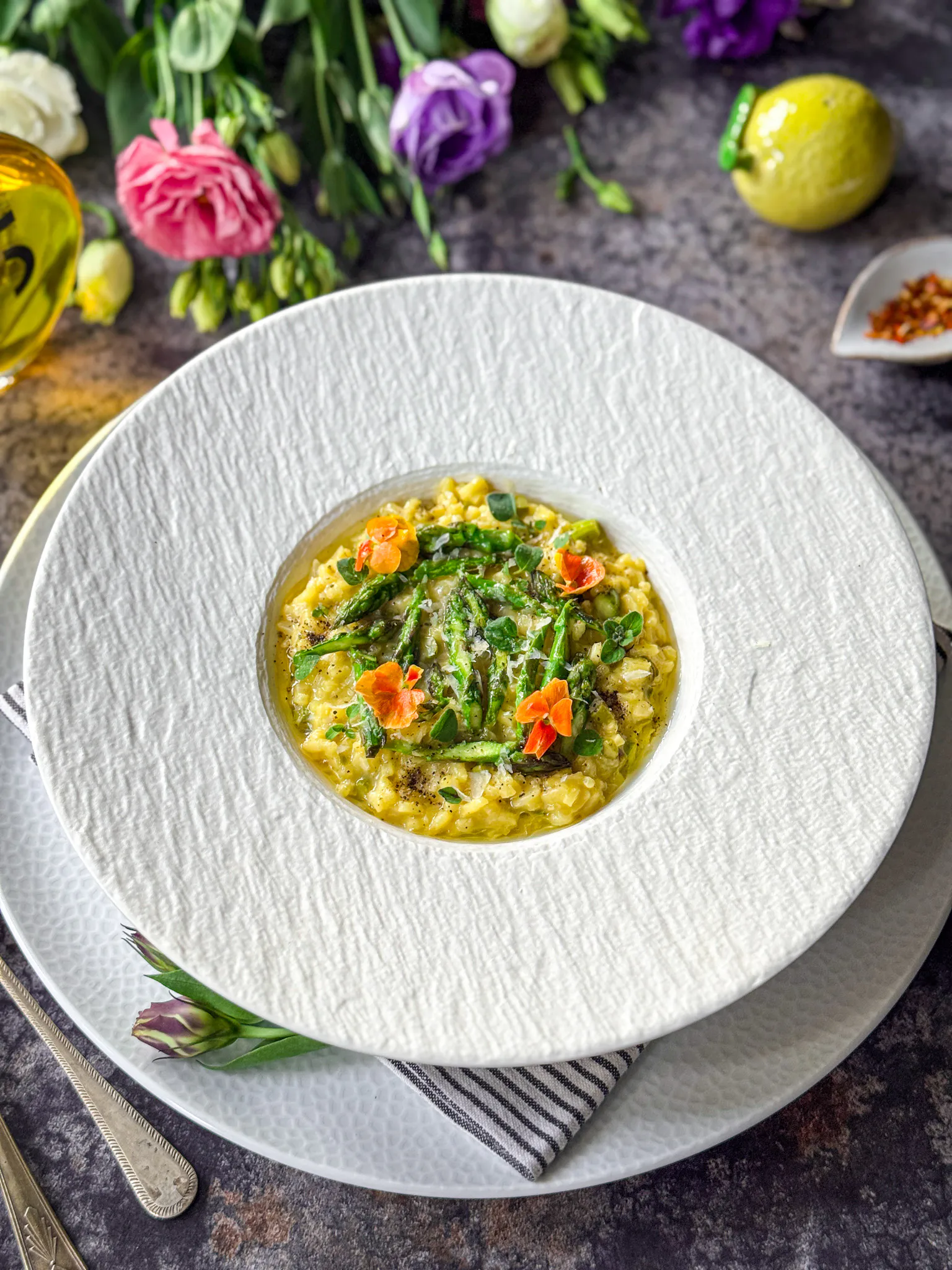
Risotto has a wonderful way of making very little feel luxurious. A handful of rice, some good stock and a little patience at the hob, and somehow you end up with something silky, rich and almost impossibly creamy, without adding a drop of cream.
This Asparagus Saffron Risotto is the kind of dish I love making when I want dinner to feel a little more special without doing anything particularly complicated. It’s rich and creamy, but still has a little bite in the rice, with saffron giving it that unmistakable golden colour and asparagus bringing some freshness to the bowl.
Saffron risotto has its roots in Risotto alla Milanese, one of Milan’s best-known dishes. Traditionally it is kept quite simple, which is part of what makes it so good. My version adds asparagus, but the idea remains much the same: let the rice become creamy slowly and give the saffron enough space to be noticed.
And that slow cooking is really the pleasure of risotto. It isn’t a dish you put on the hob and forget about, but neither is it difficult. Add the stock gradually, stir, taste and watch the rice change as it cooks. Around 25 to 30 minutes later, it’s ready for the table.
What Is Risotto alla Milanese?
Risotto alla Milanese is one of Milan’s most recognisable dishes, known for its vivid golden colour and unmistakable saffron flavour. Unlike many risottos that are built around vegetables, mushrooms or seafood, saffron is very much the focus here. It gives the rice its delicate fragrance and warmth as well as that extraordinary colour.
The traditional dish is beautifully simple. Risotto rice is slowly cooked with stock until creamy, then finished with butter and Parmesan for that loose, glossy consistency a good risotto should have. There is no cream involved; the creaminess comes from the starch released by the rice as it cooks.
In this Asparagus Saffron Risotto, fresh asparagus is added to those familiar Milanese flavours. Its freshness and slight bite work beautifully against the creamy saffron rice, while the saffron remains central to the dish.
What You’ll Need
Vegetable stock. Keep it hot in a separate saucepan while you cook the risotto. Adding hot stock gradually allows the rice to continue cooking without repeatedly dropping the temperature of the pan.
Olive oil. Used to gently cook the onion and garlic before the rice is added, forming the savoury base of the risotto.
Brown onion and garlic. Finely chopped so they soften into the risotto rather than remaining noticeable pieces in the finished dish.
Carnaroli rice. My choice for this risotto. Its high starch content helps create that creamy consistency while the grains retain a little bite in the centre. Another good risotto rice can be used if Carnaroli isn’t available.
Dry white wine. Added before the stock, bringing acidity that balances the butter and cheese later in the dish. Choose something dry rather than sweet.
Saffron threads. ¼ teaspoon is enough to give the risotto its characteristic golden colour, delicate fragrance and gentle warmth without overwhelming the other flavours. Use saffron threads rather than powdered saffron here.
Green asparagus. Cut the stems into smaller pieces while keeping the tender tips slightly larger. This helps the different parts cook evenly and keeps the asparagus recognisable throughout the risotto.
Butter. Stirred through towards the end for richness and to help give the finished risotto its glossy texture.
Pecorino Sardo. Finely grated and stirred through at the end. Its salty, savoury character brings another layer of richness, so taste the risotto before adding any final salt.
Salt and black pepper. Added to taste at the end, particularly because both the vegetable stock and Pecorino can already contribute quite a bit of seasoning.
How to Make it
Prepare the asparagus. Snap off the woody ends and simmer them in a little of the vegetable stock for 10 minutes, then strain and discard. Cut the remaining stems into 1-inch pieces, keeping the tips slightly larger for serving.
Steep the saffron. Place the saffron threads in a small bowl with a ladleful of warm stock and leave to steep while you begin the risotto. This helps release their colour and fragrance before they are added to the rice.
Cook the asparagus. Warm a little olive oil in a wide, heavy-based pan over a medium heat. Add the asparagus pieces and cook gently, adding a splash of stock as needed. Once tender but still with a little bite, remove from the pan and set aside. Keep the tips separate for serving.


Build the base. Add the remaining olive oil to the same pan, followed by the finely chopped onion. Cook gently for 4 to 5 minutes until soft and translucent. Add the garlic and cook for another minute.
Toast the rice. Add the Carnaroli rice and stir for 1 to 2 minutes, until the grains are coated in the oil and beginning to turn translucent around the edges. Pour in the white wine and cook, stirring, until it has been absorbed.
Add the stock gradually. Add the hot stock one ladle at a time, stirring regularly and allowing most of the liquid to be absorbed before adding more. Continue for around 15 to 18 minutes, until the rice is nearly cooked but still has a little bite in the centre.
Add the saffron and asparagus. Pour in the saffron along with its steeping liquid and stir through the rice. Add the asparagus pieces and continue cooking for another 2 to 3 minutes, adding a little more stock if needed, until the rice is al dente and the risotto is loose and creamy.


Finish the risotto. Remove the pan from the heat. Add the cold butter and grated Pecorino Sardo, then stir vigorously until melted and the risotto is glossy and creamy. Taste before seasoning with salt and black pepper, as the cheese and stock will already bring saltiness. Leave to rest for 2 minutes.
Serve straight away. Spoon the risotto into warmed bowls and finish with the reserved asparagus tips, a little extra Pecorino Sardo and freshly cracked black pepper.
Helpful Tips and Tricks
- Keep the stock hot. Have it gently simmering in a separate pan while you cook. Adding cold or lukewarm stock lowers the temperature of the risotto and interrupts the cooking each time you add a ladleful.
- Don’t rush the stock. Add it gradually, giving the rice time to absorb most of each addition before adding more. You may not need every last drop, so let the texture of the rice guide you rather than forcing in the full amount.
- Stir regularly, but not constantly. The rice needs some movement to release its starch and create that creamy consistency, but vigorous, non-stop stirring isn’t necessary. Keep an eye on the pan and stir often enough to prevent the rice catching.
- Look at the rice, not just the clock. Cooking times are a guide. The grains should be tender with a slight bite in the centre, while the risotto itself should still be loose enough to gently spread when spooned onto a plate.
- Add the saffron later in the cooking. Steeping it first and adding it towards the end allows its colour and fragrance to come through without cooking it for longer than necessary.
- Finish off the heat. Stir the cold butter and Pecorino Sardo through once the pan is off the heat. This final step gives the risotto its glossy, creamy finish, so stir with a little energy rather than simply folding them in.
- Serve it straight away. Risotto continues to absorb liquid as it sits and will quickly become thicker. Have your bowls and garnishes ready before you finish the pan so you can serve it while it is still beautifully loose and creamy.
Q: Can I use Arborio rice instead of Carnaroli?
A: Yes. Carnaroli holds its shape particularly well while releasing enough starch to give the risotto its creamy texture, but Arborio is a good alternative and much easier to find. Keep an eye on it towards the end of cooking, as it can soften more quickly.
Q: What can I use instead of white wine?
A: You can leave the wine out and use a little extra vegetable stock instead. Add a small squeeze of lemon juice towards the end to bring back some of the acidity that the wine would normally provide.
Q: Can I make this risotto ahead of time?
A: Risotto is at its best served as soon as it is finished, while the rice still has a little bite and the consistency is loose and creamy. If left for too long, the rice continues absorbing liquid and the risotto becomes much thicker.
If you do need to prepare ahead, cook the risotto until it is about three-quarters of the way through, then spread it out on a tray to cool quickly and refrigerate. When you’re ready to serve, return it to the pan and finish cooking with a little hot stock before stirring through the butter and Pecorino.
Q: How do I know when my risotto is ready?
A: Taste the rice rather than relying entirely on the cooking time. It should be tender but still have a slight bite in the centre. The risotto itself should be creamy and fluid rather than stiff; when spooned into a bowl, it should settle naturally rather than sitting in a firm mound.
Q: Can I use Parmesan instead of Pecorino Sardo?
A: Yes. Parmesan is the more traditional choice for Risotto alla Milanese and works beautifully here. Pecorino Sardo has a slightly sharper, saltier character, but you can substitute Parmesan in the same quantity. Whichever you use, taste the risotto before adding any extra salt at the end, as both the cheese and stock contribute to the final seasoning.
Looking for more rice recipes? Here are few of our favourites
Creamy Mushroom Risotto with Parmesan
Green Coriander Pulao with Vegetables
Easy Japanese Chahan Rice with Egg
If you make this recipe I’d love to hear how it turned out. Leave a comment below and let me know. It genuinely makes a difference to know what’s working and what isn’t, and I read every single one. You can also find me on Pinterest, Instagram and Facebook where I share new recipes, behind the scenes and whatever else is happening in the kitchen at Poetry of Spices.

Ingredients
The risotto
The asparagus
The finish
method
(180g green asparagus, a little vegetable stock)
(¼ tsp saffron threads, 1 ladle warm vegetable stock)
(Olive oil, prepared asparagus, splash of vegetable stock)
(2 to 3 tbsp olive oil, 1 small brown onion finely chopped, 2 cloves garlic finely chopped)
(200g Carnaroli rice, 100ml dry white wine)
(Remaining hot vegetable stock)
(Steeped saffron and its liquid, cooked asparagus pieces)
(40g cold butter, 40 to 50g Pecorino Sardo grated, salt and black pepper)
Spoon into warmed bowls and finish with the reserved asparagus tips, a little extra Pecorino Sardo and freshly cracked black pepper.
(Reserved asparagus tips, extra Pecorino Sardo, black pepper)
2 comments
Followed the recipe, paid attention to the helpful tips..nailed it. Came out with the right amount of chew, right amount of creamy.
Jo Tradher
Hey Jo, nailed it is all I needed to hear! So glad the tips made a difference. Thank you so much for making it!