
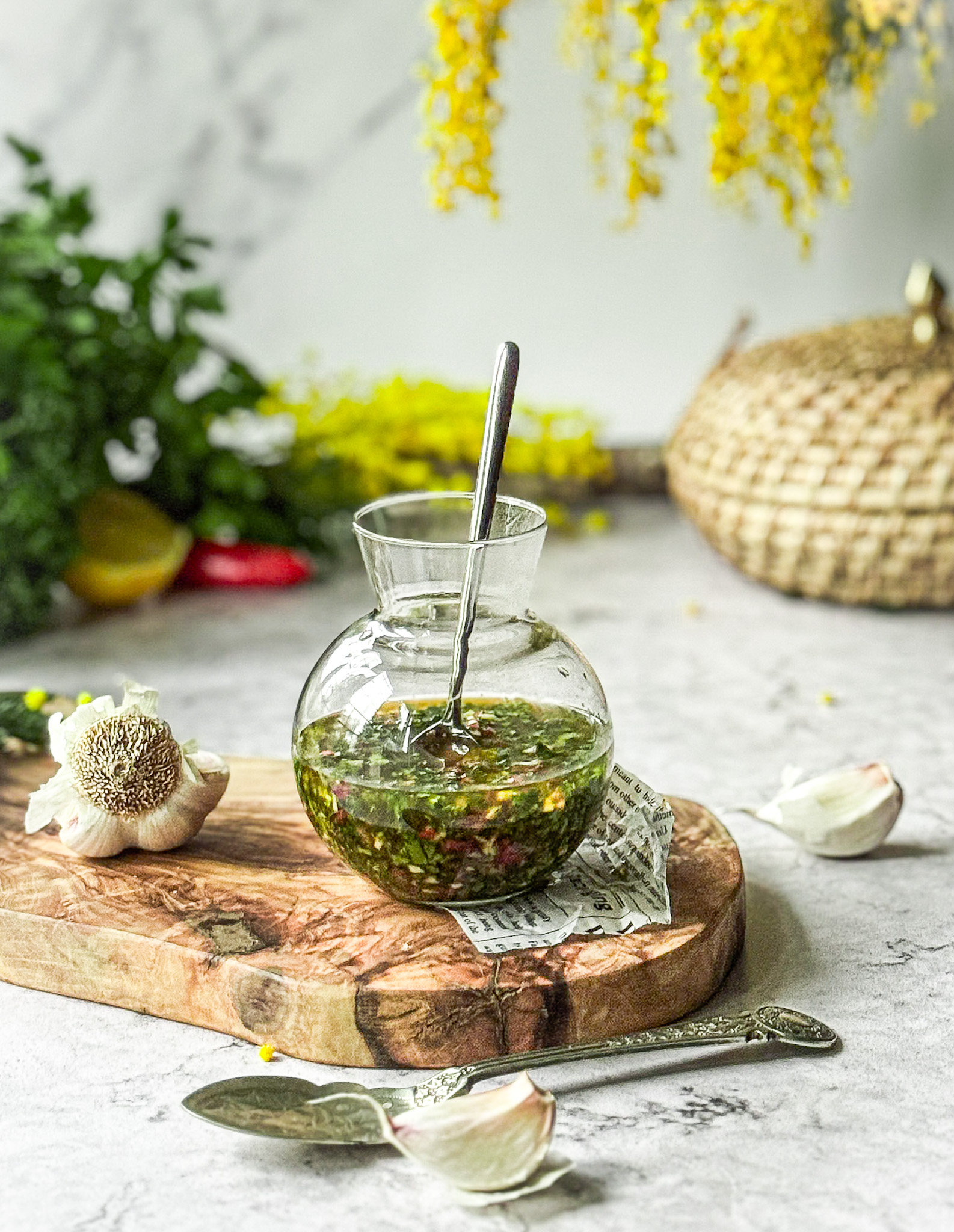
There are sauces that sit quietly on the table, and then there is this one.
Zesty, vibrant, and unmistakably fresh, this Argentinian classic brings a punch of flavour that takes just minutes to make. A vibrant blend of fresh herbs, garlic, chilli, olive oil and vinegar, bold but never overpowering. It is the kind of thing that wakes up everything it touches.
Traditionally spooned over grilled meats, chimichurri also happens to be a quiet weapon for dressing up roasted vegetables, grain bowls, fried eggs, or even just a slice of crusty bread. Sharp, herby, garlicky, and just a little fiery. Fresh ingredients coming together with real purpose, the kind of sauce you make once and then wonder how you cooked without it.
What is Chimichurri?
Chimichurri is a punchy, herb-forward sauce that hails from Argentina and Uruguay, and it is as essential to the South American grill as salt and fire.
Traditionally served with grilled meats, particularly steak, chimichurri is made with fresh parsley, garlic, vinegar, olive oil, and a few flavourful extras that vary by region and household. Some versions lean green and grassy, others red and smoky, but the core is always the same: bold, fresh, and fiercely full of character.
Unlike many sauces that are cooked or blended, chimichurri is mixed by hand. That means every bite carries a little texture, chopped herbs, a bit of chilli, and just the right amount of bite. It is the kind of sauce that lifts and sharpens a dish, whether that is a charred steak, roasted vegetables, or spooned over eggs.
While its exact origins are debated, chimichurri has been part of Argentinian cooking for generations, likely born from a blend of Spanish, Italian, and indigenous culinary influences. Today it is found in home kitchens, street grills, and elaborate asados alike.
Why You’ll Love This Recipe
- No fuss, no cook. Just a chopping board, a bowl, and a few minutes. No blender, no heat, no waiting around.
- Punchy and herby. The kind of sauce that lifts whatever it touches — earthy grilled veg, smoky meats, even eggs.
- Versatility in a jar. Use it as a marinade, a drizzle, or a dip. Chimichurri does not ask much but gives plenty back.
- Keeps all week. Make a batch and it sits happily in the fridge, ready to brighten meals whenever you need it.
The Ingredients
THE HERBS AND AROMATICS
- Flat-leaf parsley and coriander. Together they form the vibrant green base of the sauce. The parsley brings a clean, grassy freshness while the coriander adds a slightly warmer, more citrusy depth. Both need to be fresh, not wilted.
- Garlic and red onion. They add sharpness and punch, the kind that makes chimichurri stand out on the plate. Finely chopped so they distribute evenly through the sauce rather than sitting in clumps.
- Oregano. Traditionally fresh is used, but dried works just as well if that is what you have.
- Red serrano chillies. For heat that runs through the sauce without dominating it. Adjust the amount to suit your preference, or swap for a pinch of chilli flakes if that is easier.
THE ACID AND OIL
- Red wine vinegar. The classic chimichurri tang. It gives the sauce its characteristic sharpness and helps preserve the herbs.
- Lemon zest and juice. They round out the acidity with a brightness that the vinegar alone cannot quite achieve.
- Olive oil. Use a neutral olive oil rather than extra virgin here. It blends better into the sauce and does not harden in the fridge the way extra virgin can.
THE SEASONING
- Salt and black pepper. Added to taste. Season gradually and adjust once the sauce has had a few minutes to rest and the flavours have settled.
- Chilli flakes (optional). For an extra layer of heat if you want the sauce to have a little more fire.

.
The Method
Start by gathering everything and chopping it finely. The parsley, coriander, red onion, garlic, oregano, and chillies all need to be chopped small enough that the sauce holds together rather than feeling chunky. This is a rustic sauce, but the more evenly everything is cut, the better the texture when it all comes together.
Transfer the herbs and aromatics to a bowl. Add the lemon zest, lemon juice, red wine vinegar, salt, pepper, and any extra chilli flakes if you like a kick. At this point the mixture should already smell bright, zesty, and deeply herby.
Pour in the olive oil and stir everything together gently until well combined. There is no need to whisk — this sauce is not meant to emulsify. It should look loose, textured, and vibrantly green.
Leave it to rest for at least 10 to 15 minutes before serving. This is the step that makes the difference between a sauce that tastes raw and one that tastes balanced. The herbs infuse into the oil, the vinegar mellows, and the whole thing settles into something far more rounded than it was straight after mixing. Taste and adjust at this stage a touch more salt, a little extra lemon if your herbs are particularly bold.
A note on using a food processor. If you prefer a quicker route, pulse the herbs, garlic, and onion together just enough to combine. The sauce should stay loose and textured, not turn into a paste. Make sure everything is dry before you begin to avoid a watery chimichurri, and add the herbs through the feed tube while the machine is running for the most even result.
Helpful Tips and Tricks
- Let it sit before serving. Chimichurri genuinely improves with a little time. Even 30 minutes makes a noticeable difference as the acidity softens and the herbs release their oils into the sauce. If you can make it an hour or two ahead, do.
- Fresh herbs are non-negotiable. This sauce is built on vibrant flavour and wilted herbs will not give you that. Use fresh, flat-leaf parsley and coriander with bright green leaves and a strong fragrance.
- Chop rather than blend. Traditional chimichurri has texture and that texture is part of what makes it so good. If you do use a food processor, pulse gently rather than blending to a smooth paste over-processing will make it muddy and too thick.
- Use regular olive oil, not extra virgin. Extra virgin olive oil can seize up and turn cloudy when refrigerated. A good-quality olive oil that is not too peppery or assertive keeps the sauce fluid and well balanced even when chilled.
- Adjust the heat to suit you. Serrano chillies give this version a proper kick, but you can dial it up or down entirely based on your preference. Red pepper flakes or a pinch of hot smoked paprika are good alternatives if serranos are hard to find.
- Store it well and it keeps beautifully. Chimichurri keeps for four to five days in the fridge in a sealed jar. Stir well before using and bring it back to room temperature for the best texture and flavour.
Can I make chimichurri ahead of time?
Not only can you, you really should. Making it a few hours ahead or even the night before is one of the best things you can do for this sauce. The acidity softens, the herbs release their oils, and the whole thing settles into something far more rounded and balanced than it is straight after mixing. Just give it a good stir before serving and taste once more, since the flavour shifts slightly as it rests.
Can I freeze chimichurri?
Yes, and it is a genuinely useful thing to do. Spoon it into an ice cube tray, freeze until solid, then transfer the cubes to a sealed bag or container. That way you always have a portion ready to pull out whenever you need it. Defrost in the fridge overnight, stir well, and it is good to go. The texture may be slightly looser once thawed but the flavour holds up very well.
What if I don’t have red wine vinegar?
White wine vinegar is the closest thing to it and works very well here. Fresh lemon juice will also do the job if that is all you have, though the flavour will be a little softer and less sharp. Whatever you use, taste the sauce once it has rested and adjust until it has that bright, tangy quality that makes chimichurri what it is.
Can I use chimichurri as a marinade?
It works beautifully as one. The acid in the vinegar and lemon juice tenderises as it flavours, and the herbs and garlic get right into whatever you are marinating. Vegetables, tofu, halloumi, or meat all benefit from sitting in chimichurri for at least 30 minutes before cooking. The longer the better, though even a quick 15-minute soak makes a noticeable difference.
Is chimichurri supposed to be spicy?
Traditionally it has a gentle heat rather than a fiery one, but how much spice ends up in the sauce is entirely up to you. The chilli and flakes in this recipe are there to add warmth and depth rather than to dominate, so feel free to adjust the amount or leave them out altogether for a milder version.
Looking for more sauce recipe?? Here are few of our favourites:
Everyday Marinara Sauce — Rich, Rustic, Real
If you make this recipe I’d love to hear how it turned out. Leave a comment below and let me know. It genuinely makes a difference to know what’s working and what isn’t, and I read every single one. You can also find me on Pinterest, Instagram and Facebook where I share new recipes, behind the scenes and whatever else is happening in the kitchen at Poetry of Spices.

Ingredients
method
½ cup parsley, ½ cup coriander, 3–4 garlic cloves, ½ small red onion, 1 tbsp fresh oregano (or 1 tsp dried), 1–2 red serrano chillies
Zest of 1 lemon, 1 tbsp lemon juice, 2 tbsp red wine vinegar, ½ tsp salt, ¼ tsp black pepper, ½ tsp hot pepper (optional), chilli flakes (optional)
½ cup olive oil (not extra virgin)
2 comments
What a vibrant and delicious recipe. The flavours are beautifully balanced, and it comes together in minutes. I’ll be keeping a jar of this in my fridge all summer.
Judy
Hey Judy, Thank you for the lovely feedback. It’s always nice to know a recipe has earned a permanent spot in someone’s fridge!