
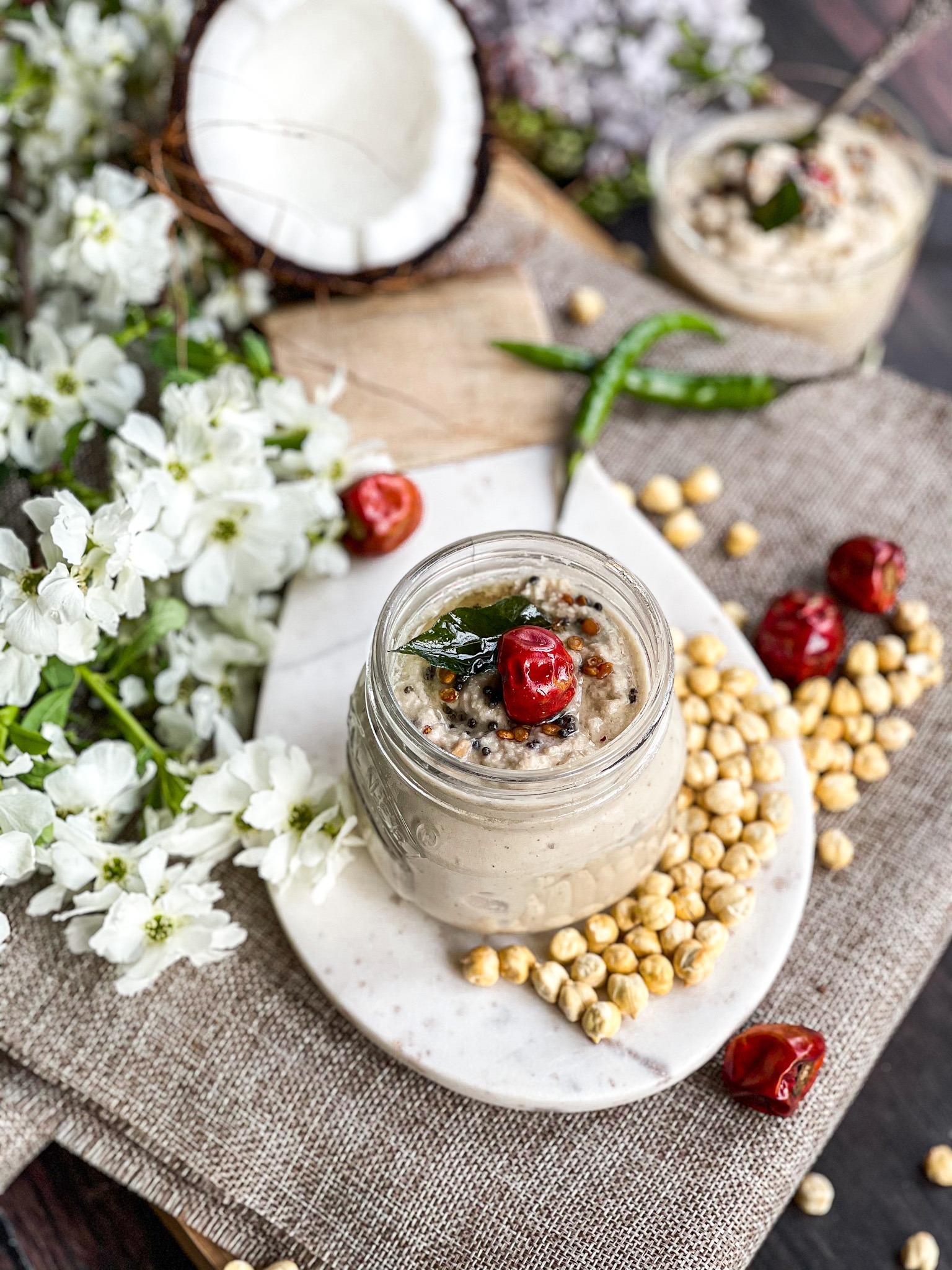
Coconut chutney or Nariyal Chutney is the most popular chutney from Southern India. It has a well rounded flavour and is served with almost all South Indian dishes like Idli, Dosa, Upma etc. as an accompaniment along with Sambar or Rasam. This chutney is very quick and simple to make, it is easily adaptable to please your tastebuds with easy to find ingredients.
Coconut is a vital ingredient in south Indian cuisine due to its abundance and versatility. It can be used dried, fresh, in oil or in many other forms, each providing its own unique flavour and texture. It acts as a perfect base, as it provides freshness and a slight sweetness, while enhancing all the flavours of the spices present.
This is the standard coconut chutney made with freshly grated coconut. The coconut provides a fresh flavour which is balanced perfectly with the roasted gram flour’s earthiness. The tanginess of the tamarind combines with the green chillies we add, to make sure it is not too spicy while still cutting the coconut’s sweetness and providing the chillies’ subtle flavour. The tempering on top may not seem crucial, but helps enhance all the flavours present, and brings the whole chutney together. It is a must have and is sure to complete any South Indian meal you eat.
.
Step by step pictures of recipe:

Assemble all the ingredients Put in a blender Blend to a smooth paste Prepare the tempering


.
Helpful Tips and Tricks for Making Coconut Chutney:
- Avoid using desiccated coconut as it will not yield the same results.
- You can use fresh yogurt instead of tamarind for the sourness, doing so will reduce the shelf life of the chutney.
- I like to remove the skin of the fresh coconut as it makes a fresher looking chutney.
- Do not over grind the chutney as the coconut will leave its oil and the chutney will lose its taste.
.
.
Tempering
Ingredients
method
2 comments
This tastes exactly like the chutney served at my favourite South Indian restaurant. I can’t believe how easy it was to make at home.
Laura
Hey Laura, That’s quite the compliment! There’s something especially satisfying about being able to recreate a favourite restaurant dish at home.