
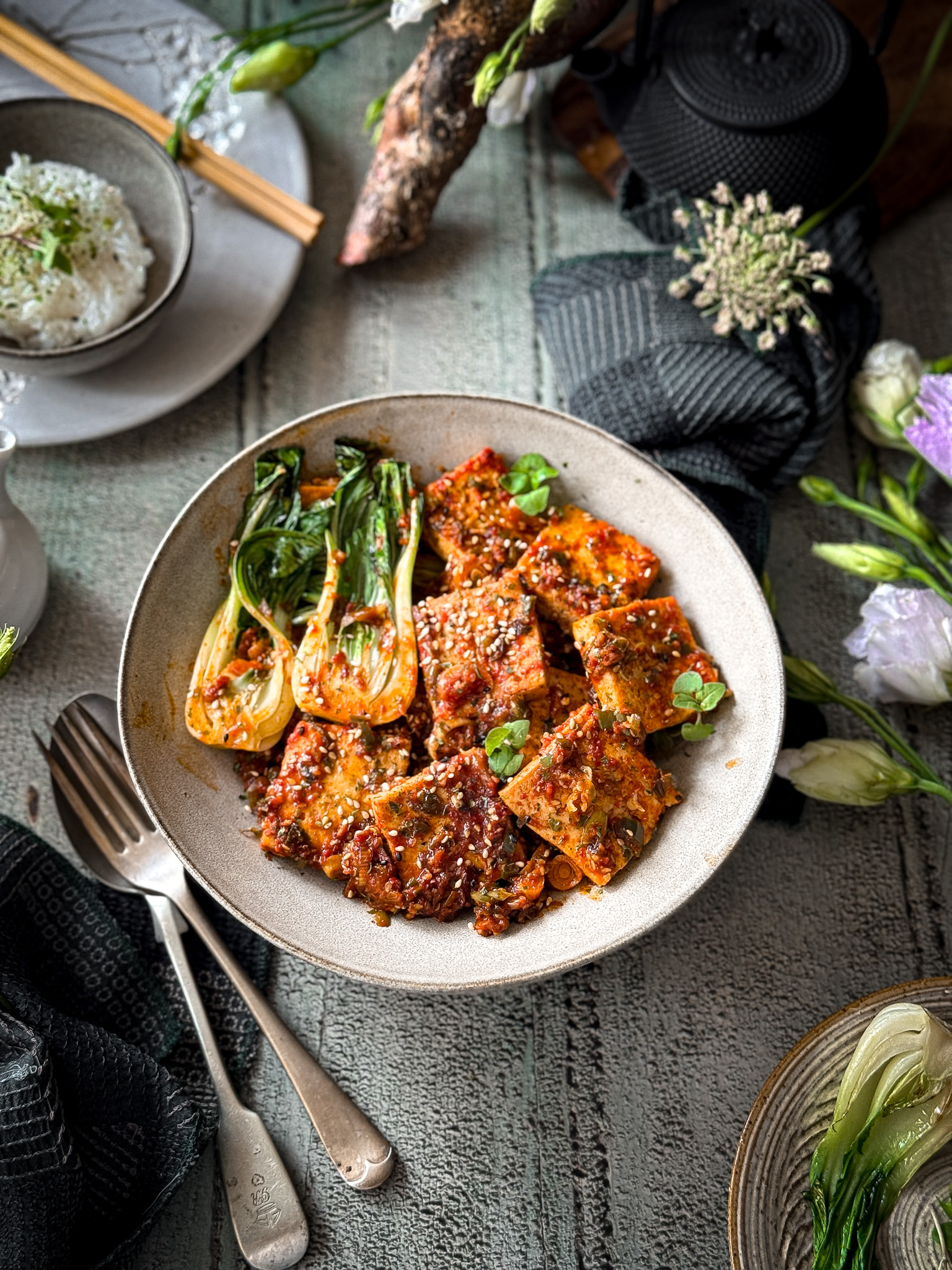
There are evenings when tofu feels like the only right thing — calm, steady, full of quiet flavour. Dubu-jorim is one of those dishes that asks for very little but gives back a lot. Slices of tofu turn golden in the pan, then slowly braise in soy, garlic, and a hint of chilli until they drink up everything — salt, spice, and that deep savoury sweetness that clings to the edges.
What makes this dish special is its balance — soft tofu that still holds its shape, a sauce that’s rich but not heavy, flavours that feel comforting yet bright. Every bite is layered: a touch of heat, a bit of sweetness, that whisper of sesame that rounds it all out.
It makes an excellent side dish to go with rice or noodles and is just as good served hot or cold. Simple enough for weeknights, satisfying enough to share — the kind of food you can make almost without thinking, and still sit down to something that feels complete.
What is Dubu-jorim?
The name Dubu-jorim (두부조림) comes from two Korean words — dubu, meaning tofu, and jorim, meaning braised. It refers to a style of cooking where ingredients are gently simmered in a seasoned sauce until they absorb all the flavours.
It’s a dish deeply woven into Korean home cooking, often served as part of a banchan spread — those small plates that bring colour and rhythm to a meal. Traditionally made for everyday dinners rather than special occasions, dubu-jorim reflects the heart of Korean cooking: simple ingredients, careful seasoning, and food that feels nourishing and whole.
You’ll find many variations across homes — some rich with spice, others mellow and savoury — but always with that same balance of warmth and ease. It’s less about a strict recipe and more about feel — a dish that invites quiet attention.
Ingredients You’ll Need to Make Dubu-Jorim – Classic Korean Spicy Braised Tofu
- Tofu – firm and fresh, the heart of this dish. Once seared, it turns crisp-edged and tender within, ready to soak up all the sauce.
- Soy sauce – deep, savoury, and full of umami; it gives the braise its rich base.
- Gochujang – that signature Korean chilli paste — smoky, slightly sweet, and full-bodied.
- Gochugaru – Korean red pepper flakes; they add warmth and gentle spice without overwhelming heat.
- Sesame oil – toasted and nutty, it rounds out the sauce with its distinctive aroma.
- Garlic – finely minced, sharp at first but mellow once cooked, it builds the base of flavour.
- Brown sugar – a touch of sweetness to balance the spice and salt.
- Green onions & jalapeño – fresh and bright, they bring small bursts of heat and crunch.
- Sesame seeds – scattered for texture, they echo the nuttiness of the oil.
- Water – just enough to thin the sauce so it braises instead of clings.
- Salt – to season the tofu before cooking, helping its flavour come alive.
How to Make the Best Dubu-Jorim
Finely dice the green onions and jalapeño. Drain the tofu, pat it dry, and slice into squares or triangles. Season the pieces lightly with salt and set aside.
In a small bowl, combine the soy sauce, sesame oil, sesame seeds, water, green onions, jalapeño, brown sugar, garlic, gochujang, and gochugaru. Mix well until smooth and glossy.
Warm a little oil in a wide pan over medium heat. Add the tofu and cook until lightly golden on both sides, turning gently to keep the pieces whole.

Lower the heat and pour the prepared sauce over the tofu. Let it simmer gently for 2–3 minutes, spooning the sauce over so it coats evenly. The liquid will reduce slightly to a rich glaze.
Serve warm with steamed rice or noodles, or enjoy it cold — it’s just as good either way. Store leftovers in an airtight container in the fridge for up to 3 days.
Helpful Tips & Tricks to Make Dubu-Jorim – Classic Korean Spicy Braised Tofu
- Use firm tofu – It holds its shape best when pan-fried and absorbs the sauce beautifully without breaking apart.
- Pat the tofu dry – The less moisture it has, the crisper the edges will be and the better it will take on the glaze.
- Don’t rush the simmer – Let the tofu sit in the sauce for a few minutes. This helps it soak up all those layers of flavour — salty, sweet, spicy, and nutty.
- Adjust the heat – Gochugaru adds warmth more than heat. If you prefer it mild, use less; for a stronger kick, add a pinch more or an extra touch of gochujang.
- Tastes even better the next day – The tofu absorbs more of the sauce as it sits, so it’s perfect for making ahead. Enjoy it cold or gently rewarmed.
- Make it your own – Try adding thin slices of onion or a few strips of bell pepper for colour and sweetness, or drizzle with a touch more sesame oil before serving.
Commonly Asked Questions
Can I make Dubu-jorim ahead of time?
Yes — it actually tastes even better the next day. The tofu continues to absorb the sauce as it rests. Store it in an airtight container in the fridge and enjoy cold or gently rewarmed.
What type of tofu is best?
Use firm or extra-firm tofu. Soft or silken tofu will fall apart while cooking. Firm tofu holds its shape while still turning tender inside.
Can I make this without gochujang?
You can, though the flavour will change slightly. Replace it with a mix of soy sauce and a touch of chilli paste or sriracha for a similar balance of spice and sweetness.
Is Dubu-jorim served hot or cold?
Both. It’s lovely straight from the pan, but also delicious chilled — which makes it a perfect make-ahead dish for busy days or lunch boxes.
Can I pan-fry the tofu without oil?
A light coating of oil helps create that golden crust, but if you’re avoiding it, use a well-seasoned non-stick pan and cook over low heat until lightly browned.
How long will it keep?
Up to 3 days in the fridge. Store it in an airtight container, and the flavours will deepen beautifully with time.
Looking For More Asian Tofu Recipes ?? Here are few of our Favourites:
If you tried this recipe or any other recipe on our blog let us know how liked it by leaving a comment/rating below! Be sure to follow along on Pinterest, Instagram and Facebook for even more amazing recipes!!

Ingredients
method
(1 medium firm tofu, salt to taste)
(3 tbsp soy sauce, 1 tbsp sesame oil, 1 tbsp sesame seeds, ¼ cup water, 2 medium green onions, ½ jalapeño, ½ tbsp brown sugar, 1½ tbsp minced garlic, 1½ tbsp gochujang, 1 tbsp gochugaru)