
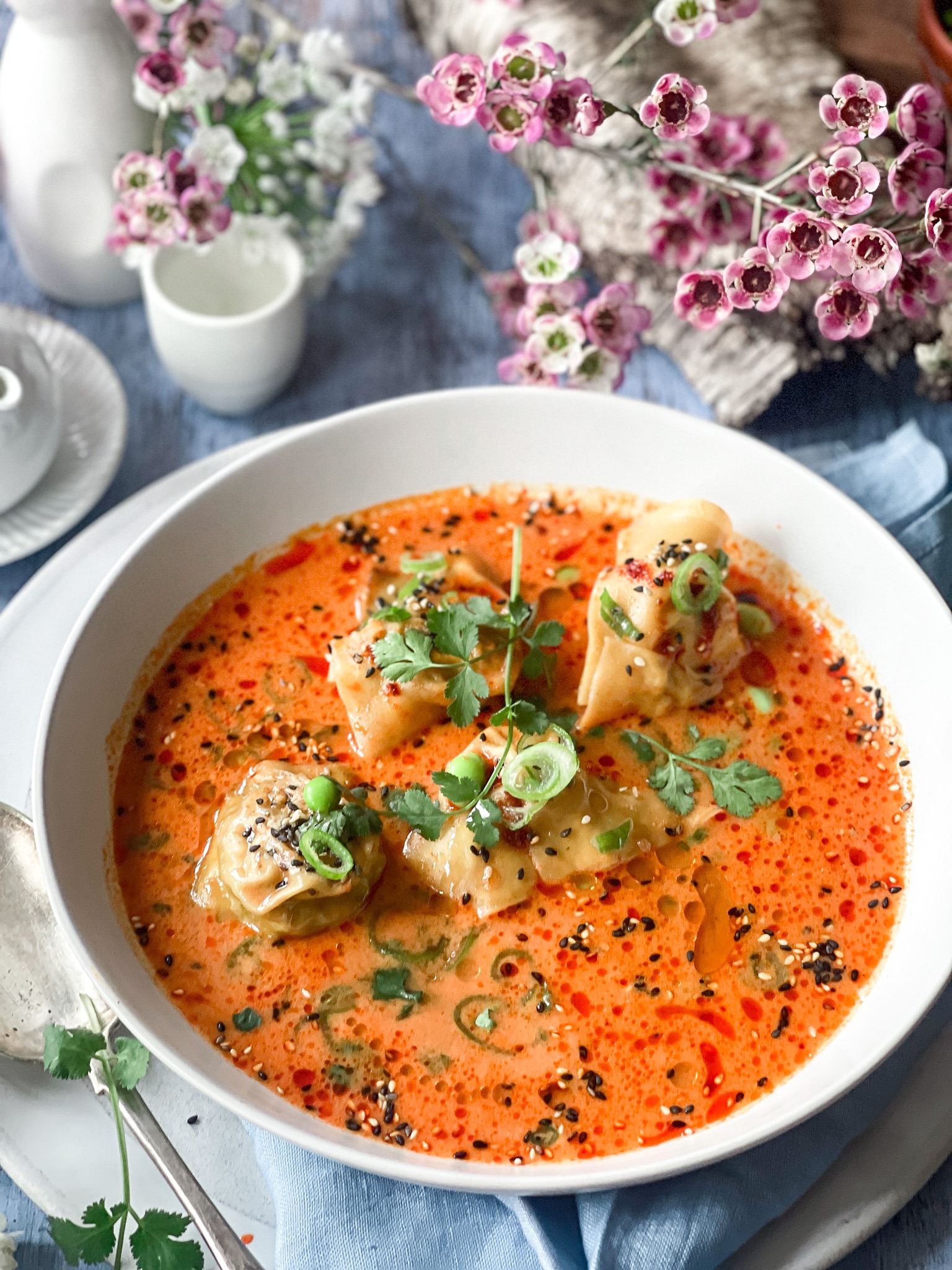
There’s nothing quite like a piping hot bowl of spicy wonton soup on a cold or rainy day. These wontons in spicy gochujang broth are just what I crave when I want something warming, full of flavour and a little different from my usual soups. The broth is rich, spicy and savoury, while the soft, plump wontons make every spoonful satisfying.
Gochujang, a Korean chilli paste, is a firm favourite in my household. We use it in everything from tofu and noodles to rice dishes, and I’m always looking for new ways to cook with it. This soup has become another favourite, especially when we’re in the mood for bold flavours and a good kick of spice.
I also like making the wontons at home. They’re much easier than they look, and there’s something special about a bowl of soup filled with freshly made wontons.
What I enjoy most about this soup is the contrast between the soft wontons and the smooth, spicy broth. It’s full of flavour but never feels heavy, and the wontons make it filling enough for a meal. Finish it with a little chilli oil and fresh herbs, and it’s a bowl I always look forward to.
Why You’ll Love This Recipe
- Vegetarian and easy to make vegan. The wontons are filled with tofu and asparagus, and the broth is made with vegetable stock. Just check that your wonton wrappers are egg-free and your Thai red curry paste doesn’t contain shrimp paste.
- Homemade wontons are easier than you think. The filling comes together quickly, especially if you use a food chopper. Once you’ve folded a few wontons, you’ll soon get the hang of it.
- Perfect for making ahead. You can prepare and strain the broth earlier in the day, then simply reheat it and cook the wontons just before serving.
- Make it as spicy as you like. Adjust the gochujang in the broth, the sambal oelek in the filling and the chilli oil on top to suit your taste.
What is Gochujang?
Gochujang is a thick, fermented Korean chilli paste and one of the key ingredients in Korean cooking. It’s traditionally made with gochugaru (Korean red pepper flakes), glutinous rice, fermented soybeans and salt, and it’s used in everything from marinades and sauces to soups and stews.
It tastes spicy, sweet, salty and savoury all at once. Fermentation gives it a deep, rich taste, while the glutinous rice adds a gentle sweetness that balances the heat.
Unlike regular chilli paste, it does much more than add spice, which is why it works so well in this wonton broth. Combined with Thai red curry paste and coconut milk, it makes a broth that’s spicy, creamy and full of depth.
Brands vary in heat and sweetness, and some contain wheat, so check the label if you need it to be gluten-free.

What You’ll Need
For the Spicy Gochujang Broth
- Shallots, garlic, ginger and lemongrass. These aromatics form the base of the broth, adding warmth, freshness and depth. Lemongrass brings a subtle citrusy flavour that works well with coconut milk.
- Spring onions. Add a mild onion flavour and freshness to the broth.
- Carrots, celery and cabbage. These vegetables add natural sweetness and savoury depth as they simmer. Although they’re strained out later, they help create a more flavoursome broth.
- Gochujang paste. This Korean fermented chilli paste has a distinctive combination of heat, sweetness and savoury flavour. It’s the main ingredient responsible for the broth’s rich, spicy taste.
- Thai red curry paste. Adds aromatic spices and another layer of flavour that complements the gochujang. Make sure to choose a vegetarian version, as some brands contain shrimp paste.
- Light soy sauce. Adds saltiness and umami, bringing together the different flavours in the broth.
- Sesame oil. Used to sauté the aromatics, adding a subtle nutty flavour.
- Vegetable stock cube and water. Form the liquid base of the broth. A low-sodium stock cube works best, as the gochujang and soy sauce already contain salt.
- Coconut milk. Gives the broth a creamy consistency and helps soften the heat of the gochujang without overpowering its flavour.
- Lime juice. Adds a little acidity, cutting through the richness of the coconut milk and lifting the overall flavour.
For the Wontons
- Asparagus and firm tofu. The main ingredients for the wonton filling. Asparagus adds freshness and a little texture, while pressed tofu gives the filling body and absorbs the seasonings.
- Ginger, garlic, spring onions, coriander stalks and green chilli. Add freshness, warmth and a little heat. Chop them finely so they distribute evenly throughout the filling.
- Rice vinegar and soy sauce. Bring acidity, saltiness and savoury depth to the filling.
- Sambal oelek. A chilli paste that adds extra heat. You can adjust the quantity depending on your preference.
- Cornflour. Helps bind the ingredients together and absorbs excess moisture, making the wontons easier to fill and fold.
- Sesame oil, salt, white pepper and sugar. Season the filling and round out the flavours. A small pinch of sugar is optional but can help soften the sharpness of the chilli.
- Wonton wrappers. Shop-bought wrappers work perfectly well. Check the label if you need them to be vegan, as some contain egg. The filling takes just minutes to prepare, especially with a food chopper, and folding is quicker than it looks once you’ve made a few.
If you enjoy making your own wontons, you might also like my Broccoli and Tofu Wontons.
For the Garnish
- Chilli oil. Adds an extra kick of heat and a rich chilli flavour. Use homemade or shop-bought.
- Sesame seeds. Add a little crunch and a nutty finish.
- Fresh coriander and spring onions. Bring freshness and colour to the finished soup.
- Edamame. Add extra protein, colour and texture to each bowl.

How To Make It
Prepare the gochujang mixture. In a small bowl, whisk together the gochujang, Thai red curry paste and soy sauce until smooth and free of lumps. Mixing these ingredients beforehand helps them combine evenly with the broth, rather than leaving little pockets of paste.
Sauté the vegetables. Heat the sesame oil in a large, heavy-bottomed saucepan over medium heat. Add the shallots, ginger, garlic and spring onions, and sauté for a few minutes until softened and fragrant. Stir in the carrots, celery, cabbage and bruised lemongrass, and cook for another 2–3 minutes. The vegetables don’t need to be fully cooked at this stage, as they’ll continue softening while the broth simmers.
Build the broth. Add the prepared gochujang mixture to the vegetables and stir until everything is well coated. Pour in the water and add the vegetable stock cube. Bring to a boil, then reduce the heat and simmer for 20–25 minutes, stirring occasionally. This gives the vegetables, aromatics and spices time to release their flavours into the broth.
Prepare the wonton vegetables. While the broth simmers, finely chop the asparagus, ginger, garlic, spring onions, coriander stalks and green chilli. You can also use a food chopper to save time. Pulse a few times until everything is finely chopped, but avoid turning it into a paste. The pieces should be small enough to fit comfortably inside the wonton wrappers without tearing them.
Make the wonton filling. Crumble the pressed tofu into a mixing bowl and add the chopped vegetables. Stir in the rice vinegar, soy sauce, sambal oelek, sesame oil, cornflour, salt, white pepper and a pinch of sugar, if using. Mix until everything is evenly combined. The cornflour helps bind the filling, while pressing the tofu beforehand removes excess moisture and prevents the wontons from becoming soggy.
Assemble the wontons. Place a wonton wrapper on a clean, dry surface and spoon a small amount of filling into the centre. Avoid overfilling, as this can make the wrappers difficult to seal.
Lightly moisten the edges with water, fold the wrapper into a triangle and press firmly to seal, pushing out any trapped air. Bring the two bottom corners together and pinch to secure. Repeat with the remaining filling, keeping the assembled wontons covered with a slightly damp tea towel to prevent them from drying out.
Strain the broth. Once the broth has finished simmering, remove it from the heat and allow it to cool slightly. Pass it through a fine-mesh sieve into another saucepan, pressing the vegetables lightly to extract any remaining liquid. Discard or compost the cooked vegetables and aromatics. Straining removes the solids and leaves you with a smooth, flavourful broth.
Finish the broth. Return the strained broth to medium heat and stir in the coconut milk and lime juice. Bring it back to a simmer, stirring until the coconut milk is fully incorporated. Taste and adjust if needed. The broth should have a balance of spice, savoury flavour and a little sharpness from the lime.
Cook the wontons. Carefully lower the assembled wontons into the simmering broth, leaving enough room for them to move without sticking together. Cook for approximately 4–5 minutes, depending on their size, until the wrappers are tender and the filling is heated through. Avoid a vigorous boil, as it can cause the delicate wrappers to split. Cooking the wontons directly in the broth also allows them to absorb some of its flavour.
Garnish and serve. Divide the wontons between serving bowls and ladle over the hot gochujang broth. Finish with a drizzle of chilli oil, sesame seeds, fresh coriander, sliced spring onions and cooked edamame. Serve immediately.
Helpful Tips And Tricks
- Finely chop the wonton filling: Make sure the asparagus and other vegetables are finely and evenly chopped. Large pieces can tear the delicate wonton wrappers when folding or cause them to split during cooking.
- Adjust the spice level: Gochujang varies in heat depending on the brand. If you prefer a milder broth, start with half the recommended amount, taste and gradually add more until you’re happy with the heat.
- Use a low-sodium stock cube: Gochujang and soy sauce are already quite salty, so a low-sodium vegetable stock cube helps build flavour without making the broth overly salty.
- Balance the flavours: If the broth tastes too salty or concentrated, add a splash of water. If it’s too spicy, stir in a little extra coconut milk to soften the heat and make the broth creamier.
- Choose how to cook your wontons: I prefer cooking them directly in the broth so they absorb all those lovely flavours. However, if you’re making the soup ahead, boil or steam the wontons separately and add them just before serving. This prevents them from becoming soggy and keeps the broth from turning cloudy.
Q: Can I use frozen or shop-bought wontons instead of homemade ones?
A: Yes. If you’re short on time, frozen or shop-bought vegetarian wontons work well in this soup. Cook them directly in the broth, following the timing on the packet, and make sure they’re heated through before serving.
Q: Can I make this soup ahead of time?
A: Yes. Prepare the broth up to 2-3 days in advance and keep it in an airtight container in the fridge. Reheat it and cook the wontons just before eating. I wouldn’t leave cooked wontons sitting in the broth for long, as the wrappers become very soft.
Q: Can I use something other than asparagus in the wonton filling?
A: Yes. Finely chopped mushrooms, cabbage, spinach or broccoli all work well. If using mushrooms, sauté them first to remove excess moisture. For spinach, cook it briefly and squeeze out any excess water before adding it to the filling. This will prevent the wontons from becoming too wet.
Q: Can I freeze homemade wontons?
A: Yes. Arrange the uncooked wontons in a single layer on a lined baking tray, making sure they don’t touch. Freeze until firm, then transfer them to a freezer-safe container or bag. They keep for up to 2 months. There’s no need to defrost them before cooking. Add them straight to the simmering broth and allow a little extra cooking time.
Q: What can I use instead of gochujang?
A: There isn’t an exact substitute, as gochujang is fermented and slightly sweet. You could use sambal oelek or another chilli paste with a touch of miso and sugar, but the broth will taste different. If you can, use gochujang, as it gives this soup its flavour.
Q: How do I store leftover wonton soup?
A: : Keep the cooked wontons and broth in separate airtight containers in the fridge for up to 2 days, refrigerating them promptly after cooling. The wontons will absorb the broth and become soggy if stored together. Reheat the broth until piping hot, then add the wontons and heat them through thoroughly before serving.
Looking For More Soup Recipes ?? Here are few of Our Favourites
The Best Thai Broccoli Coconut Soup
If you make this recipe I’d love to hear how it turned out. Leave a comment below and let me know. It genuinely makes a difference to know what’s working and what isn’t, and I read every single one. You can also find me Instagram, Facebook , Tiktok and Pinterest where I share new recipes, behind the scenes and whatever else is happening in the kitchen at Poetry of Spices.

Ingredients
For the Wontons:
For the Broth :
For the Garnish
method
(3 tbsp gochujang, 1 tbsp Thai red curry paste, 3 tbsp light soy sauce)
(1 tbsp sesame oil, 3 shallots, 2 spring onions, 4 garlic cloves, 2 tbsp ginger)
(2 carrots, 1 celery stick, 2 cups cabbage, 1 lemongrass stalk, prepared broth paste, 1.5 litres water, 1 vegetable stock cube)
(120 g asparagus, 200 g firm tofu, 1 tbsp ginger, 2 garlic cloves, 2 spring onions, 1 tbsp coriander stalks, 1 green chilli, 1 tsp rice vinegar, 2 tsp soy sauce, 1 tsp sambal oelek, 1 tbsp cornflour, 1½ tsp sesame oil, salt, white pepper, optional sugar)
(Prepared wonton filling, wonton wrappers, water for sealing)
(200 ml coconut milk, 1½ tbsp lime juice)
(Prepared wontons)
(Chilli oil, sesame seeds, fresh coriander, spring onions, cooked edamame)Notes
6 comments
Please can I get access to your recipes
Hi Priti, you will have to subscribe to the website.
Thanks
Looks really good but is it very spicy??
Stacy H
Hi Stacy, Thanks it’s on a spicier side. Start with 1 tbsp of gochujang and increase as needed.
Thanks
I love this wonton soup! I’ve had this on a repeat three times but with store bought wontons. Next time I am going to try and make the wontons myself. Really excited.
Ellie
Aww, thank you! I’m so glad this soup has become a repeat favorite for you. Store-bought wontons make it so easy, but homemade wontons are such a fun project and taste amazing in this soup. Let me know how they turn out when you give them a try!