
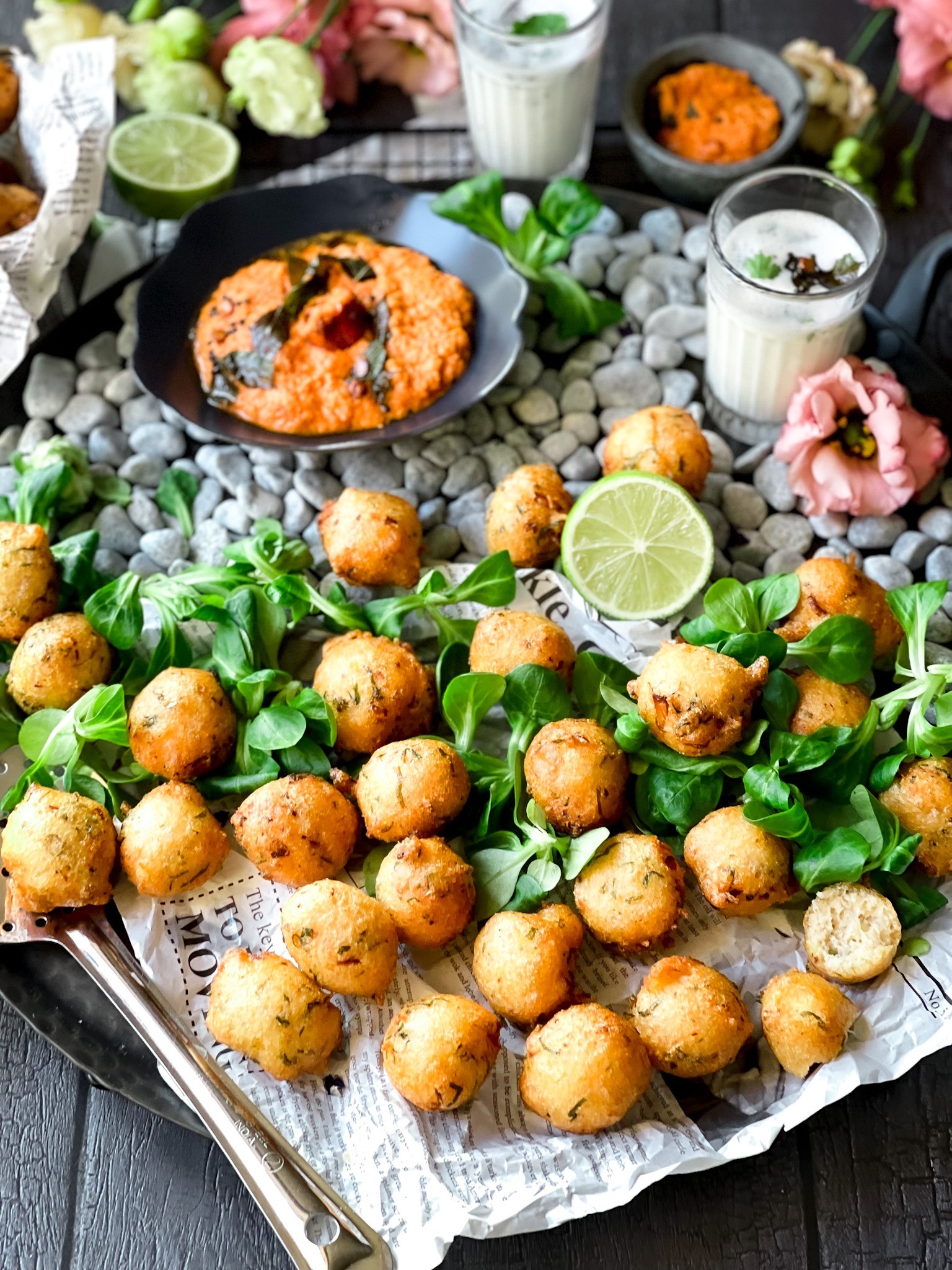
Punugulu is a crispy deep-fried savoury snack, a very popular street food of Andra Pradesh. It is also called Maavu Bonda in Tamil Nadu and is served with a spicy chutney such as Red Coconut Chutney, peanut chutney or ginger and chilli chutney along with gun powder. They are very similar to paniyaram but are these are fried unlike paniyaram which are cooked in a skillet with very little oil.
In India it is not unusual for people to come over for tea with little or even no advance notice. On several such occasions, my mom usually welcomed them with a cup of hot chai. And alongside would be a snack, generally something which she could prepare in a short time. Among all the different evening tea time snacks my mom used to make, these fritters were one of my favourites. While my mom used to make this at home, with all honesty, we never fixed a name for this dish. We used to simply call this as idli batter pakoras.
However, I got acquainted with the name punugulu when I tasted it for the first time at a beach resort in South India, whereby I came to know that this is a famous snack originating from Andhra Pradesh. The name ‘Punugulu’ just stuck with me ever since even though my version is quite different to the street-food versions available in different forms across Andhra and other places.
Traditionally these tasty fritters are prepared as street food especially in Andhra and Tamilnadu beaches with Urad dal batter. They are a wonderful evening or tea time snack during the monsoon season and consumed as a side dish with a cup of masala chai or with a coffee. It can also served as a side dish with Sambar or Sweetcorn Rasam.
There are a number of variations to the punugulu recipe. You can make them with idli batter, dosa batter, or even Black gram (Urad dal) batter. Add-ons to the batter are totally up to one’s choice. You can just make them plain just with cumin, pepper & salt or add chopped green chillies, onions, ginger, coconut, sago and coriander leaves. The choice of the batter is totally an individual’s choice and availability.
If you are looking for a healthier version of this snack, Gunta punugulu with the same batter in paniyaram pan but they will taste a bit like paniyaram. or you can also shallow fry them.
How To Make Batter For Punugulu from Scratch:
The traditional punugulu batter is made by grinding soaked urad dal and rice together.
I mostly make punugulu with the left over idli batter or dosa only. At times I grind fresh batter for punugulu with 1 cup rice, 1/3 cup Urad dal 1/2 tsp of fenugreek seeds. If you want the batter to be slightly fluffier, you can add some Fenugreek seeds.
If you are grinding fresh batter for punugulu make sure the consistency is just like Idli batter or slightly thicker. Fermentation helps the fritters become soft and fluffy from the inside & punugulu tastes really good if its a little sour. These fritters are crispy on the outside, airy and fluffy on the inside.
How to make Andra Style Punugulu with Idli or Dosa Batter:
Firstly soak the small sago seeds in water for 20-25 minutes or until soft.
Add about 2 cups of idli-dosa batter to a mixing bowl. Preferably 3-4 day old dosa batter. As the idli-dosa batter ages, it becomes a little sour and is perfect for this recipe.
Add in a pinch of asafoetida. Add the soaked sago seeds, chopped onions, curry leaves, grated coconut, chopped chillies, ginger and coriander leaves. Mix well to combine. Only, add 1/2 tbsp of semolina and 1 tbsp of the rice flour if the consistency is too thin or runny.
Frying Punugulu
Put a medium sized deep frying pan filled with oil on medium heat. The oil should be hot but not piping hot.
Dip your fingers in water and scoop out a teaspoon of batter in your fingers and gently drop them in oil. Use your thumb finger to just slide the batter into oil. Make sure the balls are small in size. If the bonda balls are big, the inside tends to remain doughy. So always shape small balls for punugulu. After adding the balls in oil, do not disturb for a minute. Fry for a couple of minutes turning the punugulu. After a couple of minutes, the balls should be really golden in colour. Remove from hot oil and drain on paper towels.
Helpful Tips & Tricks to Make Andra Style Punugulu with Sago:
- Use fermented dosa batter or idli batter to ensure a soft inside and crispy outside. It also helps the flavour of the Punugulu as it gives a unique sourness to the recipe. Slightly sour and 2 days old batter yields best flavour.
- The consistency of batter is very important just like for medu vada. If the batter is very thick punugulu will be hard & uncooked from inside. Also if the batter is runny they will not hold shape and take in too much oil. If the batter is very runny, add rice flour or semolina or soaked flattened rice (poha). Mix with the batter to get the right consistency. Leave it aside for 10 minutes so that it becomes thick and you will get the right consistency.
- If you are deep frying punugulu, make sure the oil is hot but not smoking. Deep fry in medium flame until they turn golden and crispy.
- I like to use the small variety of sago , also know as tapioca pearls for this recipe. You can substitute it with the medium sago but they do taste a bit different. Also, if using medium sago, you will need to soak them for minimum 2 hours.
- Always fry in batches. If you drop too many in the hot oil, it will quickly reduce the temperature of oil and the punugulu will not come out good.
.

Ingredients
method
Notes