
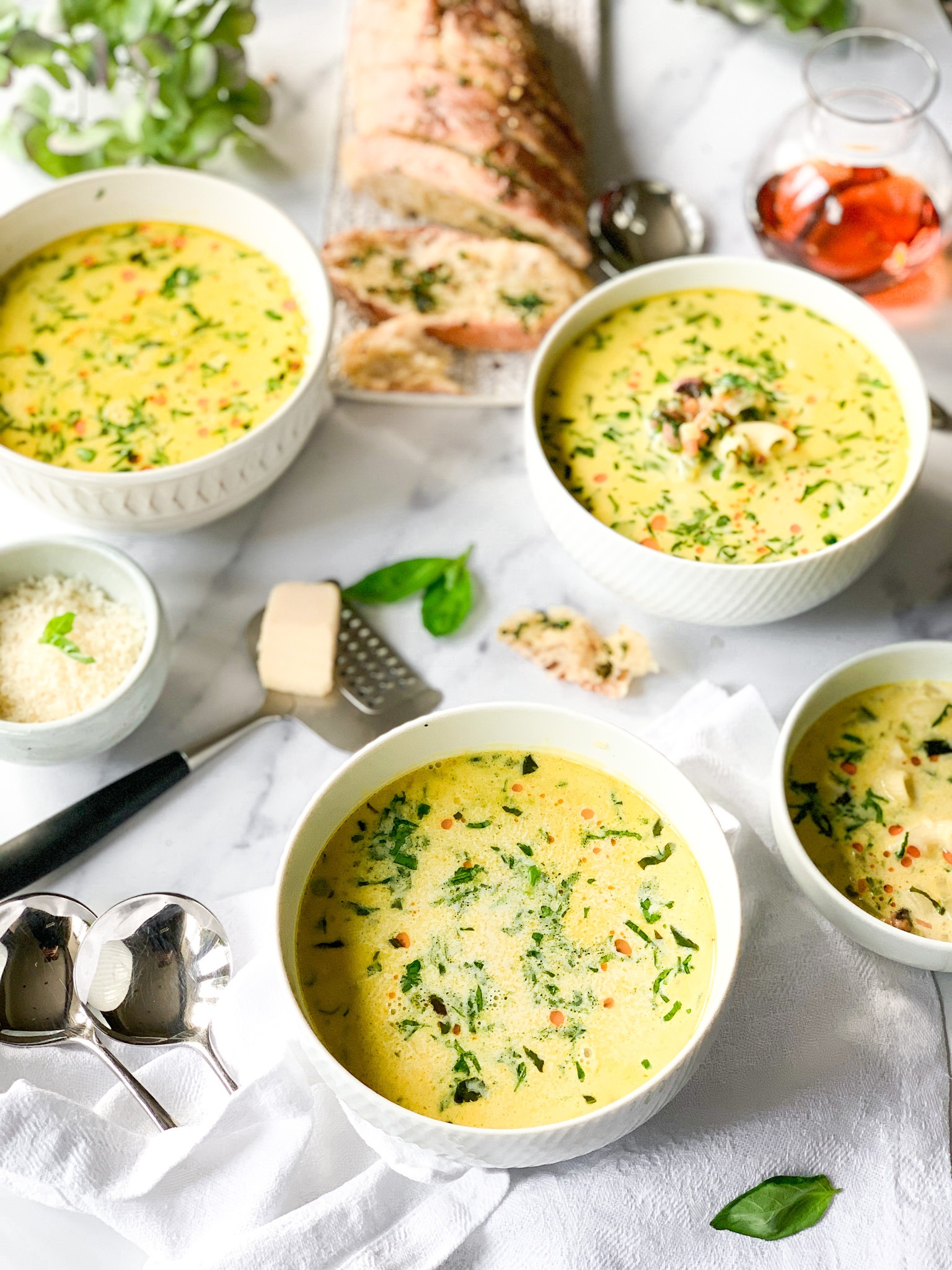
Say minestrone and most of us picture the same thing. A bowl of chunky, tomato-red soup, filled with vegetables and pasta, perhaps first eaten in an Italian restaurant with plenty of Parmesan scattered over the top. It is such a familiar version that it is easy to think that is simply what minestrone is.
But minestrone has never really belonged to one recipe. It is a soup shaped by the vegetables at hand, often made more substantial with pasta, rice or beans. Tomatoes may be familiar, but they aren’t essential, which leaves plenty of room for a bowl like this one.
My Creamy Minestrone leaves the tomatoes out altogether. Carrots, courgettes, potatoes and green beans cook alongside little pasta shells in a broth made silky with oat milk and oat cream. Garlic, oregano and bay leaves add depth, while a touch of nutmeg brings a gentle warmth that works beautifully with the creamy broth.
Finish each bowl with fresh basil and parsley, a little raw garlic and Parmesan, then bring plenty of crusty bread to the table.. It may not look like the minestrone you your first imagined, but once you start eating it, the name makes complete sense.
Why You’ll Love This Recipe
- Creamy without feeling heavy. The oat milk and oat cream give the broth its silky texture without hiding the vegetables underneath. You still taste the sweetness of the carrots, courgettes and potatoes, with the creamy broth simply bringing everything together.
- A little of everything in every bowl. Tender vegetables, small pasta shells and plenty of broth make each spoonful slightly different. The pasta gives the soup enough substance for dinner, while the vegetables keep it fresh and full of texture.
- Made in one pot. Everything cooks together, from the vegetables and pasta to the final splash of oat milk and cream. Apart from making washing-up easier, it means the pasta cooks directly in the stock, taking on all those herbs and flavours as it softens.
- Yours to adapt. Minestrone has always left room for what you have to hand. Courgettes and green beans work beautifully here, but peas, spinach, squash or other seasonal vegetables can find their way into the pot without changing the spirit of the soup.
Ingredients You’ll Need
For the Soup
Olive oil or butter. Either works as the starting point for the soup. Olive oil keeps the flavours lighter, while butter brings a little more richness to the base.
Onion and garlic. Gently softened at the beginning to create the savoury base that everything else cooks into.
Carrots, courgettes, potatoes and green beans. Each brings something slightly different to the pot. Carrots add sweetness, potatoes soften into the broth, courgettes become tender and silky, while the green beans keep a little bite.
Small shell pasta. Just a small amount makes the soup more substantial without overwhelming the vegetables. The shells are particularly good here because they catch little pockets of the creamy broth.
Bay leaves and dried oregano. Simple herbs that quietly flavour the broth as it simmers. The bay leaves add depth, while oregano brings that familiar Mediterranean warmth.
Vegetable stock. This makes up most of the broth, so a good stock really matters. I like to use homemade vegetable stock, but a good-quality shop-bought one works too.
Oat milk and oat cream. The combination that gives this minestrone its creamy finish. Oat milk keeps the broth fluid, while the smaller amount of oat cream gives it richness without making the soup feel too thick.
Nutmeg. Optional, and you only need a tiny amount. It brings a gentle warmth to the creamy broth without announcing itself as a separate flavour.
Salt and black pepper. Add these carefully depending on how well seasoned your vegetable stock already is.
To Finish
Garlic. Finely chopped and left raw for the top, adding a sharp, fresh bite against the mellow, creamy broth.
Fresh basil and flat-leaf parsley. Added at the end so their freshness isn’t lost during cooking.
Parmesan. Optional, but a little grated over the hot soup adds a salty, savoury finish and melts slightly as you eat.
How to Make
- Build the base
Melt the butter or heat the olive oil in a large saucepan over medium heat. Add the chopped onion and garlic and sauté until the onion turns soft and translucent, giving them a little time here to build the first layer of flavour. - Add the vegetables and pasta
Add the carrots, courgettes, potatoes, green beans and pasta to the pan and sauté for 3 to 4 minutes, stirring so everything becomes coated in the buttery onion and garlic. Add the bay leaves, oregano, stock, salt and black pepper, then bring to a boil. Lower the heat and simmer for 8 to 10 minutes, until the vegetables are tender and the pasta is just cooked. - Make it creamy
Just before serving, stir in the oat milk and oat cream, along with the nutmeg if using. Let everything simmer gently for another 3 to 4 minutes, until the broth is creamy and everything has come together. Taste and adjust the seasoning before taking it off the heat. - Finish and serve
Ladle into bowls and finish with the finely chopped raw garlic, fresh basil, parsley and Parmesan, if using. Serve hot with garlic bread or a piece of crusty bread alongside.
Helpful Tips and Tricks
- Cut the vegetables with their cooking time in mind. Not everything needs to be exactly the same size. Potatoes and carrots take longer to soften, so cut them a little smaller than the courgettes and green beans. That way, everything reaches the right texture at roughly the same time without the courgettes disappearing into the broth.
- Keep an eye on the broth as the pasta cooks. Pasta doesn’t just cook in the stock, it absorbs it. If the soup begins looking too thick before the pasta is ready, add a splash of hot stock or water rather than letting it cook down further. You want plenty of broth left before the oat milk and cream go in.
- Expect the soup to thicken as it stands. The pasta continues absorbing liquid even after the heat is turned off, so a pot that looks beautifully brothy when freshly made can be considerably thicker twenty minutes later. If you’re not serving immediately, keep a little extra stock aside to loosen it just before bringing it to the table.
- For leftovers, cook the pasta separately. If you already know you’ll be keeping some of the soup for another day, this makes a noticeable difference. Cook the pasta separately and add it to individual bowls rather than the whole pot. The vegetables and creamy broth will keep far better without pasta sitting in them overnight and soaking up the liquid.
- Add the oat milk and cream only once everything else is cooked. They aren’t there to cook the vegetables or pasta. Adding them towards the end keeps the broth smooth and allows you to judge its final consistency properly. Once they’re in, keep the simmer gentle.
- Don’t underestimate the raw garlic finish. It might seem unusual to scatter raw garlic over a creamy soup, but that’s exactly why it works. Chop it very finely and use a light hand. You want the occasional sharp, garlicky bite against the mellow broth rather than raw garlic dominating every spoonful.
Q: Is this actually a minestrone if it doesn’t have tomatoes?
A: Yes. Minestrone has never really been one fixed recipe. It’s a soup shaped by the vegetables available, often made more substantial with pasta, rice or beans. Tomatoes have simply become part of the version most of us recognise today.
This creamy minestrone leaves them out, but keeps the things at the heart of the soup: plenty of vegetables, pasta and a broth that brings everything together. It’s a different take on minestrone, rather than a different soup altogether.
Q: Can I make this creamy minestrone vegan?
A: Yes. The soup itself is already made with oat milk and oat cream, so simply use olive oil rather than butter and leave off the Parmesan, or replace it with your favourite plant-based alternative. Just check that your vegetable stock and pasta are vegan too, as these can vary between brands.
Q: Can I use regular milk and cream instead of oat milk?
A: Absolutely. If you don’t need the soup to be dairy-free, whole milk and single cream can be used in the same quantities. The flavour will be slightly richer, but the character of the soup stays much the same. I would avoid very low-fat milk, as it won’t give the broth quite the same creamy finish.
Q: Can I add beans to creamy minestrone?
A: Yes. Cannellini beans or butter beans are particularly good here because their mild, creamy texture works naturally with the broth. Drain and rinse tinned beans before adding them towards the end of cooking, giving them just enough time to heat through without breaking apart.
Q: Can I freeze creamy minestrone?
A: You can freeze the soup base, but I wouldn’t freeze it exactly as written with the pasta, oat milk and oat cream already added. Pasta becomes much softer after freezing and reheating, while the creamy broth can lose some of its smoothness.
If you’re deliberately making a batch for the freezer, cook the vegetables in the stock and freeze at that stage. Once reheated, add freshly cooked pasta followed by the oat milk and oat cream. It takes a little more planning, but the finished soup will be much closer to a freshly made bowl.
Looking for More Soup Recipes ?? Here are few of our Favourite
Chilli Oil Ramen with Peanut Butter and Sesame Paste
If you make this recipe I’d love to hear how it turned out. Leave a comment below and let me know. It genuinely makes a difference to know what’s working and what isn’t, and I read every single one. You can also find me on Pinterest, Instagram and Facebook where I share new recipes, behind the scenes and whatever else is happening in the kitchen at Poetry of Spices.
To Garnish:
Ingredients
method
(1 tbsp olive oil or butter; 1 small yellow onion, finely chopped; 2 cloves garlic, chopped)
(½ cup carrots, chopped; ½ cup courgettes, chopped; ½ cup potatoes, chopped; ½ cup beans, chopped; 2 tbsp dried small shell pasta)
(2 bay leaves; ½ tsp dried oregano; 3½ cups homemade vegetable stock; ½ tsp salt; ¼ tsp black pepper)
(¾ cup full oat milk; ¼ cup oat cream; ⅛ tsp nutmeg powder, optional)
(1 tbsp garlic, finely chopped; 1 tbsp basil, finely chopped; 1 tbsp flat-leaf parsley, finely chopped; 1 tbsp grated Parmesan, optional)
.