
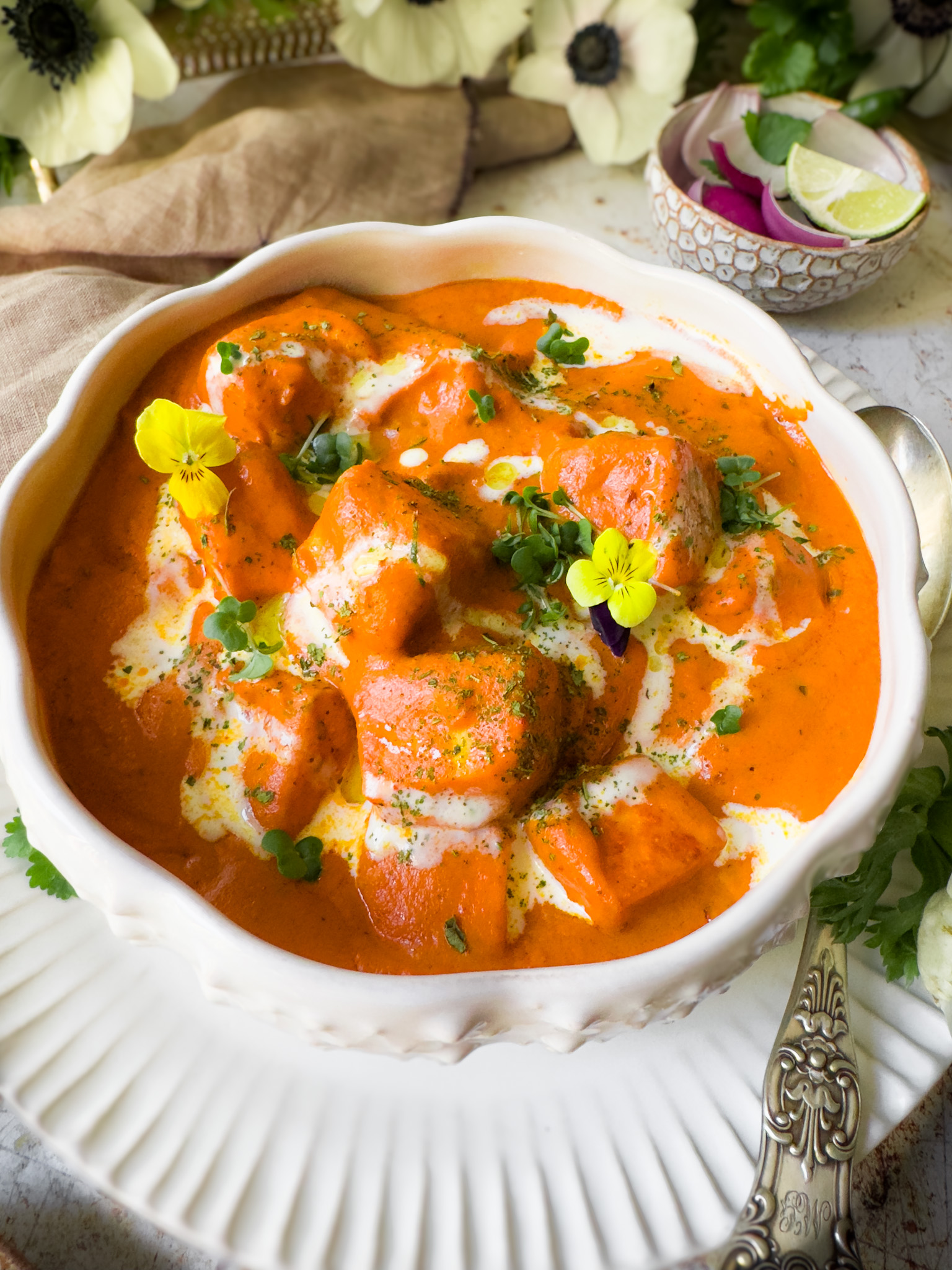
Some curries are made for celebrations. Paneer Makhani is the one I turn to when I want comfort without spending hours in the kitchen. Over the years, it has become one of the most requested dinners in our home.
Soft cubes of paneer gently simmered in a rich, buttery tomato sauce have a way of making even an ordinary evening feel a little more special. The sauce is smooth, gently spiced and deeply comforting, coating every piece of paneer without overpowering its delicate flavour.
Most of the work is already done if you have made a batch of my Makhani Sauce ahead of time. This curry comes together in little more than the time it takes to cook the paneer. It is the recipe I rely on when I want something generous enough for guests, yet easy enough for a weeknight dinner.
What is Paneer Makhani?
Paneer Makhani is one of North India’s most loved paneer curries. Soft cubes of paneer are gently simmered in a smooth tomato and butter-based sauce that is rich without being overly spicy. Unlike many tomato-based curries, makhani sauce gets much of its velvety texture from slow-cooked tomatoes, butter, cream and nuts, giving it its distinctive richness.
The beauty of Paneer Makhani lies in its simplicity. The sauce is carefully balanced so that neither the spices nor the tomatoes dominate, allowing the mild, milky flavour of the paneer to remain the star of the dish. Served with naan, roti or fragrant basmati rice, it is a comforting meal that has become a favourite in homes and restaurants around the world.
Why You’ll Love this Recipe
- Rich, creamy and restaurant-worthy. Every piece of paneer coated in a silky, buttery tomato sauce that tastes like it took far longer than it did.
- Ready in under 30 minutes. Especially quick if your makhani sauce is already prepared and waiting in the fridge or freezer.
- Perfect for sharing. Comforting enough for a family dinner and impressive enough for guests.
- Even better the next day. The flavours deepen overnight making leftovers something to genuinely look forward to.
Ingredients You’ll Need
THE BASE
- Makhani sauce. The soul of this dish. Rich, buttery and full of slow-cooked tomato and spice. If you have not made it yet, the full recipe is here. It is freezer-friendly and worth making in batches.
- Butter and neutral oil. Used together for the tempering, they bring out the depth of the spices without burning.
- Cumin seeds. Toasted in the butter and oil first to release their warm, earthy aroma before anything else goes in.
- Onion. Finely chopped and cooked until soft and lightly golden, adding sweetness and body to the sauce.
- Garlic. Finely chopped for a sharp, aromatic bite that runs through the whole curry.
- Green chillies. Add a gentle heat and brightness. Adjust to your preference.
- Kashmiri red chilli powder. Used twice — once with the paneer and once in the sauce. It adds a warm, inviting colour and a mild heat without sharpness.
THE PANEER
- Paneer. Cut into cubes and lightly sautéed before going into the sauce. The golden crust adds flavour and helps the paneer hold its shape without breaking apart in the gravy.
- Butter and oil. For sautéing the paneer evenly and adding a touch of richness as it colours.
THE FINISHING TOUCHES
- Kasturi methi (dried fenugreek leaves). Rubbed between the palms before adding to release its aroma. This is the ingredient that gives the curry its restaurant-style finish and should not be skipped.
- Garam masala. A small pinch added near the end for warmth and a rounded depth.
- Fresh cream. Stirred in off the heat so it does not split, it brings the whole dish together with a silky, luxurious texture.
- Sugar or honey (optional). A small amount to mellow any acidity from the tomatoes. Even a tablespoon will not make the sauce sweet — it simply rounds out the flavour. Leave it out if you prefer a more savoury profile.
- Fresh coriander. Scattered over just before serving for a final burst of freshness and colour.

How to Make it
Sauté the paneer first. Heat a little butter and oil in a pan over a medium heat. Add the paneer cubes, sprinkle with a pinch of salt and Kashmiri red chilli powder, and fry on all sides until lightly golden. The crust that forms here adds flavour and keeps the paneer from breaking apart later. Remove and set aside.
Build the base. In the same pan, add a little more butter and oil and toast the cumin seeds until they splutter and smell nutty. Add the finely chopped onion, garlic and green chillies and sauté for two to three minutes until the onions are soft and lightly golden.
Add the colour. Reduce the heat to low and stir in the Kashmiri red chilli powder. Give it just a moment, you want to release the colour without burning the spice. Too much heat here turns the colour dull and the flavour bitter.
Bring in the sauce. Pour the strained makhani sauce into the pan and stir well to combine everything. Cook for two to three minutes on a low heat, then add a splash of water if the gravy feels too thick. Let it simmer for another two to three minutes.
Add the paneer. Return the sautéed paneer cubes to the pan and stir gently so they absorb the sauce without breaking apart. Taste the sauce. If it is a little sharper then you’d like add a hint of sweetness. Stir in a little sugar or honey. This is entirely optional leave it out if you prefer the sauce as it is.
Finish the curry. Rub the kasturi methi between your palms and sprinkle it into the pan this releases its aroma and gives the curry that signature restaurant-style depth. Add a pinch of garam masala and salt to taste. Stir gently and let everything simmer for two to three more minutes.
Add the cream off the heat. Switch off the hob. Take the pan off the heat before stirring in the cream. This keeps it smooth and prevents it from splitting. Stir it in gently until the sauce is smooth and glossy. Garnish with fresh coriander and a drizzle of cream before serving.
Helpful Tips and Tricks
- Soak the paneer in warm water if it feels firm. Shop-bought paneer can sometimes be quite dense or rubbery straight from the packet. A ten-minute soak in warm water softens it considerably and improves the texture once it is in the sauce.
- Lower the heat before adding the chilli powder. Kashmiri red chilli powder goes in on a low flame. Its job is to release colour into the oil, not cook through. A high heat will burn it instantly, turning the colour muddy and the flavour bitter.
- Strain the makhani sauce. If you are making the sauce from scratch rather than using a pre-made batch, pass it through a sieve before adding it to the pan. This is what gives Paneer Makhani its signature silky, restaurant-style texture.
- Add the cream after turning off the heat. This is the step most people get wrong. Cream added to an actively hot pan will split and release oil rather than blending smoothly. Take the pan off the heat first, then stir the cream in slowly until the sauce looks glossy and well combined.
- Do not skip the kasturi methi. Rubbing it between your palms before adding releases the essential oils and gives the curry that unmistakable restaurant-style aroma and depth. It is a small step that makes a disproportionately large difference to the finished dish.
Q:Can I use store-bought makhani sauce instead of homemade?
A: Yes, although the flavour won’t be quite the same. That said, homemade makhani sauce gives you far more control over the flavour, richness and spice level, and it makes a noticeable difference to the finished dish. If you have the time, the full recipe is worth making in a larger batch — it keeps in the fridge for a week and freezes beautifully, so future curries come together in minutes.
Q: Do I have to fry the paneer before adding it to the sauce?
A: You do not have to, but it makes a real difference. Frying gives the paneer a light golden crust that adds flavour and helps it hold its shape in the sauce rather than breaking apart when you stir. If you prefer softer, more delicate paneer, you can add it directly to the sauce — just stir very gently and give it a few minutes to warm through.
Q: What is kasturi methi and where do I find it?
A: Kasturi methi is dried fenugreek leaves, widely used in North Indian cooking. It has a slightly bitter, herby flavour that adds a distinctive depth to makhani dishes and is a key part of what gives them that restaurant-style quality. You will find it in any Indian or South Asian grocery shop, and it keeps well in a sealed jar for months. It is worth having in the cupboard if you cook Indian food regularly.
Q: Can I make this vegan?
A: Yes, with a few swaps. Replace the paneer with extra-firm tofu pressed and cut into cubes (Soft tofu will not work)— it absorbs the sauce in a similar way. Use plant-based butter and swap the cream for coconut cream or a good oat-based cream. The flavour will be slightly different but the dish will still be rich, satisfying and deeply spiced.
Looking for more Indian recipes?? Her are few of our favourites
Tandoori Broccoli Steak and Paneer with Yoghurt Chutney
Simple Paneer Kali Mirch (Black Pepper)
If you make this recipe I’d love to hear how it turned out. Leave a comment below and let me know. It genuinely makes a difference to know what’s working and what isn’t, and I read every single one. You can also find me on Pinterest, Instagram and Facebook where I share new recipes, behind the scenes and whatever else is happening in the kitchen at Poetry of Spices.

Ingredients
For sautéing the paneer
For the curry
To garnish
method
(400g paneer, 1 tsp oil, 1 tbsp butter, pinch of salt, ½ tsp Kashmiri red chilli powder)
(1 tbsp butter, 2 tsp oil, 1 tsp cumin seeds, 1 red onion, 2 garlic cloves, 1 green chilli)
(1 tsp Kashmiri red chilli powder)
(2 cups makhani sauce, ¼–½ cup water)
(Prepared paneer)
(½ tbsp sugar or honey, optional)
(1 tsp kasturi methi, ¼ tsp garam masala, salt to taste)
(2–3 tbsp fresh cream)
(1 tbsp fresh coriander, extra cream optional)