
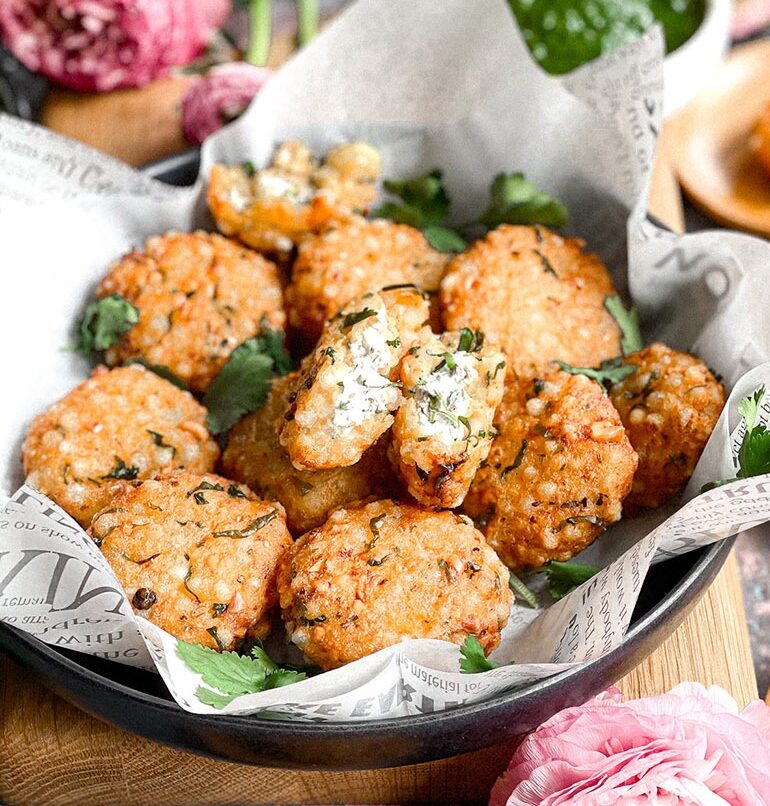
There are some flavour combinations that make complete sense the moment you taste them. Crisp, golden sabudana vadas filled with cool, creamy labneh are one of them. The warm, lightly spiced shell gives way to a soft centre that is rich, tangy and refreshing, turning a familiar Indian snack into something that feels just a little more special.
The vadas are made with soaked sago pearls, potatoes, roasted peanuts and green chillies, giving them a crisp exterior and a wonderfully soft, textured centre. The labneh doesn’t overpower them. Instead, its gentle tang cuts through the richness, while a coating of fragrant peanut dukkah adds another layer of crunch and warmth. Every bite is crisp, creamy and full of contrast.
Whether you’re serving them as a starter, an afternoon snack or as part of a mezze-style spread, one is never enough. If you’re making them during Navratri or another fasting period, simply fry the vadas without the labneh filling. You’ll still enjoy the same balance of flavours and textures that makes this recipe so memorable.
What Is Sabudana?
Sabudana, also known as sago pearls, is a starch-based ingredient used in many Indian fasting recipes. Although you’ll often find it labelled as sabudana, sago pearls or tapioca pearls, the variety commonly used in Indian cooking is typically made from cassava starch.
It comes in small, medium and large pearls, each suited to different recipes. For these stuffed sabudana vadas, medium-sized pearls give the best texture, becoming soft and lightly chewy once soaked while still holding their shape during frying.
If you’re new to cooking with sabudana, or would like to learn more about the different varieties, how to soak them correctly and how to prevent them from becoming sticky, you’ll find a detailed guide in my Sabudana Khichdi recipe.
Why You’ll Love this Recipe
- A surprise in every bite. The crisp shell gives way to a creamy labneh centre, creating a contrast of textures that gives these vadas a completely different character from the traditional version.
- Just as good stuffed or plain. The labneh filling is what makes this recipe unique, but the vadas are every bit as delicious served without it, fried plain and enjoyed with your usual accompaniments. That makes them just as suitable during Navratri and other fasting periods.
- Ideal for entertaining. They’re simple to serve and can be prepared ahead, making them a brilliant addition to sharing platters, festive gatherings or afternoon tea.
- Crisp outside, soft inside. The combination of soaked sabudana, potatoes and roasted peanuts creates a vada with plenty of texture, while the peanut dukkah and creamy labneh bring crunch, richness and freshness to every bite.
Why Labneh Works So Well Here
Labneh is thick, creamy and gently tangy, which makes it particularly good for stuffing inside these sabudana vadas. Unlike regular yoghurt, its strained texture is firm enough to shape, while still becoming beautifully soft once enclosed inside the warm, crisp vada.
For the filling, the labneh is mixed with green chilli, fresh coriander and peanut dukkah. The chilli brings a little warmth, while the dukkah adds nuttiness and texture against the smooth labneh. If you’d like to make your own, you’ll find the full method in my homemade labneh recipe.
What makes the pairing work so well is that neither one overwhelms the other. The sabudana, potatoes and peanuts have gentle, comforting flavours, while the labneh brings freshness and tang. Together, they take the familiar sabudana vada in a new direction while keeping everything we love about the original.

Why Finish with Peanut Dukkah?
Dukkah is a Middle Eastern blend of toasted nuts, seeds and spices, traditionally served with bread and olive oil or scattered over dishes for extra crunch and flavour. There are countless variations, with the choice of nuts and spices changing from one recipe to another.
For these sabudana vadas, I’ve made the dukkah with roasted peanuts, sesame seeds, coriander seeds and cumin seeds, with a little Aleppo pepper for gentle warmth. Peanuts feel particularly at home here because they’re already such an important part of traditional sabudana vada, so the dukkah brings something new without feeling disconnected from the flavours of the original dish.
Everything is toasted before being coarsely crushed, keeping plenty of texture rather than turning it into a fine powder. A little goes into the labneh filling, bringing a warm, nutty crunch against its creaminess, while the rest can be scattered over the finished vadas for another layer of texture.
What You’ll Need
For the Sabudana Vadas
- Sabudana. Medium-sized sago pearls are the base of the vadas. Once properly soaked, they become soft and slightly chewy, then crisp beautifully around the outside as they fry.
- Potatoes. Boiled and mashed potatoes give the vadas their soft centre while helping bind the sago pearls together. They also make the mixture pliable enough to shape around the filling without falling apart.
- Roasted peanuts. One of the flavours that makes sabudana vada so distinctive. Crushing the peanuts spreads their nuttiness throughout the mixture while leaving enough texture for little bits of crunch.
- Green chillies and red chilli powder. The green chillies bring a fresh, direct heat, while the chilli powder gives a gentler warmth that runs through the whole vada.
- Fresh coriander. Chopped generously through the mixture for freshness and a light herbal note against the potatoes and peanuts.
- Lemon juice. Brings the acidity the mixture needs, cutting through the richness of the fried vadas and keeping the flavours bright.
- Salt. Seasons the mild base of potatoes and sabudana and brings the chilli, peanuts and lemon together.
For the Labneh Stuffing
- Labneh. Thick, creamy and gently tangy, with enough body to sit inside the vada without disappearing into the sabudana mixture.
- Peanut dukkah. Folded through the labneh so the creamy filling has little pieces of toasted nuts, seeds and spices running through it.
- Green chilli and coriander. A little of each keeps the filling fresh and lively, with just enough heat to balance the richness of the labneh.
For the Peanut Dukkah
- Peanuts and sesame seeds. Toasted together, they form the nutty, crunchy base of the dukkah. Using peanuts also creates a natural connection with the roasted peanuts already running through the sabudana vadas.
- Coriander and cumin seeds. Toasting these whole spices releases their warmth and fragrance before they’re coarsely crushed into the dukkah.
- Aleppo pepper. Optional, but its gentle warmth works particularly well here without taking over the toasted spices.
- Fine salt. Just enough to bring the nuts, seeds and spices into balance.
How to Make
1. Soak the sabudana
Start by rinsing the sabudana well under cold running water, then transfer it to a large bowl and add ¾ cup water. Cover and leave in a cool, dry place for at least 4-5 hours, or preferably overnight. As the pearls soak, they’ll absorb the water, swell and become soft and fluffy.
Before you begin, press one pearl gently between your thumb and finger. It should squash easily with no hard centre. If it still feels firm, add another ¼ cup water and leave it to soak for a further hour before checking again.


2. Make the sabudana mixture
Bring the vada mixture together by adding the soaked sabudana to a large bowl with the mashed potatoes, crushed roasted peanuts, coriander, green chillies, red chilli powder, salt and lemon juice.
Mix everything together until the potato is evenly worked through the sabudana and the mixture holds together when pressed in your hand. Set aside while you prepare the dukkah and filling.


3. Toast and crush the dukkah
Toast the dukkah ingredients separately in a heavy-based frying pan over a medium heat, beginning with the sesame seeds and repeating with the peanuts, coriander seeds and cumin seeds. Stir them as they toast and remove each one as soon as it becomes fragrant. Leave everything to cool completely.
Once cooled, pound each ingredient separately using a mortar and pestle, keeping the texture coarse rather than grinding it into a powder. Combine everything in a bowl with the Aleppo pepper, if using, and salt. You only need a little for the filling, so keep the remaining dukkah in an airtight container for another day.
4. Prepare the labneh filling
Start with thick, well-strained labneh so the filling is firm enough to shape. If you’re making it from scratch, you’ll find the full method in my homemade labneh recipe.
Add the labneh to a bowl with the peanut dukkah, finely chopped green chilli and coriander. Mix until everything is evenly combined, then divide into 20 equal portions and gently roll each one into a small ball, ready for stuffing.


5. Fill and shape the vadas
Divide the sabudana mixture into 20 portions and roll each one into a ball. Flatten one gently between your fingers, place a ball of labneh in the centre, then carefully bring the edges of the sabudana mixture up and around the filling. Seal it completely before gently flattening it between your palms to form the vada.


Use a light hand here. Pressing too firmly can crack the outside, while a poorly sealed edge gives the labneh somewhere to escape during frying. Repeat with the remaining mixture and filling.
For plain sabudana vadas, simply leave out the filling. Shape each portion into a ball, flatten gently and fry in exactly the same way.


6. Fry until crisp and golden
Heat the oil over a medium heat in a kadai or wok. Once hot, carefully lower in the vadas one at a time, working in batches so the pan never becomes crowded.
Keep the heat at medium and fry until the outside is crisp and beautifully golden on both sides. Lift them from the oil and leave to drain on kitchen paper while you cook the remaining batches.
7. Serve while hot
Serve the sabudana vadas while they’re still hot and crisp, when the contrast between the golden shell and creamy labneh centre is at its best. A spoonful of your Coriander Chutney or a little hot sauce alongside works beautifully.
.
Helpful Tips & Tricks
- Make sure the labneh is thick. The filling needs enough body to hold its shape while you stuff the vadas. If your labneh feels particularly soft, strain it for a little longer before using. A thicker filling is much easier to enclose and less likely to find its way through the sabudana mixture during frying.
- Keep the filling small. It can be tempting to add a generous spoonful of labneh, but too much makes the vadas difficult to seal. A small ball in the centre gives you plenty of creaminess while leaving enough sabudana mixture around it to form a secure shell.
- Shape gently and check for cracks. Press the mixture firmly enough to hold together, but avoid compressing it too hard, as this keeps the texture of the soaked sago pearls intact. Once shaped, run your fingers gently around the surface and edges, sealing any cracks before they reach the oil. Even a small opening can widen as the vada fries and let the filling escape.
- Keep the oil at a steady medium heat. If the oil is too cool, the vadas will absorb more of it before becoming crisp. Too hot and the outside can brown before the vada has heated properly through the centre. Frying at a steady medium heat gives you that crisp, evenly golden shell.
- Don’t overcrowd the pan. Fry the vadas in small batches with a little room between them. Adding too many at once lowers the temperature of the oil and makes it harder for the outside to crisp evenly.
- Prepare the components ahead. The sabudana can be soaked overnight, while the dukkah and labneh can both be prepared in advance. Having these ready means much of the work is already done when it comes time to shape and fry the vadas.
Q: Can I make these sabudana vadas for fasting?
A: Yes, but make the plain sabudana vadas rather than the labneh and dukkah stuffed version. Fasting traditions vary between families and occasions, so use ingredients appropriate to the fast you observe. Regular salt, for example, is commonly replaced with sendha namak during Navratri fasting, and other ingredients may need to be adjusted depending on your traditions.
The plain version still gives you everything you want from a traditional sabudana vada: a crisp golden outside, soft centre and plenty of crunch from the roasted peanuts.
Q: What can I use instead of labneh?
A: Thick hung yoghurt is the closest substitute. Strain full-fat yoghurt until enough whey has drained away for it to hold its shape. The important thing is the consistency. It needs to be firm enough to portion and enclose inside the vada without running out.
Cream cheese can also work if labneh isn’t available, although it will give you a richer filling without quite the same fresh tang.
Q: What should I serve with stuffed sabudana vadas?
A: They need very little alongside them because there is already so much happening inside. Coriander chutney is my favourite pairing, bringing freshness and a little sharpness against the fried vada and creamy labneh. A spicy chilli sauce also works particularly well if you want a little more heat.
For entertaining, serve them as part of a larger sharing spread with the chutneys alongside so everyone can help themselves.
Q: Can I make sabudana vadas in advance?
A: Most of the preparation can be done ahead, but the vadas are best fried shortly before serving. The sabudana can be soaked overnight, while the peanut dukkah and labneh filling can both be prepared in advance and kept separately.
Once fried, the outside gradually loses its crispness, so serving them warm and freshly cooked gives you the best texture.
Q: Can I air fry or bake sabudana vadas?
A: Yes, although the texture will be slightly different from frying. For the air fryer, lightly brush or spray the shaped vadas with oil and cook until crisp and golden, turning them partway through so both sides colour evenly.
They can also be baked on a lined tray with a light coating of oil, turning them during cooking. The stuffed vadas are a little more delicate than the plain version, so handle them gently whichever method you choose.
Looking for more snack recipes?? Here are few of our favourites
The Best Crispy Polenta Chips — Golden, Garlicky and Irresistible
How to Make the Crispiest Golden Onion Bhajia
If you make this recipe I’d love to hear how it turned out. Leave a comment below and let me know. It genuinely makes a difference to know what’s working and what isn’t, and I read every single one. You can also find me on Pinterest, Instagram and Facebook where I share new recipes, behind the scenes and whatever else is happening in the kitchen at Poetry of Spices.
.

Ingredients
For the fritters
For the stuffing
For making Peanut Dukkah (makes ½ cup)
method
For the Sabudana Vadas
2 comments
I made these for a family get-together and they were a huge hit. Such a creative twist on sabudana and packed with flavour. Thanks for another wonderful recipe!
Ishita
Hey Ishita,
I’m so pleased to hear they were a hit! Family get-togethers are always the best testing ground for new recipes. Thanks for giving them a try.