
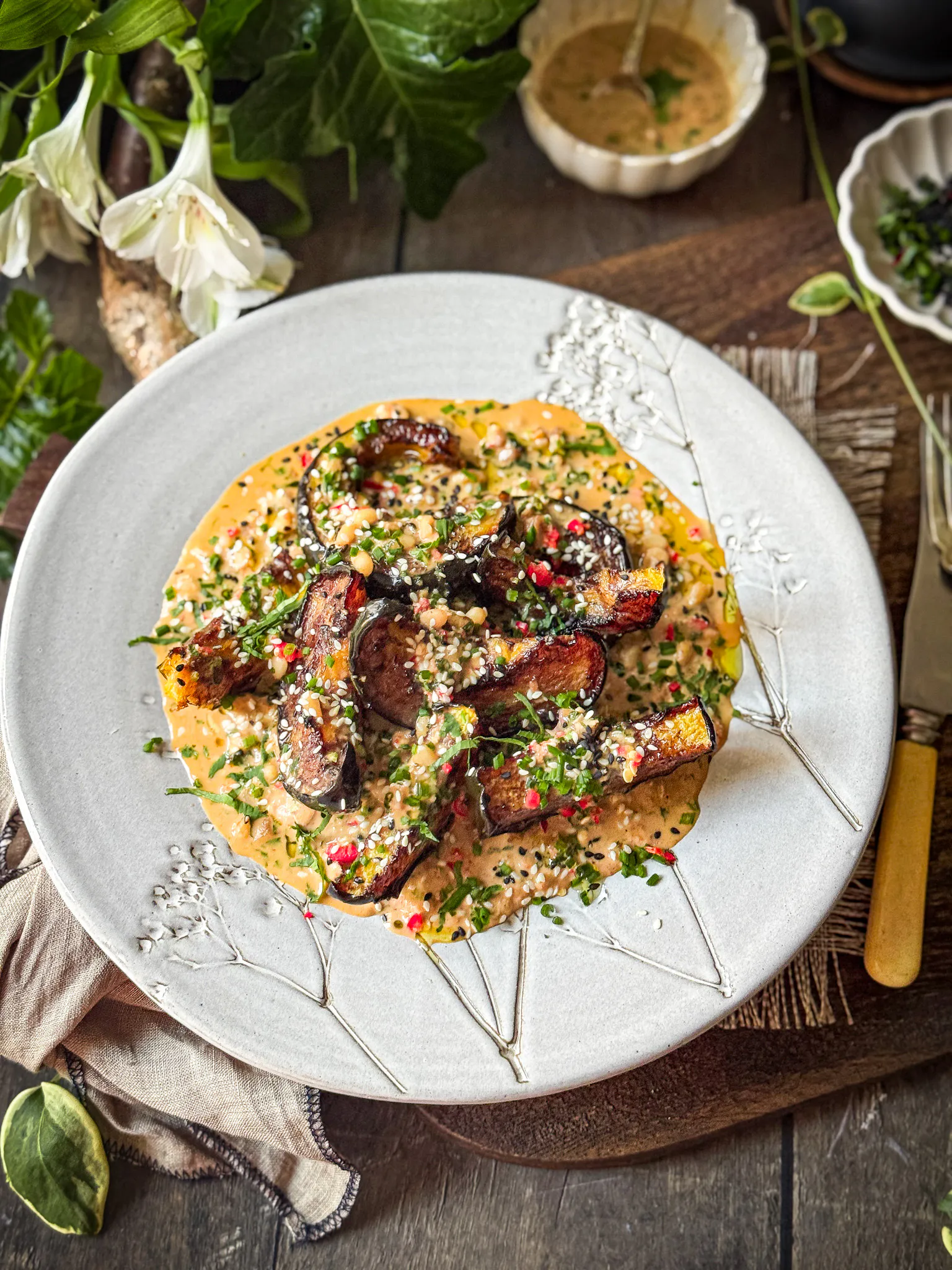
Pomegranate-Glazed Kabocha Squash with Spicy Tahini brings together some of my favourite autumn flavours: sweet, tender squash with golden, caramelised edges, a tangy pomegranate and orange glaze, and a warm, spicy tahini sauce underneath. It looks impressive on the table without being complicated to make.
Kabocha squash has a naturally sweet, nutty flavour and a dense, creamy texture that makes it ideal for roasting. The wedges are roasted until almost tender, then brushed with a mixture of pomegranate molasses, orange juice and olive oil. A final few minutes in the oven gives them a glossy, sticky coating with just enough sharpness to balance the sweetness.
What makes this dish different is the tahini. Rather than a cold dressing, it’s gently warmed with garlic, chilli, toasted pine nuts and walnuts, giving it a rich, nutty flavour with a welcome kick of heat. The coriander stirred in at the end brings everything together.
I love serving this on a large platter, with the squash nestled into the tahini and a scattering of pomegranate seeds and coriander over the top. It makes a colourful centrepiece for an autumn gathering, although I’ve learnt not to expect it to stay on the table for very long. It always seems to disappear almost as soon as I bring it out!
Why You’ll Love this Recipe
- Easy to prepare ahead. Most of the cooking happens in the oven, and you can make the glaze and tahini in advance, then roast the squash and assemble everything just before serving.
- No peeling needed. Kabocha skin is thin and edible, so it softens as it roasts and you can leave it on the wedges. That saves time and keeps their shape.
- Naturally vegan. Made entirely with plant-based ingredients, it’s a satisfying addition to a vegetarian or vegan table without needing any substitutions.
What You’ll Need
Kabocha squash. This Japanese pumpkin has a naturally sweet, nutty flavour and dense, creamy flesh that holds its shape well when roasted. Look for one that feels heavy for its size, with firm, unblemished skin. There’s no need to peel it, but give it a thorough wash before cutting.
Olive oil. You’ll need this for roasting the squash and making the glaze. A regular olive oil works well, so there’s no need to reach for your best extra virgin.
Pomegranate molasses. I love the sharp, fruity tang this brings to roasted vegetables. It’s thick, slightly sweet and quite tart, which makes it perfect for glazing the squash. Look for pure pomegranate molasses rather than a sweetened pomegranate syrup.
Fresh orange juice. The natural sweetness of orange juice softens the sharpness of the pomegranate molasses without taking away its tang. Freshly squeezed is worth using here, as you only need a small amount.
Maple Syrup/Honey. Helps the glaze to stick to the squash and reduces the tartness of the pomegranate molasses.
Tahini. Choose a smooth, runny tahini made from hulled sesame seeds. Some brands can be quite thick or bitter, so give the jar a good stir before measuring. Don’t be alarmed if the tahini thickens when you add the lemon juice. That’s normal, and it becomes smooth again as you gradually whisk in the water.
Lemon juice. A squeeze of lemon cuts through the richness of the tahini and keeps the sauce from feeling too heavy. Bottled works if you must, but fresh is better.
Garlic and fresh red chilli. Gently cooking these in olive oil brings out their taste and gives the tahini a fragrant, spicy base. I prefer deseeding the chilli so the heat doesn’t overpower the other ingredients, but you can leave the seeds in if you like it hotter.
Chilli powder and cayenne pepper. These give the sauce an extra kick of heat. Cayenne can be quite fiery, so adjust the amount to suit your taste, especially if you’re using a hot chilli powder.
Salt and black pepper. Season the squash and glaze to balance the sweetness and acidity. A pinch of salt in the tahini helps bring all the flavours together.
Pine nuts and walnuts. I like the combination of buttery pine nuts and crunchy walnuts here. Toasting them first makes all the difference, and chopping the walnuts into smaller pieces helps them mix through the tahini.
Fresh coriander. Some goes into the warm tahini, while the rest is scattered over the finished dish. Its bright, herbal flavour works well against the richness of the sauce. If coriander isn’t your favourite, flat-leaf parsley is a good alternative.
Sesame seeds or everything bagel seasoning. A final sprinkle adds crunch. I prefer toasted sesame seeds for their nutty taste, but everything bagel seasoning is a great alternative if you want a more savoury finish.
Pomegranate seeds (optional). Those bursts of tart, juicy sweetness are just what the roasted squash and creamy tahini need. They also add colour to the finished platter.
How to Make It
Prepare the squash. Start by preheating your oven to 200°C fan (220°C conventional). Give the kabocha squash a thorough wash, then carefully cut it in half and scoop out the seeds and stringy centre. There’s no need to peel it, as the skin softens in the oven. Cut each half into even wedges, roughly 1 inch thick. Try to keep them similar in size so they roast at the same rate. Kabocha can be quite firm to cut, so use a sharp, sturdy knife and take your time.
Roast until golden. Arrange the wedges on a large baking tray, drizzle with olive oil and season with salt and black pepper. Toss gently to coat, then spread them out in a single layer, leaving some space between each piece. This is important because overcrowding the tray causes the squash to steam rather than roast. Let the wedges cook for 25–30 minutes, turning them halfway through, until they’re starting to turn golden around the edges and are almost tender when pierced with a knife. Don’t worry if they aren’t completely cooked at this stage; they’ll be going back into the oven with the glaze.
Make the pomegranate glaze. While the squash is roasting, whisk together the pomegranate molasses, orange juice, maple syrup, olive oil, salt and black pepper in a small bowl. You should have a smooth, pourable glaze with a good balance of sweetness and sharpness. Give it a taste before brushing it onto the squash. Pomegranate molasses varies between brands, so if yours is very tart, a splash more orange juice softens it.
Glaze and finish roasting. Once the squash is almost tender, take the tray out of the oven and brush the wedges generously with the pomegranate glaze, coating both sides. Return them to the oven for another 8–10 minutes, until the glaze turns glossy, slightly sticky and caramelised around the edges. Keep an eye on them during these final minutes. Pomegranate molasses contains natural sugars that can catch quickly in a hot oven, and you want the glaze to caramelise without burning. The squash should now be completely tender but still hold its shape.
Prepare the tahini. While the glazed squash finishes roasting, whisk the tahini and lemon juice together in a bowl. You’ll notice the mixture becomes quite thick and may even look slightly grainy at first. Don’t worry, this is exactly what happens when tahini meets an acidic ingredient. Gradually whisk in the water, adding it a little at a time, until the mixture becomes smooth and creamy. You’re looking for a consistency that’s thick enough to sit underneath the squash but soft enough to spread across a serving platter.
Build the spicy tahini sauce. Heat a little olive oil in a frying pan over medium-low heat. Add the chopped garlic, red chilli, chilli powder and cayenne pepper, cooking for about a minute until fragrant. Keep the heat low enough that the garlic softens without turning brown, (add a little water to prevent the spices from burning) as burnt garlic can make the sauce bitter. Add the maple syrup, toasted pine nuts and chopped walnuts, letting them mingle with the warm spices before pouring in the tahini mixture. Cook for another minute or two, stirring continuously, until the sauce is warmed through and slightly thickened. Season with a pinch of salt, then take the pan off the heat and fold in the chopped coriander. If the sauce has thickened more than you’d like, loosen it with a splash of warm water. It should be creamy and spoonable rather than stiff.
Assemble and serve. Spoon the warm spicy tahini onto a large serving platter and spread it into a generous layer, leaving a few natural swirls and ridges. Arrange the glazed kabocha wedges over the top, allowing some of the tahini to remain visible between them. Finish with a scattering of toasted sesame seeds or everything bagel seasoning, fresh coriander leaves and pomegranate seeds, if using. A light dusting of chilli powder adds more heat if you want it. Bring the platter to the table while the squash is still warm, with plenty of tahini to scoop up alongside each wedge.

Helpful Tips And Tricks
Choose the right squash. Kabocha has a dense, creamy flesh that works especially well for roasting, but if you can’t find it, red kuri squash or butternut squash are good alternatives. Just bear in mind that butternut has a softer texture and may need slightly less time in the oven.
Toast the nuts separately. A dry frying pan over medium-low heat is all you need. Keep them moving and remove them as soon as they’re lightly golden and fragrant. Pine nuts can go from toasted to burnt surprisingly quickly, so don’t leave the pan unattended.
Watch the consistency of the tahini. The sauce thickens as it warms and keeps thickening as it cools. If you’re preparing it ahead, don’t worry if it looks quite firm when you return to it. A splash of warm water and a quick stir will bring it back to a creamy, spoonable consistency.
Make ahead without losing the texture. You can prepare the glaze, toast the nuts and mix the tahini with lemon and water in advance. Keep everything separate, then roast the squash and finish the warm tahini sauce closer to serving, so the wedges keep their caramelised edges and the nuts keep their crunch.
Serve it warm, not piping hot. I find this dish tastes best when the squash has had a few minutes to settle after roasting. The glaze becomes slightly stickier, and the warm tahini is easier to spread across the platter without running everywhere.
Q: What can I use instead of pomegranate molasses?
A: Pomegranate molasses is what gives the glaze its tangy sweetness, so there isn’t an exact substitute. A mix of balsamic vinegar and a little maple syrup is a reasonable alternative, though the glaze will taste different. If you use it, taste as you go and add the sweetener a little at a time.
Q: Can I use different nuts in the tahini?
A: Yes. Toasted almonds, pistachios or cashews all work in place of the pine nuts and walnuts. Chop larger nuts so they mix through the sauce evenly, and toast them the same way.
Q: Can I make the tahini less spicy?
A: Yes. Deseed the fresh chilli and use less cayenne, or leave the cayenne out and rely on the chilli powder. You can always add more heat at the end with a dusting of chilli powder.
Q: How do I store and reheat leftovers?
A: Keep the squash and tahini in separate airtight containers in the fridge for up to 3 days. Reheat the squash in a hot oven for about 10 minutes, or until heated through, to help bring back the caramelised edges. Warm the tahini gently in a pan with a splash of water, stirring until creamy again.
Looking for More Squash Recipes ?? Here are few of our Favourites:
Roasted Sweet Potato and Squash Soup with a Mexican Twist
Butternut Squash Soup with Coconut
Spicy Roasted Butternut Squash with Lime
If you make this recipe I’d love to hear how it turned out. Leave a comment below and let me know. It genuinely makes a difference to know what’s working and what isn’t, and I read every single one. You can also find me on Pinterest, Instagram and Facebook where I share new recipes, behind the scenes and whatever else is happening in the kitchen at Poetry of Spices.

Ingredients
For the roasted kabocha squash
- 1 kg kabocha squash
- 1½ tbsp olive oil
- Salt and freshly ground black pepper, to taste
For the pomegranate glaze
- 2 tbsp pomegranate molasses
- 2 tbsp freshly squeezed orange juice
- 1 tbsp maple syrup or honey
- 1½ tbsp olive oil
- Salt and freshly ground black pepper, to taste
For the spicy tahini
- 70 g tahini
- Juice of 1 lemon
- 6 tbsp water, plus extra if needed
- 1 tsp olive oil
- 3 garlic cloves, chopped
- 1 red chilli, deseeded and finely chopped
- ½ tsp chilli powder
- ½ tsp cayenne pepper
- 1-2 tsp maple syrup or honey
- 3 tbsp toasted pine nuts
- 2 tbsp chopped walnuts
- 1 small bunch fresh coriander, leaves chopped
- Salt, to taste
To finish
- Toasted sesame seeds or everything bagel seasoning
- Fresh coriander leaves
- Pomegranate seeds (optional)
- Extra chilli powder (optional)
method
- Prepare the squash. Preheat the oven to 200°C fan (220°C conventional). Wash the kabocha squash, cut it in half and scoop out the seeds and stringy centre. Leave the skin on and cut into even 1-inch (2.5 cm) thick wedges.
(1 kg kabocha squash) - Roast the squash. Arrange the wedges in a single layer on a large baking tray. Drizzle with olive oil, season with salt and black pepper and toss gently to coat. Roast for 25–30 minutes, turning halfway through, until almost tender and golden around the edges.
(1½ tbsp olive oil, salt and black pepper) - Prepare the glaze. While the squash roasts, whisk together the pomegranate molasses, orange juice, maple syrup, olive oil, salt and black pepper in a small bowl until smooth.
(2 tbsp pomegranate molasses, 2 tbsp orange juice, 1 tbsp maple syrup, 1½ tbsp olive oil, salt and black pepper) - Glaze the squash. Remove the tray from the oven and brush the wedges generously with the glaze on both sides. Return to the oven for 8–10 minutes, until the squash is tender and the glaze is glossy, sticky and lightly caramelised. Keep an eye on it towards the end to prevent burning.
(Prepared pomegranate glaze) - Prepare the tahini mixture. In a bowl, whisk together the tahini and lemon juice. Gradually add the water, whisking until smooth and creamy. Set aside.
(70 g tahini, juice of 1 lemon, 6 tbsp water) - Make the spicy tahini sauce. Heat the olive oil in a frying pan over medium-low heat. Add the garlic, red chilli, chilli powder and cayenne pepper. Cook for about 1 minute until fragrant, without browning the garlic. Add the toasted maple syrup, pine nuts and walnuts, followed by the tahini mixture. Cook for 1–2 minutes, stirring continuously, until warmed through and slightly thickened. Season with salt, remove from the heat and fold in the chopped coriander. Add a splash of warm water if the sauce is too thick.
(1 tsp olive oil, 3 garlic cloves, 1 red chilli, ½ tsp chilli powder, ½ tsp cayenne pepper, 1 tsp maple syrup, 3 tbsp toasted pine nuts, 2 tbsp chopped walnuts, prepared tahini mixture, fresh coriander and salt) - Assemble and serve. Spread the warm spicy tahini over a large serving platter. Arrange the glazed squash wedges on top, leaving some of the sauce visible. Sprinkle with toasted sesame seeds or everything bagel seasoning, fresh coriander leaves and pomegranate seeds, if using. Finish with a dusting of chilli powder for extra heat. Serve warm.
(Roasted glazed squash, spicy tahini sauce, sesame seeds or everything bagel seasoning, coriander leaves, optional pomegranate seeds and chilli powder)
Notes
- Kabocha skin is edible and softens during roasting, so there's no need to peel it.
- Add the glaze only towards the end of roasting to prevent the pomegranate molasses from burning.
- If preparing ahead, keep the squash and tahini separate and assemble just before serving.
- The tahini thickens as it cools. Loosen it with a splash of warm water before serving if needed.