
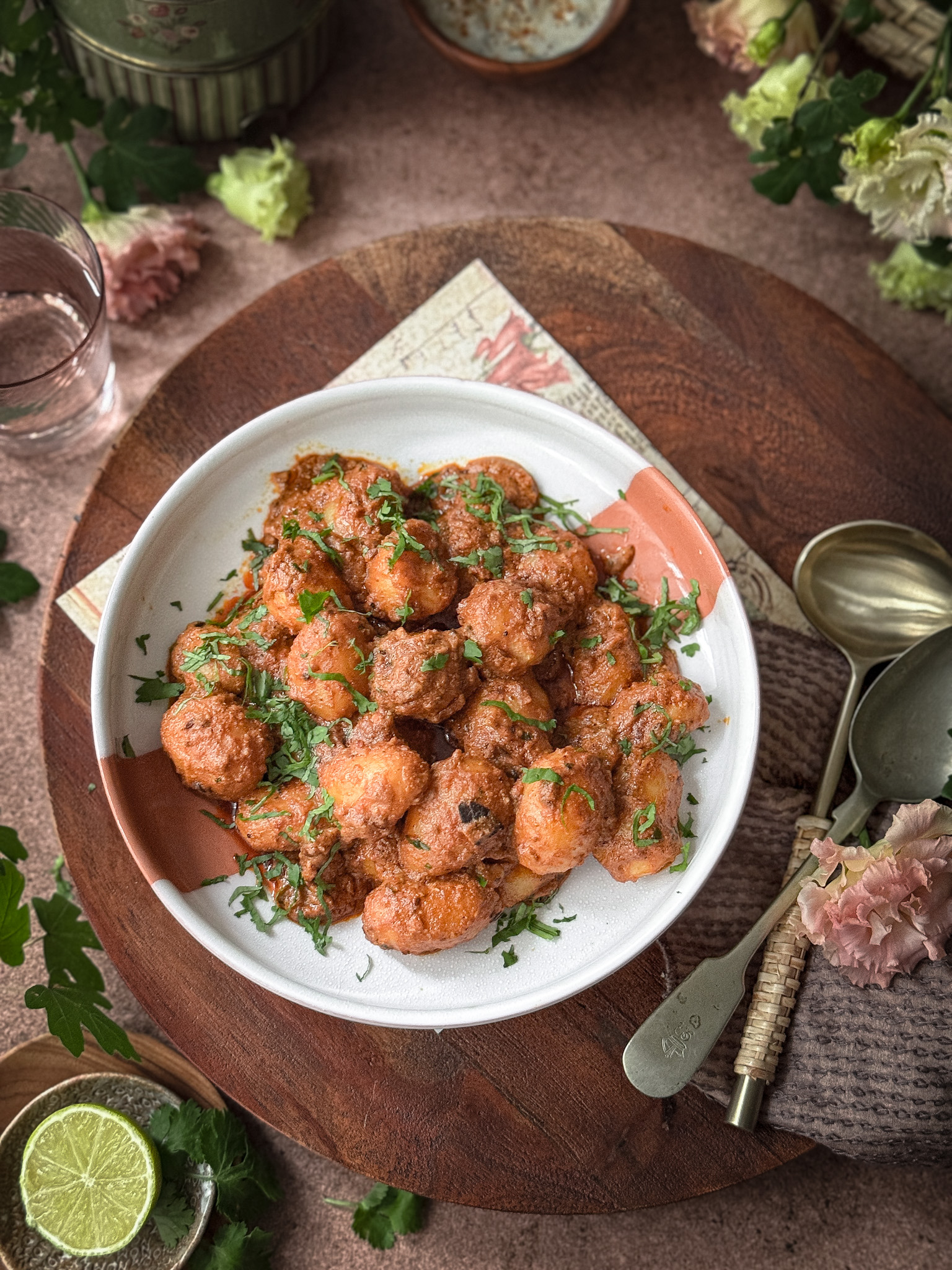
No onions, no garlic, no tomatoes, yet Kashmiri Dum Aloo has a depth of flavour that might surprise you. And if you’ve only ever had the rich, tomato-based dum aloo served in restaurants, this is quite a different experience.
That depth comes from the spices. Fennel is what really sets it apart, with its delicate sweetness and almost liquorice-like aroma, while dried ginger adds a gentle warmth and Kashmiri red chillies give the gravy its deep red colour. The result is rich and tangy, yet surprisingly balanced.
But the spices are only half of it. The other half is the dum technique. The potatoes are pricked and cooked in a covered pot, with a weight placed on the lid to help seal in the steam. This allows the gravy and spices to seep into the potatoes as they become tender, so every bite is seasoned right through, not just on the surface.
I’ve always believed that not every recipe needs to be complicated to taste good. A few small details done properly are often all it takes, and this dish is a good example. Serve it with steamed basmati rice or warm rotis, whether it’s for a festive gathering or a family meal.
Why You’ll Love This Recipe
- Naturally vegetarian and gluten-free. A satisfying option when you’re cooking for different dietary preferences. Just make sure your asafoetida is gluten-free.
- Easy to prepare ahead. You can boil and fry the potatoes in advance, leaving less to do when it’s time to cook. It tastes even better the next day, as the potatoes continue to absorb the gravy as they rest.
- A versatile addition to any Indian meal. Pair it with a simple dal, rice and a vegetable side for a complete meal, or include it in a larger festive spread.
What Is Kashmiri Dum Aloo ?
Kashmiri Dum Aloo, also known as Dum Olav, is a traditional potato curry from Kashmir, particularly associated with Kashmiri Pandit cooking. Unlike the creamy, tomato-based versions commonly found in restaurants, it relies on a distinctive combination of spices, and the details vary from one household to another.
Fennel and dried ginger are important in Kashmiri Pandit cooking, and you’ll find them in many traditional dishes. Kashmiri red chillies are another essential ingredient, giving the curry its deep red colour without making it overwhelmingly hot.
The name “dum” refers to the method of cooking slowly in a covered pot, so the ingredients cook in their own steam. It’s used in many Indian dishes, but it suits potatoes especially well, because they absorb the spiced gravy as they cook.
What You’ll Need
The ingredients for Kashmiri Dum Aloo are fairly simple, but a few of the spices are essential to getting its distinctive taste.
For the potatoes
- Baby potatoes. Choose small, round potatoes of a similar size so they cook evenly. Their size also makes them ideal for absorbing the gravy while holding their shape.
- Mustard oil. Traditionally used in Kashmiri cooking, it adds a slightly pungent, earthy taste. It’s used to fry the potatoes and make the gravy.
For the gravy
- Yoghurt. Forms the base of the gravy, adding richness and a gentle tang. Use plain, full-fat yoghurt and whisk it well before adding it to the pan to help prevent splitting.
- Fennel powder. One of the most important spices in this recipe. It has a naturally sweet, slightly liquorice-like taste that gives Kashmiri Dum Aloo its signature flavour. Freshly ground fennel seeds work well.
- Dried ginger powder. Known as saunth, it brings a warming, slightly peppery note that complements the fennel.
- Kashmiri red chillies. Both whole dried chillies and chilli powder are used. They provide the deep red colour and a gentle heat without overpowering the other spices.
- Cashews. Soaked and blended with the dried chillies to make a smooth paste, they add body and a little richness to the gravy.
- Whole spices. Black cardamom, green cardamom, cinnamon, cloves, bay leaves and cumin seeds create an aromatic base when tempered in hot oil.
- Asafoetida (hing). Adds a savoury depth that’s useful in dishes made without onions or garlic. A little goes a long way. Check that it’s gluten-free if you need to.
- Salt and hot water. Salt brings everything together, while hot water helps adjust the consistency of the gravy as the potatoes cook.
- Fresh coriander. A little chopped coriander adds freshness just before serving.
How to Make It
Prepare the potatoes. Wash the baby potatoes and place them in a pressure cooker with enough water to cover them and a pinch of salt. Cook for one whistle, then allow the pressure to release naturally. Once cool enough to handle, peel the potatoes and prick them all over with a fork or toothpick. This helps the gravy seep into them later. If you don’t have a pressure cooker, boil the potatoes in salted water for about 12–15 minutes, until just tender.
Fry the potatoes. Heat the mustard oil in a heavy-bottomed pan and shallow-fry the potatoes over medium heat, turning occasionally until golden and slightly crisp on all sides. Remove and set aside. You can also deep-fry them if you prefer. Prick the potatoes once more after frying.
Make the chilli-cashew paste and yoghurt mixture. Soak the dried Kashmiri red chillies and cashews in hot water for about 30 minutes to an hour, then blend them into a smooth paste. In a separate bowl, whisk the yoghurt with Kashmiri red chilli powder until smooth. Lightly crush the black cardamom, green cardamom and cinnamon to release their aroma.
Start the gravy. Heat the mustard oil in a heavy-bottomed pan. Add the cumin seeds, bay leaves, cloves, crushed cardamoms and cinnamon. Let them sizzle for a few seconds until fragrant, taking care not to burn them.
Cook the yoghurt and chilli paste. Add the prepared chilli-cashew paste, followed by the whisked yoghurt mixture. Keep the heat low to medium and stir continuously at first to prevent the yoghurt from splitting. Continue cooking, stirring regularly, until the mixture thickens and the oil begins to separate.
Add the ground spices. Stir in the asafoetida, fennel powder and dried ginger powder, along with a splash of hot water to prevent the spices from catching at the bottom of the pan. Cook briefly until everything is well combined.
Add the potatoes. Return the fried potatoes to the pan, season with salt and gently toss them in the gravy. Let them cook for a few minutes, then pour in enough hot water to reach roughly the top of the potatoes. Bring everything to a gentle boil.
Cook on dum. Cover the pan with a tight-fitting lid and place a weight on top to help seal in the steam. Alternatively, seal the pan with foil before putting the lid on. Reduce the heat to low and cook for 20–25 minutes, allowing the potatoes to become tender and absorb the spiced gravy. By the end, the sauce should have reduced to a thick consistency that coats the potatoes.
Finish and serve. Check the seasoning and adjust if needed. Garnish with freshly chopped coriander and serve hot with steamed basmati rice, rotis or parathas.
Helpful Tips and Tricks
- Choose the right potatoes. Small, round baby potatoes work best as they hold their shape during frying and slow cooking. Try to choose potatoes of a similar size so they cook evenly.
- Don’t overcook the potatoes initially. They should be just tender when boiled, not completely soft, as they’ll be fried and cooked again in the gravy. Overcooked potatoes can break apart during the final cooking stage.
- Plan ahead for the soaking. The dried Kashmiri chillies and cashews need about an hour in hot water to soften properly. Start soaking them before preparing the potatoes so they’re ready when you need them.
- Heat the mustard oil properly. Mustard oil has a naturally pungent aroma. Heat it until it just begins to smoke, then lower the heat before adding the spices, taking care not to let it overheat. This helps mellow its sharpness.
- Keep the yoghurt from splitting. Use full-fat yoghurt at room temperature and whisk it until smooth. Keep the heat gentle when adding it to the pan, stirring continuously until it combines with the chilli paste.
- Keep the heat very low for the dum. The sealed pan can’t be stirred, so the gravy at the bottom can catch easily. Use the lowest flame, and if your hob runs hot, place a flat tawa or heat diffuser underneath. Try not to lift the lid, as the trapped steam is doing the cooking.
- Adjust the gravy towards the end. Kashmiri Dum Aloo should have a thick gravy that clings to the potatoes rather than a thin, watery sauce. If it’s too thick, add a little hot water. If it’s too runny, let it cook uncovered for a few minutes.
- Give it time to rest. Give it time to rest. If you’re not serving it straight away, let the curry sit covered for 15–20 minutes. The potatoes will continue to absorb the gravy, and the spices will have time to develop further.
Q: Is Kashmiri Dum Aloo spicy?
A: It has a gentle heat, but it isn’t fiery. Kashmiri red chillies are mainly used for their colour, while fennel and dried ginger add warmth rather than sharpness. If you prefer a milder curry, simply reduce the amount of chilli powder.
Q: Can I use regular potatoes instead of baby potatoes?
A: Yes. Choose a waxy variety and cut them into evenly sized pieces, roughly the size of baby potatoes. This will help them cook evenly, although cut potatoes may not hold their shape quite as well, so be gentle when tossing them in the gravy.
Q: Can I make Kashmiri Dum Aloo without cashews?
A: Absolutely. The cashews add body and richness, so the gravy will be slightly thinner without them. Simply blend the soaked Kashmiri chillies with a little water to make a smooth paste. The curry will still taste delicious.
Q: Can I make this recipe vegan?
A: Yes, although yoghurt plays an important role in this recipe. Choose a thick, plain, unsweetened plant-based yoghurt, preferably soya, and keep the heat gentle to prevent it from splitting. The taste and texture will be slightly different, but the spices will still come through.
Q: How do I store and reheat leftovers?
A: Allow the curry to cool, then transfer it to an airtight container and refrigerate promptly for up to two days. Reheat gently in a covered pan with a splash of hot water, as the gravy will thicken while resting. Make sure it’s piping hot throughout before serving.
Looking For More No Onion Garlic Recipes?? Here are few of Our Favourites
Paneer Butter Masala | No Onion And Garlic
If you make this recipe I’d love to hear how it turned out. Leave a comment below and let me know. It genuinely makes a difference to know what’s working and what isn’t, and I read every single one. You can also find me on Pinterest, Instagram and Facebook where I share new recipes, behind the scenes and whatever else is happening in the kitchen at Poetry of Spices.

Ingredients
For the potatoes
- 500 g small baby potatoes
- Water, for boiling
- A pinch of salt
- 4 tbsp mustard oil, for shallow-frying
For the chilli-cashew paste
- 6 dried Kashmiri red chillies
- 8 cashews
- Hot water, for soaking
For the gravy
- 2-3 tbsp mustard oil
- 1 cup plain full-fat yoghurt
- 1–1½ tbsp Kashmiri red chilli powder
- 2 black cardamom pods
- 3–4 green cardamom pods
- 5 cm cinnamon stick
- ½ tsp cumin seeds
- 2 bay leaves
- 4–5 cloves
- 1 tsp asafoetida (hing)
- 1½ tbsp fennel powder
- 1 tsp dried ginger powder
- Salt, to taste
- Hot water, as required
For garnishing
- Fresh coriander leaves, chopped
method
- Soak the chillies and cashews. Place the dried Kashmiri red chillies and cashews in a bowl, cover with hot water and leave to soak for 1 hour. Drain, then blend with a little fresh water until you have a smooth paste. Set aside.
(6 dried Kashmiri red chillies, 8 cashews, hot water) - Boil and peel the potatoes. Wash the baby potatoes and place them in a pressure cooker with enough water to cover them and a pinch of salt. Cook for one whistle, then allow the pressure to release naturally. Once cool enough to handle, peel the potatoes and prick them all over with a fork or toothpick. Alternatively, boil them in a saucepan of salted water for 12–15 minutes, until just tender.
(500 g baby potatoes, water, a pinch of salt) - Shallow-fry the potatoes. Heat the mustard oil in a heavy-bottomed pan until it just begins to smoke, then reduce the heat. Add the potatoes and shallow-fry over medium heat, turning occasionally until golden and slightly crisp on all sides. Remove and set aside. Prick them once more to help the gravy soak in.
(4 tbsp mustard oil, boiled and peeled potatoes) - Prepare the yoghurt and whole spices. Whisk the yoghurt and Kashmiri red chilli powder together until smooth. Lightly crush the black cardamom, green cardamom and cinnamon to release their aroma.
(1 cup plain full-fat yoghurt, 1–1½ tbsp Kashmiri red chilli powder, 2 black cardamom pods, 3–4 green cardamom pods, 5 cm cinnamon stick) - Temper the whole spices. Heat the mustard oil along with any oil remaining from frying the potatoes in a heavy-bottomed pan. Once hot, add the cumin seeds, bay leaves, cloves and lightly crushed cardamom and cinnamon. Let them sizzle for a few seconds until fragrant, taking care not to burn them.
(2 tbsp mustard oil, remaining oil from frying the potatoes, ½ tsp cumin seeds, 2 bay leaves, 4–5 cloves, crushed cardamom and cinnamon) - Cook the chilli paste and yoghurt. Add the prepared chilli-cashew paste, followed by the whisked yoghurt mixture. Reduce the heat to low and stir continuously at first to prevent the yoghurt from splitting. Continue cooking, stirring regularly, until the mixture thickens and the oil begins to separate.
(Prepared chilli-cashew paste, yoghurt and chilli powder mixture) - Add the ground spices. Stir in the asafoetida, fennel powder and dried ginger powder. Add a splash of hot water to prevent the spices from sticking, and cook for 1–2 minutes until well combined.
(1 tsp asafoetida, 1½ tbsp fennel powder, 1 tsp dried ginger powder, a little hot water) - Add the potatoes. Add the fried potatoes to the gravy, season with salt and gently stir until evenly coated. Cook for 2–3 minutes, then pour in enough hot water to reach roughly the top of the potatoes. Bring to a gentle boil.
(Fried potatoes, salt to taste, hot water as required) - Cook on dum. Reduce the heat to its lowest setting. Cover the pan with a tight-fitting lid and place a suitable heat-safe weight on top to help seal in the steam, or seal with foil before covering. Cook gently for 20–25 minutes without lifting the lid. The potatoes should become tender and absorb the gravy, which will reduce and thicken as it cooks.
- Garnish and serve. Remove the lid, check the seasoning and gently stir. If the gravy is too thick, add a splash of hot water. Garnish with chopped coriander and serve hot with steamed basmati rice, rotis or parathas.
(Fresh coriander leaves)
Notes
-
- Potatoes: Avoid overboiling them, as they will cook again during frying and the final dum stage.
- Mustard oil: Use 4 tbsp to shallow-fry the potatoes and 2 tbsp to prepare the gravy, along with any oil remaining from frying. Heat the oil until it just begins to smoke, then reduce the heat before adding the whole spices.
- Yoghurt: Use full-fat yoghurt at room temperature and keep the heat gentle to reduce the risk of splitting.
- Dum cooking: Use a heavy-bottomed pan and very low heat. A heat diffuser or flat tawa underneath can help prevent the gravy from catching.
- Make ahead: The curry can be made a day in advance and reheated gently with a splash of hot water.