
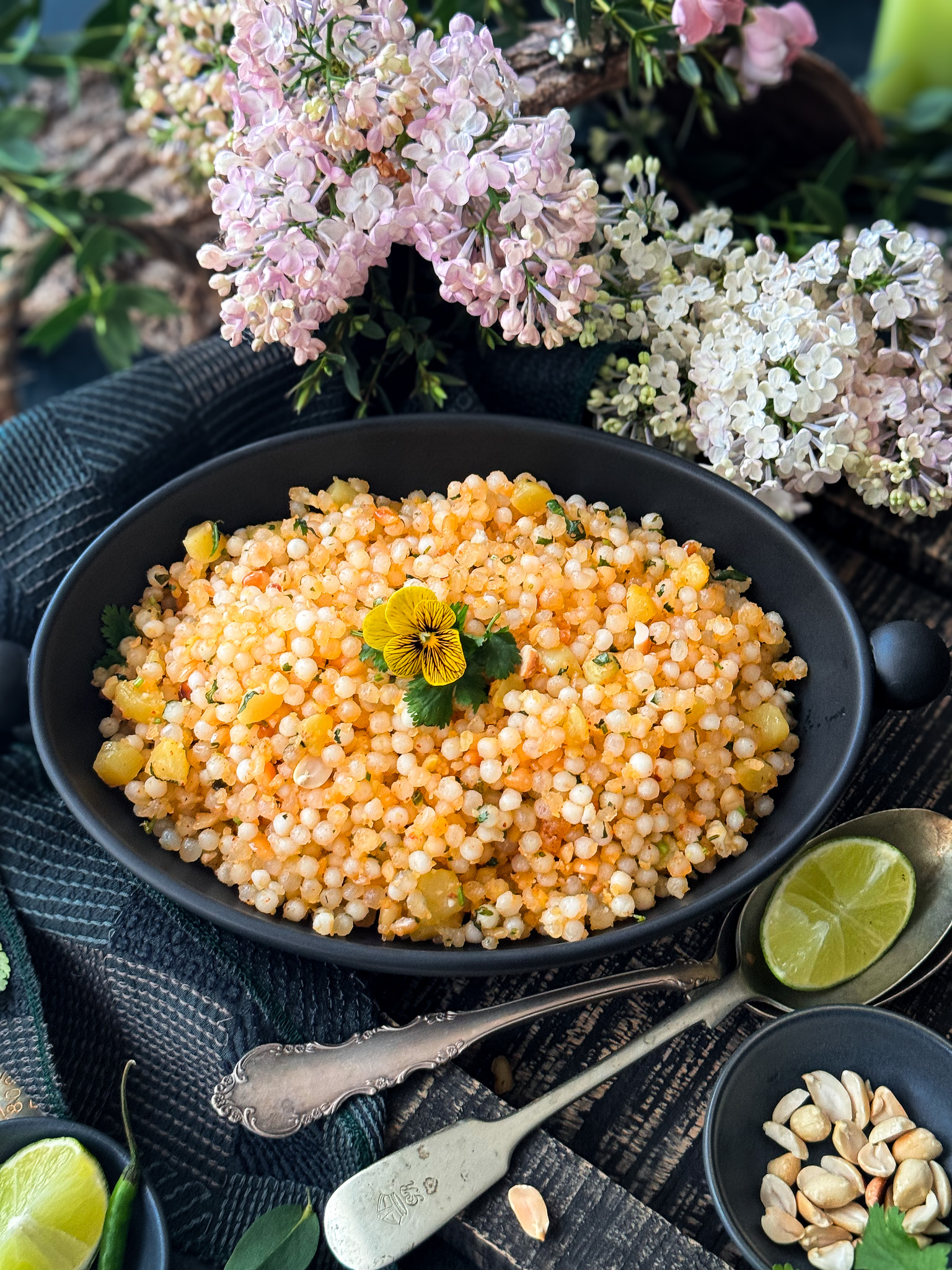
Some of the most memorable dishes are also the simplest, and Sabudana Khichdi is a perfect example. Every spoonful brings together soft, fluffy sago pearls, tender potatoes, crunchy roasted peanuts and fresh green chillies, finished with a squeeze of lemon that lifts every flavour. It is a dish that feels light yet satisfying, proving that a handful of humble ingredients can create something truly special.
Although Sabudana Khichdi is best known as a fasting dish enjoyed during festivals such as Navratri and Janmashtami, it deserves to be enjoyed throughout the year. Naturally made without onion and garlic, it fits beautifully into a Satvik diet, but you certainly do not need to be fasting to appreciate it. Across Maharashtra, Gujarat and parts of Rajasthan, it has long been valued as a simple, nourishing meal that celebrates how much flavour can come from just a handful of ingredients.
The secret to a great Sabudana Khichdi is not the ingredients. It is the technique. Fluffy sago pearls do not happen by chance. They come from soaking the sabudana correctly and cooking it with a gentle hand. Get those two steps right and you will be rewarded with a khichdi that is light, fluffy and full of texture every single time.
What Are Sago Pearls?
Sago pearls, known as sabudana in India, are small starch pearls and a staple ingredient in many Indian fasting recipes. Although you’ll often find them labelled as sago pearls, sabudana or tapioca pearls, the variety commonly used in Indian cooking is typically made from cassava starch.
Sago pearls come in different sizes, usually small, medium and large, with each suited to different recipes. Small pearls are often used in desserts and puddings, medium pearls are the most common choice for dishes like Sabudana Khichdi, or Sabudana Vadas , while larger pearls are preferred for recipes where a chewier texture is desired. For this recipe, medium-sized pearls give the best balance of texture and cook evenly without becoming mushy.
Unlike bubble tea pearls, sago pearls have very little flavour of their own. Instead, they absorb the flavours of the ingredients they are cooked with, making them just as suited to savoury dishes like Sabudana Khichdi as they are to sweet puddings and desserts. Soak them correctly and cook them gently, and you’ll be rewarded with soft, fluffy pearls that are light, distinct and never sticky.
Why You’ll Love This Recipe
- Naturally Satvik – Made without onion or garlic, this khichdi stays true to the traditions of a Satvik diet. It needs no adaptations, making it just as suitable for fasting as it is for everyday cooking.
- Most of the work happens before you start – Once the sabudana has finished soaking, the recipe comes together in minutes. It is quick to cook, making it ideal for busy mornings, light lunches or a simple evening meal.
- A wonderful balance of textures – Soft, fluffy sago pearls, tender potatoes, crunchy roasted peanuts and the occasional warmth of green chilli make every bite as satisfying as the last.
- Comforting without feeling heavy – Filling enough to keep you going through a day of fasting, yet light enough to enjoy at any time of year. It is one of those dishes that leaves you satisfied without weighing you down.

.
What You’ll Need
- Sago pearls (sabudana). Medium-sized pearls that become soft, fluffy and gently chewy once properly soaked, forming the foundation of the dish.
- Potatoes. Boiled, diced and sautéed until lightly golden, they add a tender bite that makes the khichdi more satisfying.
- Cumin seeds (optional) — Bloomed in hot ghee at the very start, giving the dish a warm, earthy base note beneath everything else.
- Roasted peanuts. Crushed rather than left whole, they bring crunch and a deep, nutty richness that contrasts beautifully with the soft sago pearls.
- Green chillies. Sliced finely for a gentle heat that lifts the dish without overpowering the other flavours.
- Red chilli powder — Adds colour and a deeper, more rounded heat alongside the fresher bite of the green chillies.
- Curry leaves. Fried briefly in ghee until fragrant, they infuse the khichdi with their distinctive aroma and subtle citrusy notes.
- Rock salt (sendha namak). Traditionally used during fasting in place of ordinary salt. It seasons the dish just like regular salt while keeping the recipe suitable for vrat meals.
- Sugar. Just a small amount rounds out the heat from the chillies and balances the savoury flavours without making the dish taste sweet.
- Lemon juice. Added right at the end, it brightens the dish and brings all the flavours into balance.
- Fresh coriander. Scattered over just before serving, it adds freshness and a burst of colour.
- Ghee. The traditional choice for cooking Sabudana Khichdi, giving the potatoes, peanuts and spices a gentle richness that ties the whole dish together.
For fasting purposes, use rock salt (sendha namak) instead of regular salt. Finish off the khichdi with a squeeze of lemon juice and a sprinkle of chopped coriander for the perfect finishing touches.
How to Make it:
Rinse the sago pearls well under cold running water until it runs almost clear, washing away the surface starch that would otherwise cause the pearls to stick together later. Transfer them to a bowl and add water in a 1:1 ratio (equal parts sabudana and water), then leave to soak for 4 to 6 hours, or overnight. Once soaked, press a pearl gently between your fingers: it should squash easily with no hard centre. If it still feels firm, give it a little longer.
Heat the ghee in a large pan over medium heat, then add the cumin seeds (if using) and let them splutter for a few seconds. Stir in the diced potatoes and cook until they turn tender with lightly golden edges. Add the crushed peanuts, green chillies and curry leaves, and sauté for a minute until fragrant.
Add the drained sabudana, red chilli powder and rock salt, & sugar stirring to combine, then cover the pan and cook over low to medium heat for 6 to 7 minutes, stirring occasionally, until the pearls turn glossy and almost translucent. This is the moment to stop rather than push on, since overcooking is the quickest way to end up with sticky sabudana.
Turn off the heat and stir through the lemon juice and fresh coriander. Taste, adjust the seasoning if needed, and serve immediately, garnished with a little more coriander, while the khichdi is still warm and the pearls are at their lightest and fluffiest.
How to Prevent Sticky Sabudana
Light, fluffy Sabudana Khichdi isn’t down to luck. It comes from understanding how the sago pearls absorb water and behave during cooking. If you’ve ever ended up with a sticky, clumpy khichdi, one of these is almost always the reason.
Don’t soak in too much water
This is the most common mistake. Sago pearls only need enough water to absorb into themselves. If they sit submerged in excess water for too long, they continue taking in moisture until the outside becomes soft and fragile. Once they hit the heat, that excess moisture encourages the starch to release, causing the pearls to stick together.
Drain thoroughly before cooking
Even perfectly soaked pearls can become sticky if they go into the pan carrying excess water. Once they’ve finished soaking, transfer them to a sieve and leave them to drain for a few minutes. It is a small step, but it helps keep the pearls light and separate as they cook.
Use a wide pan
Give the pearls room to cook in a single layer rather than piling them into a deep saucepan. A wider pan allows moisture to evaporate more quickly, helping the pearls cook evenly instead of steaming and sticking together.
Stir with a gentle hand
Sabudana doesn’t respond well to rough handling. Fold the pearls through the potatoes rather than stirring vigorously, as broken pearls release more starch into the pan. A gentle fold is all that’s needed to coat everything evenly while keeping the pearls intact.
Helpful Tips and Tricks
1. Stick to one size of pearl. Small, medium and large sago pearls all absorb water at different rates. Mixing sizes in the same batch means some pearls will be perfectly cooked while others remain firm or become over-soaked. For the most consistent results, always use one size at a time.
2. Boil the potatoes ahead of time. If you’re making Sabudana Khichdi for breakfast or during a fast, boiling the potatoes the day before saves valuable time. Once the sabudana has finished soaking, the rest of the dish comes together in just a few minutes.
3. Not fasting? Add a little fresh ginger. Ginger isn’t traditionally added to vrat recipes, but if you’re making Sabudana Khichdi outside of a fast, a little finely chopped or grated ginger adds warmth and another layer of flavour without changing the character of the dish.
4. Make only what you need. Sabudana Khichdi is at its best when freshly cooked. As it cools, the pearls firm up and gradually lose their light, fluffy texture. Rather than planning for leftovers, cook only as much as you’ll enjoy in one sitting whenever possible.
5. Finish with another squeeze of lemon. If the finished khichdi tastes a little flat, it often needs more acidity rather than more salt or chilli. An extra squeeze of lemon brightens the whole dish and brings all the flavours back into balance.
Q : Are sago pearls, tapioca pearls and sabudana the same?
A: In most Indian supermarkets, yes. The terms sabudana, sago pearls and tapioca pearls are often used interchangeably for the small white pearls used in recipes like Sabudana Khichdi. They are typically made from cassava starch, although the packaging can vary depending on the brand or country of origin. The most important thing is choosing the right size, as small, medium and large pearls all absorb water differently. For this recipe, medium-sized pearls give the best texture.
Q: Can I make Sabudana Khichdi vegan?
A: Absolutely. Simply replace the ghee with a neutral oil such as sunflower, vegetable or groundnut oil. The khichdi will still have the same light texture and balanced flavours, although ghee does add a gentle richness and aroma that many people associate with traditional Sabudana Khichdi.
Q: Is Sabudana Khichdi only eaten during Navratri?
A: Not at all. Although it is one of the most popular dishes prepared during Navratri, Janmashtami and other fasting occasions, many families enjoy it throughout the year. It makes a wonderful breakfast, a light lunch or a simple evening meal, and its popularity today extends far beyond religious fasting.
Q: Can I reheat Sabudana Khichdi?
A: Yes, although it is always at its best when freshly made. As the khichdi cools, the pearls naturally firm up and lose some of their light texture. To reheat, warm it gently in a frying pan with a splash of water, stirring as little as possible until heated through. This helps loosen the pearls, although they will never be quite as soft and fluffy as they were when first cooked.
Q: What should I serve with Sabudana Khichdi?
A: A bowl of plain yoghurt is the classic accompaniment, balancing the warmth of the green chillies and adding a cooling contrast to the dish. A wedge of lemon on the side is always welcome too, especially if you enjoy a little extra freshness. That said, Sabudana Khichdi is satisfying enough to be enjoyed entirely on its own as a complete meal.
Looking for More Festive Recipes?? Here are few of Our Favourites
Beetroot Cutlet with Kasundi Chutney
Coriander Fritters with Spiced Yoghurt
If you make this recipe I’d love to hear how it turned out. Leave a comment below and let me know. It genuinely makes a difference to know what’s working and what isn’t, and I read every single one. You can also find me on Pinterest, Instagram and Facebook where I share new recipes, behind the scenes and whatever else is happening in the kitchen at Poetry of Spices.

Ingredients
method
(1½ cups dry medium sago pearls, 1½ cups water)
(½ cup roasted peanuts)
(4 tbsp ghee, 1 tsp cumin seeds, optional)
(½ cup diced boiled potatoes)
(2-3 green chillies, finely diced; 5-6 curry leaves, finely chopped)
(1 tsp red chilli powder, 1½ tsp rock salt, 2-3 tsp granulated sugar )
( 1-2 tbsp lemon juice, 2-3 tbsp coriander, finely chopped)