
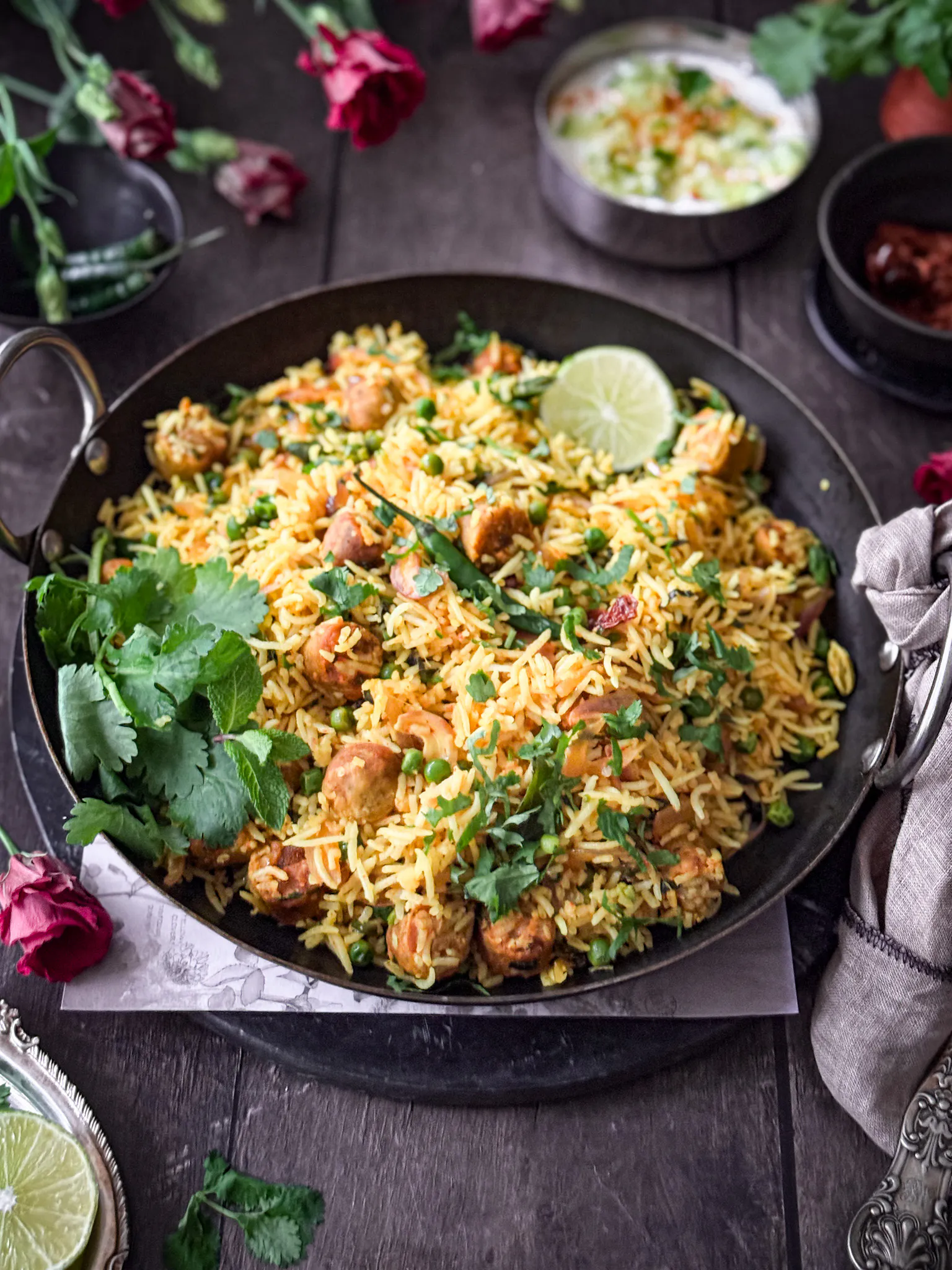
Some dishes are so deeply woven into family traditions that they become part of who we are. Gatte is one of those dishes for me. Growing up in a Marwari household, it was never just another sabji. It was part of every festival, celebration and family gathering, a dish that brought with it the familiar flavours and warmth of home.
While Gatte Ki Sabji, with its tender gram flour dumplings in a spiced yoghurt gravy, is perhaps the most familiar way of enjoying gatte, there are other ways to bring these little dumplings to the table. I’ve already shared my Gatte Ki Sabji on the blog, and today it’s Gatte Ka Pulao.
What I love about this pulao is how the gatte transform a simple rice dish into something much more substantial. Tossed together with aromatic spices, the rice becomes beautifully fragrant, while the gatte add a satisfying texture that makes every mouthful interesting.
It’s hearty, comforting and full of the flavours I grew up loving. And with a bowl of chilled raita alongside, it makes the kind of meal that needs very little else.
Why You’ll Love this Recipe
- A different way to enjoy gatte. If you’re familiar with Gatte Ki Sabji, this pulao offers a delicious alternative, with the dumplings tossed through spiced rice rather than simmered in a yoghurt gravy.
- Wholesome and satisfying. The besan gatte add substance and plant-based protein, making this a filling vegetarian meal that doesn’t need much alongside it.
- Easy to prepare ahead. The gatte can be boiled and sliced in advance, leaving you with a quick and straightforward pulao to put together when you’re ready to eat.
What Are Gatte & Why Are They So Loved In Marwari Cooking?
Gatte are savoury dumplings made from besan (gram flour), mixed with spices and a little oil to form a firm dough. The dough is shaped into long cylinders, boiled until cooked through and then sliced into rounds. Unlike dumplings made with wheat flour, gatte have a distinctive, firm yet tender texture that holds up well in a gravy or tossed with other ingredients.
Their origins are closely connected to the landscape of Rajasthan. In a region where water was scarce and fresh vegetables weren’t always available, home cooking relied on ingredients that could be stored for long periods. Besan became an important part of the Marwari kitchen because it was versatile, nourishing and could be turned into so many different dishes. Gatte are a clever example of how a few basic ingredients could become something substantial and satisfying.
One of the things that makes gatte so special is how much they vary from one household to another. Some families prefer them softer, others with a firmer bite. The seasoning changes too, with ajwain, cumin, coriander and other spices lending their own character, and even the thickness of the rolls and the size of the slices can change the finished dish. Recipes are passed down through generations, and there isn’t just one way to make gatte. Perhaps that’s why they remain such a cherished part of Marwari food.
What You’ll Need
For the Gatte
- Besan (gram flour). The base of the gatte, giving them their distinctive flavour and firm yet tender texture.
- Red chilli powder and Kashmiri red chilli powder. The regular chilli powder brings heat, while Kashmiri chilli powder adds a deeper colour and a milder warmth.
- Turmeric powder. Adds a gentle earthiness and a golden hue to the dough.
- Coriander powder. Its warm, slightly citrusy notes complement the other spices.
- Cumin seeds and ajwain (carom seeds). These bring an earthy, aromatic flavour, with ajwain adding the flavour so closely associated with gatte.
- Kasuri methi (dried fenugreek leaves). Adds a subtle bitterness and savoury depth.
- Hing (asafoetida). Just a pinch gives the gatte their characteristic savoury aroma.
- Salt. To season the dough.
- Oil. Helps keep the gatte tender rather than dry or crumbly.
- Water. Added gradually to bind the dough, with additional water needed to boil the shaped gatte.
For the Pulao
- Cooked rice. Basmati rice works well for its fragrance and separate, fluffy grains. Cook it beforehand and allow it to cool completely so it doesn’t break when mixed with the gatte.
- Oil. For tempering the spices and sautéing the onions.
- Black peppercorns and green cardamom. Whole spices that infuse the oil with warmth and fragrance.
- Cashews. Add a gentle nuttiness and a little crunch.
- Green chillies and dried red chilli. Bring two different layers of heat, one fresh and sharp, the other deeper and more rounded.
- Onions. Thinly sliced and cooked until lightly golden, bringing sweetness to balance the spices.
- Green peas. Add colour and a little natural sweetness. Fresh or frozen peas both work well.
- Curry leaves. Give the pulao a distinctive aroma when added to the hot pan.
- Kashmiri red chilli powder, red chilli powder and turmeric. The same spices used in the gatte, this time to season the rice and add colour.
- Salt. To bring all the seasonings together.
- Fresh coriander and mint leaves. Add freshness and a fragrant herbal finish.
- Lemon juice. A little acidity brightens the pulao and balances its richer, spiced notes.
How To Make It
Prepare the gatte dough. In a mixing bowl, combine the besan with both chilli powders, turmeric, coriander powder, cumin seeds, ajwain, kasuri methi, hing and salt. Add the oil, rubbing it gently into the flour and spices. Gradually add water, a little at a time, until everything comes together into a firm, smooth dough that holds its shape.
Shape and boil the gatte. Divide the dough into portions and roll them into long, even cylinders. Gently lower them into a pan of boiling water and cook until they begin to float to the surface, about 10–12 minutes. Remove from the water, allow them to cool slightly, then slice into rounds.


Cook the rice. Rinse the basmati rice thoroughly and boil until the grains are tender but still separate. Drain well and set aside. The rice should be cooked through without becoming too soft, as it will be tossed with the gatte later.
Build the tempering. Heat the oil in a large kadhai or deep pan. Add the black peppercorns, green cardamom, cashews, green chillies and dried red chilli. Allow them to sizzle gently until fragrant and the cashews begin to turn golden. Add the sliced onions and sauté until softened and lightly browned, giving them time to develop their natural sweetness.


Bring the gatte and spices together. Add the sliced gatte, boiled peas and curry leaves, followed by both chilli powders, turmeric and salt. Toss gently to coat everything in the spices, then cook over a low heat for 3–4 minutes. The gatte should take on the colour and seasoning without breaking apart.
Finish the pulao. Add the cooked rice, fresh coriander, mint and lemon juice. Fold everything together gently, allowing the rice to pick up the spices while keeping the grains intact. If the pulao feels a little dry, sprinkle in some water to add moisture. Cook over a low heat for another 2 minutes, until heated through.


Serve hot with chilled raita or plain yoghurt alongside.
Helpful Tips and Tricks
- Let the gatte dough rest. Once kneaded, cover it and leave it for 10–15 minutes before shaping. This gives the besan time to absorb the moisture, making the dough easier to handle and less likely to crack.
- Don’t make the gatte too thick. Medium-sized rolls work best, as very thick ones can take longer to cook through. They also give you more evenly sized rounds for the pulao.
- Use rice that has cooled completely. Freshly cooked rice can be delicate and more likely to clump together. If you’re cooking it on the same day, spread it on a large plate or tray to let the steam escape before using it.
- Adjust the heat to your liking. Between the green chillies, dried red chilli and chilli powders, this pulao has several kinds of heat. For a milder version, reduce the green chillies or remove their seeds without losing the flavour of the other spices.
- Give the pulao a short rest before serving. Once you’ve switched off the heat, cover the pan for about five minutes. This allows the seasoning to settle and the rice to absorb the aromas before serving.

Q: Can I make Gatte Ka Pulao without boiling the gatte first?
A: I wouldn’t recommend it. Boiling cooks the besan dough through and gives the gatte their characteristic texture. Adding uncooked gatte directly to the rice won’t give you the same result.
Q: Can I use brown rice instead of basmati rice?
A: Yes, brown rice works well if you prefer a nuttier flavour and a slightly chewier texture. Just cook it separately until tender before adding it to the pulao, as it takes longer to cook than white basmati rice.
Q: How do I store and reheat leftover Gatte Ka Pulao?
A: Allow the pulao to cool quickly, then refrigerate it in an airtight container within an hour. Keep it refrigerated for up to 24 hours. Reheat thoroughly until steaming hot throughout, adding a small splash of water if needed. Only reheat rice once.
Q: Can I make this recipe without onions?
A: Absolutely. You can leave out the onions for a no-onion version. The whole spices, chillies and herbs will still give the pulao plenty of character. You could also add a little extra hing to enhance its savoury flavour.
Looking For More Rice Recipes?? Here are few of Our Favourites
Green Coriander Pulao with Vegetables
Quick South-Indian Style Rasam Rice
Easy Japanese Chahan Rice with Egg
If you make this recipe I’d love to hear how it turned out. Leave a comment below and let me know. It genuinely makes a difference to know what’s working and what isn’t, and I read every single one. You can also find me on Pinterest, Instagram and Facebook where I share new recipes, behind the scenes and whatever else is happening in the kitchen at Poetry of Spices.

Ingredients
For the Gatte
- ½ cup besan (gram flour), approximately 9 tbsp
- 1 tsp red chilli powder
- ½ tsp Kashmiri red chilli powder
- ¼ tsp turmeric powder
- 1½ tsp coriander powder
- ¼ tsp salt
- ¼ tsp ajwain (carom seeds)
- ¾ tsp kasuri methi (dried fenugreek leaves)
- A pinch of hing (asafoetida)
- 2 tbsp oil
- 1–2 tbsp water, as required to bind the dough
- Additional water for boiling
For the Pulao
- 3 cups cooked rice
- 1 tbsp oil
- ¼ tsp black peppercorns
- 3–4 green cardamom pods
- 8–10 cashews, halved
- 3–4 green chillies, slit
- 1-2 dried red chilli, broken
- 2 onions, thinly sliced
- ¼ cup green peas, boiled
- 1 sprig curry leaves
- 1 tsp Kashmiri red chilli powder
- ½ tsp red chilli powder
- ½ tsp turmeric powder
- Salt, to taste
- 1.5 tbsp coriander leaves, chopped
- 1.5 tbsp mint leaves, chopped
- Juice of 1 lemon
method
- Combine the besan, chilli powders, turmeric, coriander powder, salt, ajwain, kasuri methi and hing in a bowl. Mix in the oil, then gradually add water to form a firm, smooth dough.
(½ cup besan • 1 tsp red chilli powder • ½ tsp Kashmiri red chilli powder • ¼ tsp turmeric • 1½ tsp coriander powder • ¼ tsp salt • ¼ tsp ajwain • ¾ tsp kasuri methi • pinch of hing • 2 tbsp oil • 1–2 tbsp water) - Divide the dough and shape into long, even cylinders. Gently lower into boiling water and cook until they begin to float to the surface, about 10–12 minutes. Remove, cool slightly and slice into rounds.
(Prepared gatte dough • water for boiling) - Heat the oil in a large kadhai or deep pan. Add the black peppercorns, cardamom, cashews, green chillies and dried red chilli. Sauté until fragrant and the cashews begin to turn golden.
(1 tbsp oil • ¼ tsp black peppercorns • 3–4 green cardamom pods • 8-10cashews • 3–4 green chillies • 1 dried red chilli) - Add the sliced onions and sauté until softened and lightly browned.
(2 onions) - Add the sliced gatte, boiled peas and curry leaves. Stir in both chilli powders, turmeric and salt. Toss gently and cook over a low heat for 3–4 minutes.
(Prepared gatte • ¼ cup boiled green peas • 1 sprig curry leaves • 1 tsp Kashmiri red chilli powder • ½ tsp red chilli powder • ½ tsp turmeric • salt) - Add the cooked rice, coriander, mint and lemon juice. Fold together gently. If the pulao feels dry, sprinkle in a little water. Cook over a low heat for another 2 minutes.
(3 cups cooked rice • 1.5 tbsp coriander leaves • 1.5 tbsp mint leaves • juice of 1 lemon • water, if needed) - Serve hot with chilled raita or plain yoghurt.