
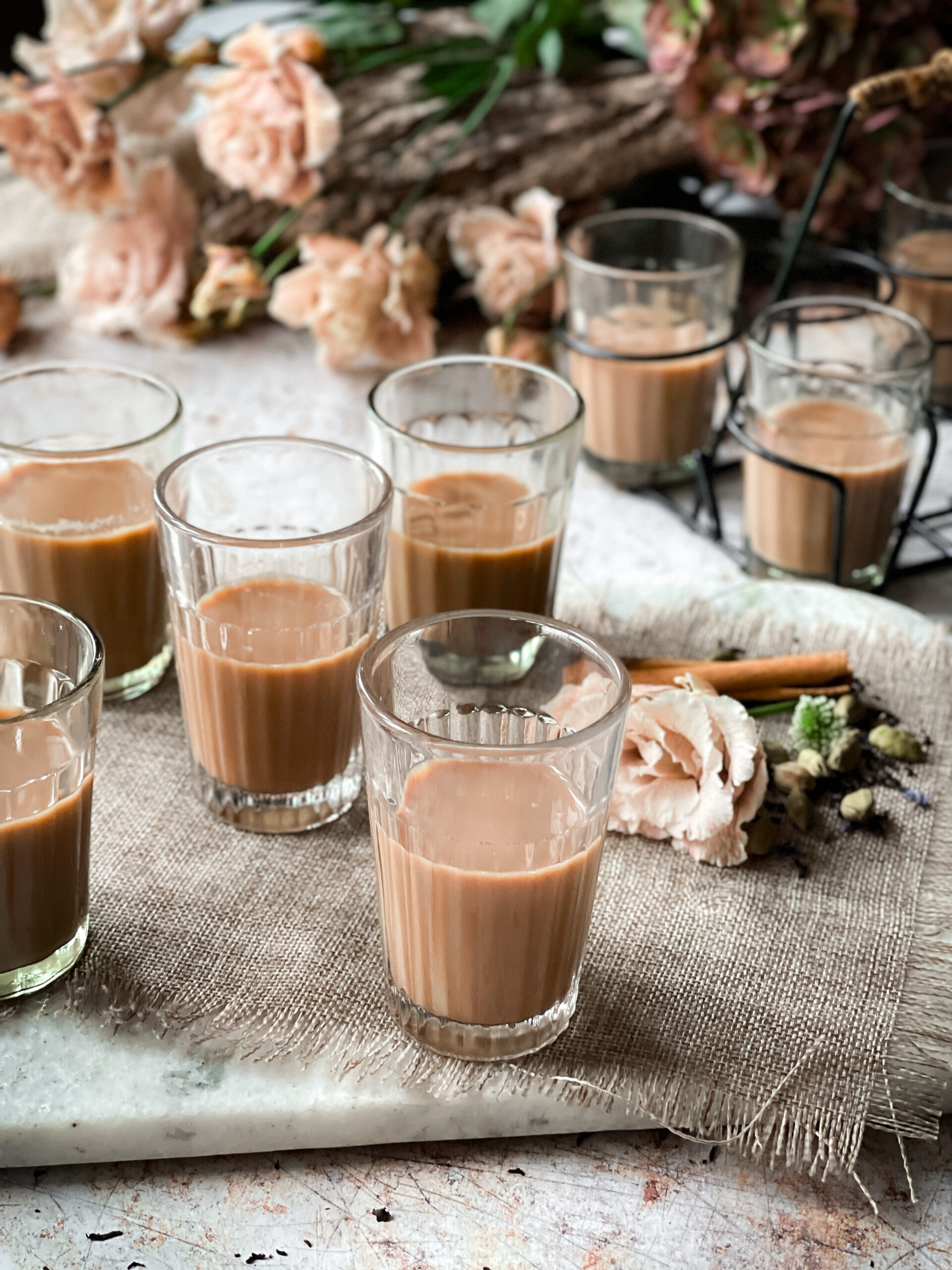
In India, there’s always a reason to stop for chai. An unexpected visitor, a break from work, a long afternoon catching up with friends, or simply that familiar craving for comfort in a cup. It’s such an ordinary part of everyday life that you hardly think about it, yet some of our best conversations happen over a cup of tea.
But while the love for chai stretches across the country, Mumbai has a rhythm of its own, and a tea to match it. That’s where cutting chai comes in. In this fast-paced city, ordering a ‘cutting’ means asking for a smaller serving of strong, milky tea. Having lived in Mumbai, I remember those little glasses lined up at roadside tapris, filled with freshly brewed chai and served piping hot. It’s a simple tradition that’s become an unmistakable part of the city’s everyday life.
What I love about this cutting chai recipe is how much you can get from just a handful of ingredients. Strong black tea, freshly crushed ginger, cardamom, milk and sugar, simmered together until the balance is just right. It doesn’t need a long list of spices or any special equipment, just a little attention to how it’s brewed.
I enjoy mine strong, with enough ginger to give it a little kick, and preferably with something crisp to nibble on. Whether it’s a plate of freshly fried pakoras, a couple of biscuits or simply a quiet moment in the afternoon, a good glass of chai always feels like time well spent.
Why You’ll Love This Recipe
- Ready in just 15 minutes. There’s no lengthy preparation or complicated process, making it easy to prepare whenever you fancy a cup.
- A strong brew without the bitterness. Brewing the tea leaves and spices in water before adding the milk helps develop a full-bodied taste without having to boil the tea for too long.
- No special blends required. You have complete control over what goes into your tea, without relying on shop-bought masala powders or premixed chai concentrates.
- Easy to customise. Adjust the strength and sweetness to your liking, or use unsweetened oat or almond milk for a dairy-free version.
What Is Cutting Chai?
What Makes a Cutting Different?
At first glance, cutting chai might look like any other glass of Indian chai, but there is a little more to it. The biggest difference is the portion. A ‘cutting’ traditionally means half a glass of tea.
Despite its smaller size, cutting chai does not compromise on taste. It is intentionally brewed stronger than regular chai, with a good balance of milk, sweetness, and the unmistakable kick of freshly crushed ginger and cardamom. Every sip is rich and satisfying, even when there is only half a glass to enjoy.
Then there is the way it is served. Forget large mugs and delicate teacups; cutting chai is best known for those small, sturdy glass tumblers lined up at roadside stalls. There is something rather lovely about watching freshly brewed chai being poured into those little glasses, with steam rising as they are handed across the counter.
Why Is It So Popular?
Part of its appeal is its simplicity. A smaller serving is affordable, quick to drink, and just enough when you fancy a little tea without ordering a full glass. It is a tradition that fits naturally into everyday life, whether you are on your way to work, running errands, or simply taking a quick break in the afternoon.
There is also a popular story behind the name. Friends or colleagues would order a single glass of chai and ask the vendor to “cut” it into two smaller portions, making it easy to share. Whether that is exactly how the name originated or not, it reflects what cutting chai has always been about: enjoying a good glass of tea without needing much time or money.

What You’ll Need
You only need a handful of everyday ingredients to make this cutting chai recipe, but choosing the right tea and using fresh spices makes a noticeable difference.
- Water: Forms the base of the chai, giving the tea leaves and spices time to release their flavours before the milk is added.
- Green cardamom: Lightly crush the pods to release their fragrant seeds. Cardamom brings a delicate, slightly sweet aroma that works beautifully with the strength of the tea.
- Fresh ginger: Grated or crushed ginger adds a lovely peppery warmth and a little kick. Fresh ginger works best here, as dried ginger has a different, more concentrated taste.
- Black tea: Assam or Indian CTC tea is ideal for a strong, full-bodied brew. CTC tea has a finer, granular texture and produces the deep colour and robust taste associated with Indian roadside chai.
- Full-fat milk: Gives the chai its creamy texture and balances the strength of the black tea. For a vegan version, you can use unsweetened almond milk instead.
- Sugar: Balances the slight bitterness of the tea and the sharpness of the ginger. You can adjust the sweetness to suit your preference.
How to Make Cutting Chai
- Prepare the spices: Lightly crush the green cardamom pods using a mortar and pestle, just enough to release their seeds. Grate or crush the fresh ginger and set both aside.
- Infuse the water: Bring the water to a boil in a small saucepan over medium heat. Add the sugar and ginger, letting them simmer for a couple of minutes before adding the crushed cardamom, including the pods. Continue simmering until the spices release their lovely aroma.
- Brew the tea: Stir in the black tea leaves and let them brew for a few minutes, until the water develops a deep amber colour and the tea is strong enough for your liking. Keep an eye on it, as boiling the leaves for too long can make the chai bitter.
- Add the milk: Pour in the milk and bring the mixture back to a gentle simmer. Cook for another couple of minutes, stirring occasionally, until the chai develops a rich, creamy colour and the flavours come together.
- Strain and serve: Remove the saucepan from the heat and strain the chai through a fine-mesh sieve into small glass tumblers, filling them about halfway for a traditional cutting. Serve immediately while piping hot.
Helpful Tips and Tricks
- Crush your spices fresh: Avoid ready-made ginger paste or ground cardamom if possible. Freshly crushed spices release their natural oils and give the chai a much more fragrant aroma.
- Keep an eye on the saucepan: Once the milk is added, chai can rise and boil over surprisingly quickly. Use a deep saucepan, keep the heat gentle and stir occasionally to prevent the milk from catching at the bottom.
- Serve it freshly brewed: Cutting chai is best enjoyed straight from the stove. If you’re making several servings, strain the entire batch into a teapot or jug as soon as it’s ready so the tea leaves don’t continue steeping.
- Taste before serving: The strength of different tea leaves can vary, so check the sweetness before pouring. You can always add a little more sugar if needed.
- Making a larger batch? Double or triple the ingredients as needed, but leave plenty of room in the saucepan for the chai to bubble up. It may take a little longer to come back to a simmer once you add the milk.
Q. What is the difference between cutting chai and masala chai?
A. The main difference is the serving size. Cutting chai is traditionally served in smaller glasses and is often brewed strong, with ginger and cardamom adding a lovely kick. Masala chai, on the other hand, usually refers to tea made with a blend of spices, which may include cinnamon, cloves, black pepper and cardamom. The two aren’t entirely different drinks, as cutting chai can also be made with masala.
Q. Can I make cutting chai without milk?
A. You can, although the result will be closer to a spiced black tea than the traditional milky version. Without milk to soften the strength of the brew, the tea may taste a little sharper. I’d suggest using slightly less tea or shortening the brewing time to keep the flavour balanced.
Q. Can I use tea bags instead of loose tea leaves?
A. Absolutely. If you don’t have Indian CTC tea, strong black tea bags such as Assam or English Breakfast work well. Start with two tea bags for this recipe and adjust the strength to your liking. I’d avoid flavoured tea bags, as they can compete with the fresh ginger and cardamom.
Q. Why does my chai taste bitter?
A. Bitterness usually comes from brewing the tea leaves for too long, although the type and quantity of tea can also make a difference. If your chai tastes too harsh, try shortening the brewing time slightly or using fewer tea leaves next time. Adding more sugar might disguise the bitterness, but it won’t fix the underlying problem.
Q. Can I prepare cutting chai in advance?
A. Yes, although it’s always best freshly brewed. If you’re making it ahead, strain the chai completely, allow it to cool and refrigerate it in an airtight container. When you’re ready to serve, warm it gently in a saucepan over low heat, stirring occasionally. Avoid boiling it repeatedly, as this can affect the taste and texture.
Looking For Snacks to go with Chai?? Here are few of Our Favourites
Andhra Style Punugulu with Sago
Light and Spongy Rava Dhokla
Pinwheel Samosa with Puff Pastry
Crispy Onion and Halloumi Pakodas
If you make this recipe I’d love to hear how it turned out. Leave a comment below and let me know. It genuinely makes a difference to know what’s working and what isn’t, and I read every single one. You can also find me on Pinterest, Instagram and Facebook where I share new recipes, behind the scenes and whatever else is happening in the kitchen at Poetry of Spices.

Ingredients
method
(2–3 green cardamom pods, 1-inch piece fresh ginger)
(500 ml water, 1 tbsp sugar, prepared ginger)
(Prepared cardamom pods)
(2–3 tsp black tea leaves or Indian CTC tea)
(60–120 ml full-fat milk or unsweetened almond milk)Notes
4 comments
Cutting Chai is a nostalgia. Born and bought up in Mumbai now living in UK I miss all the wonderful street food . Glad i found your blog . The taste is so close to home.
Vanita
Hey Vanita, close to home is the biggest compliment this recipe could get! So glad you found the blog and I hope it brings a little bit of Mumbai to your kitchen. Thank you so much for making it!
Very Nice. love your recipes.
Felcy
thanks