
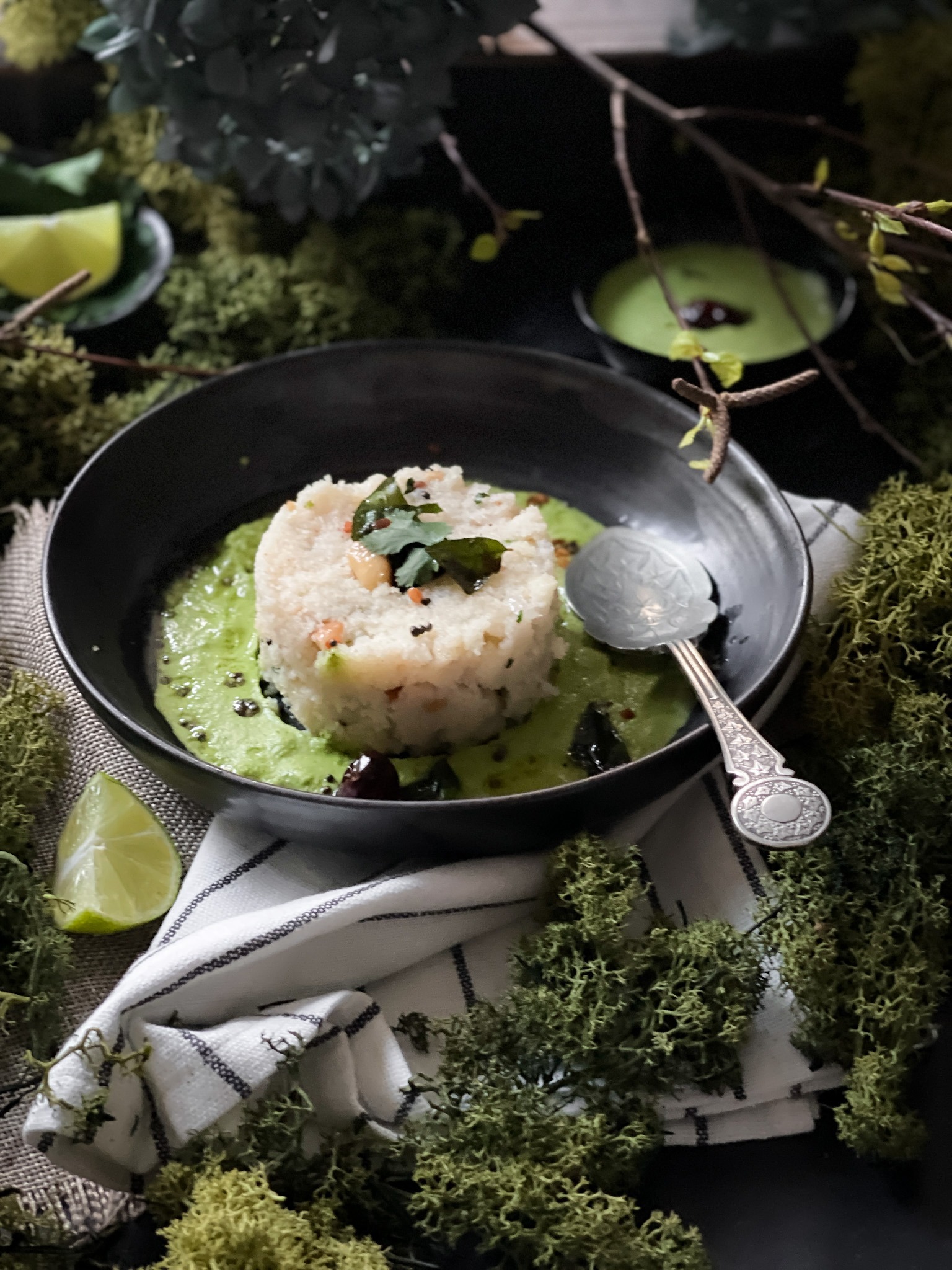
Super soft, moist, fluffy and so flavourful – Semolina upma with green coriander chutney a delicious wholesome breakfast for your busy days! Made with simple, everyday ingredients and easy to cook, this satisfying South Indian breakfast is a healthy way to start your day and stay full for hours!
Upma is a simple Indian savoury porridge, breakfast dish made with semolina (rava), spices, roasted cashew nuts and curry leaves. Served with chutney or rasam it is a staple in many Indian homes. The flavour, taste and texture of piping hot upma is so amazing that you can’t resist yourself from digging into it. It makes a satisfying meal, especially with your cup of filter coffee on the side!!
What is Semolina Upma?
Upma, uppumavu, or uppittu is a dish originating from the Indian sub continent. It is most common in South India and Sri Lanka. Cooked as a thick porridge from dry-roasted semolina this fragrant savoury dish is nutty in flavour and also very nutritious.
Upma is an Indian word, derive from the combinations of word uppu, meaning “salt” in South Indian languages, and mavu means” ground grain meal” in Tamil. In North India, the dish is called upma. In Maharashtra the dish traditionally had the name saanja in Marathi.
Upma a very versatile dish as well. Make it with other grains like polenta or millet to make it gluten-free. Add vegetables to make it wholesome, or make it with vermicelli for a different texture and taste. The humble upma is an evergreen classic thats served in every South Indian restaurant for breakfast. It can be eaten for breakfast, brunch, or as a snack!!
What is Semolina?
Semolina is a popular type of gritty flour, made from drum wheat. Not from other popular wheat type, known simple as common wheat. When durum wheat is milled, its most nourishing parts are ground into semolina. Durum wheat grains are golden in colour, so the milled semolina is a pale-yellow flour. Semolina is a popular type of flour, known as grits in US, rava/suji/sooji in India. It is off-white or yellow, depending on the variety of wheat it was made from. It resembles a coarse sand in texture.
Semolina is most commonly used in Italy. This is why people refer to it as pasta or macaroni wheat, because semolina’s number one use is in the making of pasta or couscous. The main reason people prefer semolina for pasta-making is that it is extremely high in gluten, which helps keep the shape of pasta during cooking. This is how pasta can come in all different shapes and sizes without risk of falling apart or becoming a giant blob while it is boiling. You’ll find it in many common and often comforting foods: pasta, couscous, bulgur, noodles, and lots of desserts and breads.
Semolina is available in many varieties. From fine, to medium to very coarse. Made from soft wheat, maize, rice, millet and other grains one can make this dish gluten-free and vegan also.

Ingredients needed to make Semolina Upma with Green Coriander Chutney
These ingredients are key to achieving a base and understanding the basic concept of a great semolina upma.
Ghee (Oil if Vegan ): Ghee enhances the flavour of upma and makes it fragrant. For a vegan and lighter version one can easily substitute it for oil.
Black Mustard seeds: Essential to most Indian dishes, the flavour is very similar to subtle spice of mustard which compliments well with curry leaves.
Curry leaves: These leaves are aromatic, and carry a pungent and citrusy flavour which works will with mustard seeds.
Chana dal/Split Urad dal: The lentils when lightly fried with the ghee, mustard seeds and curry leaves, adds nuttiness and gives a crunchy texture to the soft, fluffy upma.
Cashew nuts: add the crunchy texture to the upma.
Boriya Chillies: Dry round chillies add a hint of spiciness.
Pink Onions: Balanced the nutty flavour.
Water: To cook the semolina and give the upma its typical moist and soft texture.
Salt, Lime Juice & Coriander: Cuts through the flavours and helps add acidic freshness to the entire dish.
NOTE: Use ghee more freely for upma recipe. I have used 2 tablespoons ghee, but you may use even more for a softer and tastier upma. Adding ghee in end enhances the flavours.
HOW TO SERVE RAVA UPMA
A well roasted upma will have fluffy grains that will be steaming hot, which pairs amazingly well with some rasam and filter coffee. Traditionally, upma is served with coconut chutney and lime. However, it can be served with other chutneys, pickles, yogurt, sev or bhujia, and even sambar. It also tastes delicious with idli podi.
Helpful Tips and Tricks to make Semolina Upma:
- Roasting semolina: For an even roasting or toasting of semolina, you need to stir it often on a low or medium-low heat of the pan. Keep a look out for a change of colour accompanied by a toasted aroma, but be careful not to burn it.The semolina needs to be roasted well to ensure the upma is fluffy and light.
- Oil/vegan ghee: to make the upma vegan it can be made with coconut oil or vegan ghee (if you have access to it). If you have neither, you can also use any cooking oil like sunflower oil or peanut oil.
- Add semolina in batches: Always add semolina to the hot water in batches. After adding each batch mix the semolina evenly with the water. This ensures that your upma will turn smooth and soft. If you add all roasted semolina at the same time it will form lumps. The roasting also adds some colour since naturally, semolina is very pale.
- Semolina to water ratio: For a softer semolina upma, you can use the proportion of 1:3 for semolina and water respectively. Which means that for 1 cup of fine semolina you can add 3 cups water.
- Variations: There are a few variations, you can make vegetable upma by adding veggies like peas, carrots, peppers or cauliflower. Or make tomato upma or even ragi rava upma.
- The final texture of upma also depends on the type of semolina that you use. So if you are not happy with the texture try a different variety.
Other Indian breakfast recipes you will love:
Afraid you’ll miss a post? Subscribe today and receive updates on new posts, and bonus recipes and information! Follow along on Instagram, Facebook , Tiktok and Pinterest for food inspiration and adventures.

Ingredients
method
4 comments
I’ve made upma for years, but this version was especially good. The texture was spot on, and the balance of flavors was excellent. A recipe I’ll keep coming back to.
Aisha
Hey Aisha, That means a lot coming from someone who’s been making upma for years. Thank you for the kind words and for giving this version a try.
What a lovely recipe ! Simple ingredients, easy to follow, and a delicious result. This made for the perfect start of my day.
Sana
Hey Sana, Thank you for the lovely note. Comments like yours make all the recipe testing worthwhile. I’m so happy this one found its way into your kitchen.