
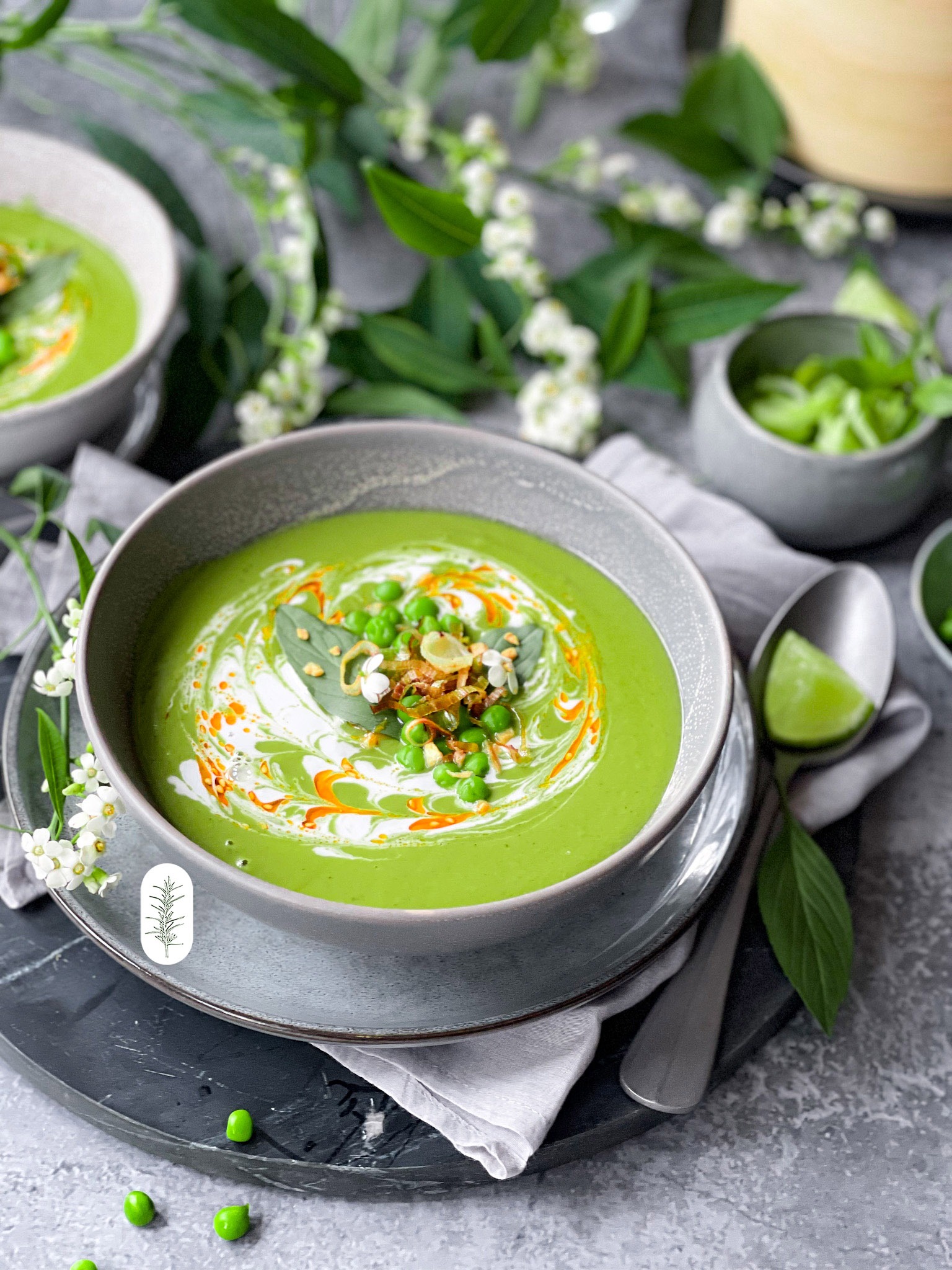
Some soups are made for their richness; others are all about freshness. This Pea, Leek and Lemongrass Soup sits somewhere between the two. It’s smooth and creamy enough to feel comforting, but bright enough that it never feels heavy.
What I love about this soup is that the first spoonful isn’t quite what you expect. It starts soft and slightly sweet, then that citrusy fragrance of lemongrass comes through and changes the whole character of the bowl. The result is fresh and aromatic, with a silky texture that makes you want to go back for another spoonful.
It’s also not a soup I’d save only for winter. There are days when you want something warm and comforting without the weight of a particularly rich soup, and this fits that space beautifully. Using frozen peas means it’s just as easy to reach for throughout the year.
Why You’ll Love the Recipe
- Quick to make. There is no roasting or lengthy simmering involved. Once everything has softened and cooked through, the soup is blended until smooth, so you can have it on the table without turning soup-making into an afternoon project.
- Naturally vegan. Coconut milk provides the creaminess without needing any dairy, and vegetable stock keeps the entire recipe plant-based without requiring substitutions or adjustments.
- A good one for the freezer. Make a larger batch and portion it once cooled, ready for days when you want homemade soup without starting from scratch. Its smooth, blended texture freezes and reheats well.
- Easy to serve in different ways. Pour it into smaller bowls as a starter, or serve a generous bowl with warm crusty bread for lunch or a light supper. Its vivid green colour also makes those smaller starter portions look lovely on the table.
What you’ll Need
Frozen peas. The main ingredient and responsible for much of the soup’s sweetness and vivid green colour. There’s no need to defrost them before adding them to the pan.
Leeks, banana shallot and spring onions. These create the savoury base of the soup. Cooking them gently at the beginning softens their sharper flavours and brings out their natural sweetness.
Lemongrass and lime leaves. These give the soup its distinctive citrusy fragrance. Chop the lemongrass before cooking so it softens sufficiently for blending, while the lime leaves infuse the soup as it simmers.
Ginger, garlic and bird’s eye chilli. Ginger and garlic add warmth and depth, while a single bird’s eye chilli gives the soup some heat without making chilli the dominant flavour.
Coriander. The stalks go in early with the aromatics, while the leaves are added after cooking. It’s a good way of using the whole bunch while getting something different from each part.
Spinach. Added after the heat is switched off, so it wilts into the soup without needing prolonged cooking. It also helps deepen that vibrant green colour.
Coconut milk. Gives the soup its smooth, creamy consistency and rounds out the chilli and aromatics without making the soup overly rich.
Lemon. Both zest and juice are used, but at different stages. The zest goes in before blending, while the juice is added towards the end for a fresher finish.
Peanut oil. Used for sautéing the vegetables and aromatics. Its neutral flavour works well here without competing with the other ingredients.
Salt and white pepper. White pepper brings gentle heat without leaving black flecks through the green soup. Season at the end once the coconut milk and lemon have been added
How to Make It
Start with the base. Heat the peanut oil in a large saucepan over medium heat, then add the banana shallot, leeks and spring onions. Cook gently for around 5 minutes, until softened but not coloured. This is where the sweetness of the soup starts to build.


Cook the aromatics. Stir in the ginger, garlic, chilli, lime leaves, lemongrass and coriander stalks. Cook for another 2 to 3 minutes, stirring often, until fragrant and the sharper edges of the chilli and ginger have softened slightly.
Let it all infuse. Pour in the boiling water, scraping up any bits from the bottom of the pan, and bring to a gentle simmer. Give it around 10 minutes here. This allows the lemongrass and lime leaves to properly flavour the liquid before the peas go in.
Bring in the peas and coconut milk. Add the frozen peas and coconut milk, stir to combine and simmer gently for 10 to 12 minutes, until the peas are completely tender.


Stir through the greens. Take the pan off the heat and add the spinach, coriander leaves and lemon zest, stirring until the spinach wilts in the residual heat. Season with salt and white pepper.
Blend the soup. Using a hand blender, blitz until completely smooth. If you’re using a countertop blender or food processor instead, work in batches and take care with the hot liquid. Never fill the jug more than halfway and hold the lid securely with a folded tea towel.


Finish with lemon. Return the soup to a low heat, stir in the lemon juice and warm through for 2 to 3 minutes. Taste and adjust the seasoning before serving.
Serve it up. Ladle into bowls and finish with fresh peas, crispy leeks, a swirl of coconut cream or a drizzle of chilli oil, choosing one or a combination depending on how you want to serve it.
Helpful Tips and Tricks
- Clean the leeks thoroughly. Dirt has a habit of hiding between their layers. Slice the leeks first, then wash them in a large bowl of cold water, separating the pieces with your fingers so any grit can fall to the bottom. Lift them out rather than pouring everything through a colander, which can tip the grit straight back over them.
- Bruise the lemongrass before chopping. Give the stalks a firm bash with the side of a knife before slicing them. This breaks down the tougher fibres and helps release more of their fragrance as they cook. Remove the very tough outer layers first.
- Adjust the consistency after blending. Different peas and coconut milks can leave you with a slightly different thickness each time. If the soup is thicker than you’d like, loosen it with a little hot water rather than adding more coconut milk, which would change the balance of the soup.
- Taste again after adding the lemon. Acidity changes how you perceive both salt and heat, so wait until the lemon juice is in before making your final seasoning adjustments. You may find the soup needs less salt than expected, or a little more white pepper.
- Protect that green colour. Once the soup has been blended and the lemon added, it only needs enough time on the heat to warm through. Keeping it simmering for too long will gradually dull that vivid green.
Q: Can I use fresh peas instead of frozen?
A: Yes. When fresh peas are in season, you can use the same weight in place of frozen. They may cook a little more quickly, so start checking them after 5 to 6 minutes rather than automatically giving them the full cooking time. Once they’re tender, you can move on to the spinach and herbs.
Q: What can I use instead of lemongrass or lime leaves?
A: These two aromatics give the soup much of its citrusy fragrance, so there isn’t an exact substitute for either. If you can’t find lemongrass, use a little extra lemon zest, adding it towards the end rather than simmering it for the full cooking time. For lime leaves, finely grated lime zest is the closest alternative. The flavour won’t be identical, but you’ll still bring some of that fresh citrus character to the soup.
Q: Can I make this soup without coconut milk?
A: Yes, although it will change both the flavour and texture. Unsweetened oat cream is a good plant-based alternative if you’d still like a creamy finish. If you aren’t keeping the soup vegan, a little single cream can be used instead.
Q: Can I freeze Pea, Leek and Lemongrass Soup?
A: Yes. Cool the soup completely before portioning it into freezer-safe containers. Defrost overnight in the fridge, then reheat gently on the hob. Give it a good stir as it warms and, if it has thickened, loosen it with a splash of hot water.
Q: Is this soup gluten-free?
A: The ingredients in the recipe are naturally gluten-free, but check the labels on any packaged ingredients you use if you’re cooking for someone with coeliac disease or a gluten intolerance, as manufacturing and cross-contamination warnings can vary.
Looking for more soup recipes?? Here are few of our favourites
Easy Lasagna Soup with Spinach
Spiced Cauliflower and Turmeric Soup
Wontons in Spicy Gochujang Broth
If you make this recipe I’d love to hear how it turned out. Leave a comment below and let me know. It genuinely makes a difference to know what’s working and what isn’t, and I read every single one. You can also find me on Pinterest, Instagram and Facebook where I share new recipes, behind the scenes and whatever else is happening in the kitchen at Poetry of Spices.

Ingredients
method
(2 tbsp peanut oil, 1 banana shallot diced, 2 medium leeks chopped, 2–3 spring onions chopped)
(50g ginger peeled and chopped, 2 cloves garlic chopped, 1 bird's eye red chilli finely chopped, 6 lime leaves, 2 lemongrass stalks bruised and chopped, 1 tbsp coriander stalks chopped)
(700ml boiling water)
(600g frozen peas, 1 x 400ml can coconut milk)
(200g spinach leaves, small handful coriander leaves, zest of 1 lemon, salt and white pepper)
(Juice of 1 lemon)
(Fresh peas, crispy leeks, coconut cream, chilli oil — to serve)