
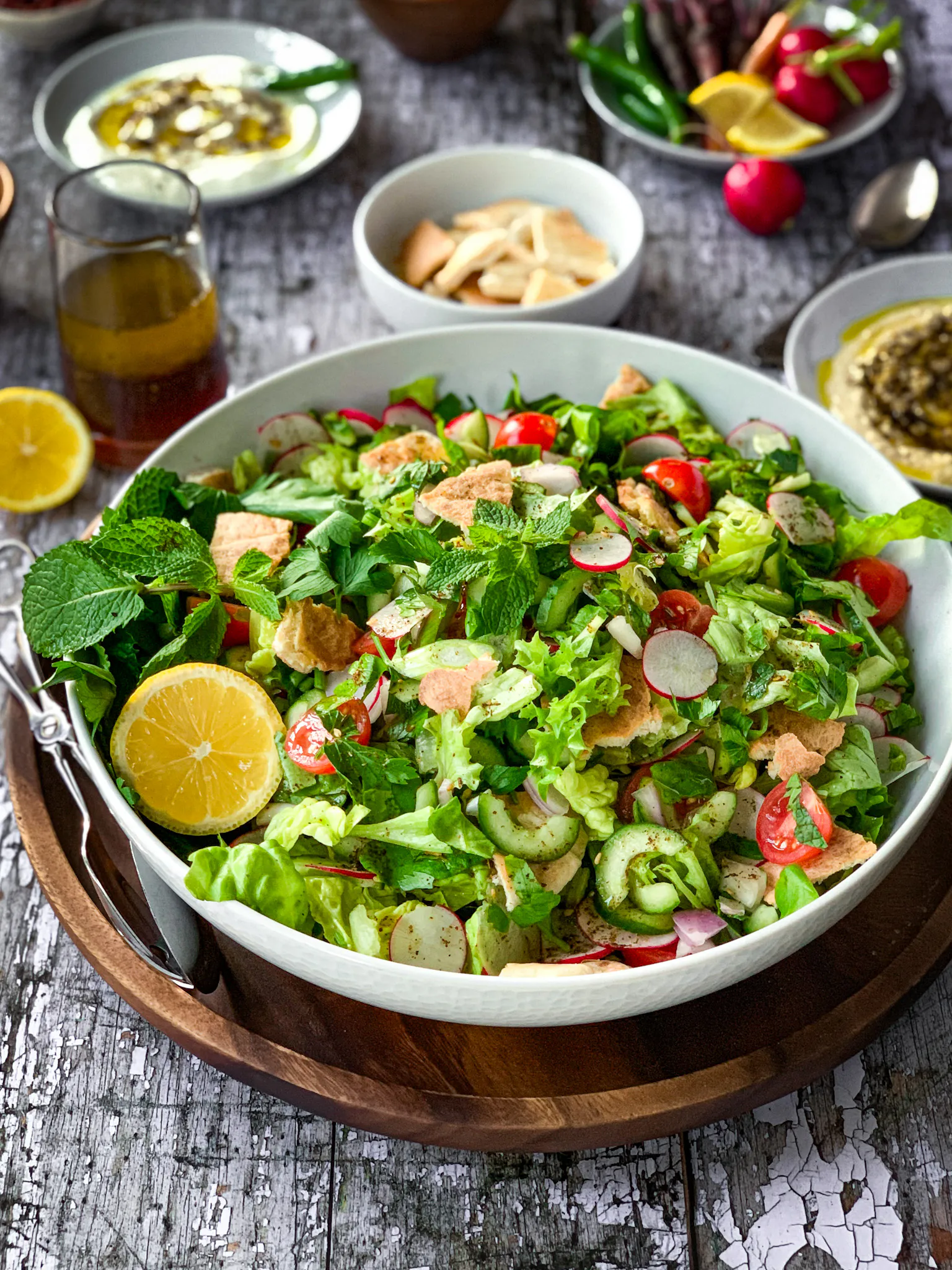
Fattoush is the kind of salad that earns its place on the table rather than filling a gap on it. Bright, acidic, and full of crunch, it is one of those dishes where every element has a purpose. Fresh vegetables and herbs tossed in a deeply tangy dressing, with crisp baked flatbread scattered through that soaks just enough of the dressing without losing its crunch.
It became a fixture for us long before I ever made it at home. The salad we would always order from a Lebanese restaurant, the one that arrived first and disappeared before anything else. Getting it right at home took a few attempts. The dressing is where the character lives. Pomegranate molasses for that deep, fruity acidity, sumac for its lemony sharpness, and a small amount of maple syrup to bring everything into balance without tipping it sweet. Together they create something intensely flavoured without being overpowering.
This works as a side dish alongside grilled vegetables, mezze, or anything off the barbecue. It holds its own as a main for a light lunch, and it is good enough to eat straight from the bowl before it even makes it to the table.
What is Fattoush?
Fattoush is a Lebanese bread salad that has been part of Middle Eastern cooking for generations. At its heart it is a simple, resourceful dish, a way of using up stale flatbread or pitta by toasting or frying it and tossing it through fresh seasonal vegetables with a sharp, well-seasoned dressing.
The word fattoush comes from the Arabic word for crumbled bread, which gives you a sense of what the dish is built around. The bread is not an afterthought or a garnish. It is structural, adding a texture that changes the whole character of the salad and helps balance the acidity of the dressing.
What goes into the salad varies by region and season. There are no strict rules about the vegetables, which is part of what makes it such a practical and enduring dish. What does not change is the dressing, and in particular the sumac, that sharp, slightly fruity spice that is as essential to fattoush as the bread itself.
Why You’ll Love this Recipe
- That dressing – Pomegranate molasses, sumac, and lemon. Deeply tangy, beautifully balanced, and the thing that makes this salad what it is.
- The crispy flatbread – Baked until golden and scattered through just before serving, it adds a crunch that makes every forkful more interesting.
- Endlessly adaptable – The vegetables change with the season and whatever you have. The dressing is what stays constant.
- Works for anything – A side, a main, tucked into a wrap or pitta. It fits wherever you need it.
The Ingredients
THE SALAD
- Gem lettuce. Roughly chopped for a sturdy, slightly sweet base that holds up under the dressing without wilting immediately.
- Cherry tomatoes. Halved so they release a little of their juice into the dressing as you toss. Sweet and bright against the acidity of the dressing.
- Cucumber. Cubed for bite. Cool and fresh against the sharpness of the dressing.
- Red radish. Peppery and crisp, they bring a slight sharpness that works well alongside the sumac and pomegranate molasses.
- Spring onions and red onion. Together they give the salad its savoury backbone. The spring onions are mild and fresh, the red onion a little more assertive.
- Flat-leaf parsley. Finely chopped and generously used. One of the defining herbs of fattoush and should be present in every bite.
- Fresh mint. Adds a cool, fragrant note that lifts the whole salad and makes it taste distinctly Middle Eastern.
- Middle Eastern flatbread or pitta. Cut into squares, tossed in olive oil, and baked until crisp. It absorbs the dressing and becomes something entirely its own.
THE DRESSING
- Lemon juice. The bright, clean acidity that forms the base of the dressing.
- Apple cider vinegar. Adds a slightly softer, fruitier sharpness alongside the lemon.
- Sumac. The spice that makes this dressing unmistakably fattoush. Tangy, slightly fruity, and deeply Middle Eastern in character. Do not skip it.
- Pomegranate molasses. The most distinctive ingredient in this dressing. It brings a deep, sweet-sour flavour that gives fattoush its intensity. Not optional.
- Maple syrup. A small amount that balances the sharpness of the molasses and lemon without making the dressing sweet.
- Garlic. Crushed and stirred through, adding depth without overpowering everything else.
- Olive oil. Rounds the dressing out and carries the flavours of the sumac and pomegranate molasses through every leaf and vegetable.
- Salt and black pepper. To taste. Season the dressing well and taste before it goes on the salad.

.
How to Make It
The method
Start with the flatbread. Preheat the oven to 200°C. Cut the flatbread or pitta into roughly one inch squares, toss them well in olive oil so every piece is coated, and spread them on a baking tray in a single layer. Bake for 8 to 10 minutes until they are deeply golden and very crisp. Keep a close eye on them in the last few minutes as they can catch quickly. Set them aside to cool completely and they will crisp up further as they do.
Make the dressing. Whisk together the lemon juice, apple cider vinegar, sumac, pomegranate molasses, maple syrup, crushed garlic, olive oil, salt, and pepper until everything is well combined. Taste it before it goes anywhere near the salad. It should be sharp and tangy with a deep, fruity sweetness from the molasses and a warm, lemony spice from the sumac. Adjust the seasoning if needed.
Assemble the salad. In a large bowl combine the gem lettuce, cherry tomatoes, cucumber, radish, spring onions, red onion, parsley, and mint. Keep the dressing and the flatbread separate until you are ready to serve. This is the most important thing about fattoush. Once the dressing goes on, the clock is running. The vegetables begin to soften and the bread begins to lose its crunch, so this is a salad that should be dressed at the table and eaten straight away.
Just before serving, pour the dressing over the salad and toss everything together well. Add the crispy flatbread, give it one final gentle toss, taste for seasoning, and serve immediately.
Helpful Tips and Tricks
- Dress the salad at the very last minute. Fattoush is at its best the moment it is tossed. The vegetables soften quickly once the acidic dressing goes on, and the bread loses its crunch. Keep everything separate until you are ready to serve, then toss and eat straight away.
- Slightly stale bread makes the best fattoush. Fresh flatbread or pitta that has had a day or two to dry out will crisp up far better in the oven than bread straight from the packet. If yours is fresh, leave it out uncovered for a few hours before baking.
- Do not swap out the sumac or pomegranate molasses. These two ingredients are what make this dressing taste like fattoush rather than any other lemon dressing. They are widely available in Middle Eastern grocery shops and most large supermarkets, and the salad will not taste right without them.
- If you are preparing ahead, keep the dressing in a jar in the fridge, the crispy bread in a bag at room temperature, and the tomatoes separate until serving. Everything else can be mixed together and kept chilled. Add the tomatoes, dressing, and bread only when you are ready to eat.
- Use whatever vegetables look best. The dressing is the constant in fattoush and the vegetables are flexible. Swap in what is in season or what you have. Roasted peppers, shredded cabbage, or sliced fennel all work well alongside the core ingredients.
Q : What is sumac and where do I find it?
A : Sumac is a deep red spice made from dried and ground sumac berries. It has a sharp, tangy flavour with a slight fruitiness that is quite unlike anything else. It is essentially the Middle Eastern equivalent of lemon, used to add acidity and brightness to dishes and dressings. You will find it in most large supermarkets in the spice aisle, and it is always stocked in Middle Eastern and South Asian grocery shops. Once you have a jar, you will find yourself reaching for it regularly.
Q : What is pomegranate molasses and can I substitute it?
A : Pomegranate molasses is a thick, intensely flavoured syrup made from reduced pomegranate juice. It is deeply sweet and sour at the same time, with a richness that gives fattoush its characteristic depth. It is available in most Middle Eastern grocery shops and increasingly in larger supermarkets. If you genuinely cannot find it, a small amount of tamarind paste mixed with a little honey is the closest substitute in terms of that sweet-sour intensity, though the flavour will be different. It is worth seeking out the real thing if you can.
Q : Can I use shop-bought croutons instead of toasted flatbread?
A : You could, but the flatbread is really what makes fattoush what it is. Croutons tend to be too uniform and too seasoned, and they do not absorb the dressing in quite the same way. Toasted flatbread or pitta has a different texture and a more neutral flavour that lets the dressing come through. If flatbread is not available, pitta chips or even toasted sourdough cut into squares would be a better substitute than standard croutons.
Q : Can I make fattoush vegan?
A : This recipe is already fully vegan. Every ingredient in both the salad and the dressing is plant-based, so there is nothing to swap or adjust.
Looking for more salad recipes?? Here are few of our favourites:
Marinated Beetroot Salad with Red Onions
Peach Tomato and Mozzarella salad with dill vinaigrette
Easy Watercress and Apple Salad
Strawberry and Lettuce Salad with Citrus Vinaigrette
If you make this recipe I’d love to hear how it turned out. Leave a comment below and let me know. It genuinely makes a difference to know what’s working and what isn’t, and I read every single one. You can also find me on Pinterest, Instagram and Facebook where I share new recipes, behind the scenes and whatever else is happening in the kitchen at Poetry of Spices.
.

Ingredients
For Dressing:
method
(1 Middle Eastern flatbread or pitta, cut into 1-inch squares • Olive oil)
(4 tbsp lemon juice • 1½ tsp apple cider vinegar • 1 tbsp sumac • 5 tbsp olive oil • 1 garlic clove, crushed • 1½ tbsp pomegranate molasses • 1 tbsp maple syrup • Salt • Black pepper)
(150g gem lettuce • 1 cup cherry tomatoes • 2 cucumbers • ½ cup radish • 3 spring onions • 1 small red onion • ½ cup parsley • ⅓ cup mint)
(Prepared dressing • Crispy flatbread)
2 comments
Made this salad for a BBQ and everyone loved it. Thanks for the recipe.
Maya
Hey Maya, I’m so pleased it went down well at your BBQ!